 Seattle
 Renton's Climate Puts Real Demands on Exterior Siding
Renton sits in one of the wetter corners of King County, where marine air off Puget Sound keeps humidity high for most of the year. That combination — driving rain that comes in sideways during fall and winter storms, salt-tinged air drifting in from the Sound, and long stretches of gray, damp weather that never quite dries out — is exactly the environment that makes moss, mildew, and slow moisture intrusion such a persistent problem on homes in this area. Siding here isn't just cosmetic. It's the first line of defense against water finding its way into wall assemblies, and it needs to hold up to a moss season that can run from October well into spring.
We've worked on enough homes in and around Renton to see the pattern: siding failures rarely show up as one dramatic event. They show up as slow, compounding damage — a section of lap siding that's stayed damp long enough for the substrate underneath to soften, moss holding moisture against a wall for months at a time, or caulking that's failed at a butt joint and let water track behind the cladding for a year before anyone notices a soft spot. Getting installation right the first time matters more here than in drier climates, because mistakes don't dry out on their own — they compound.
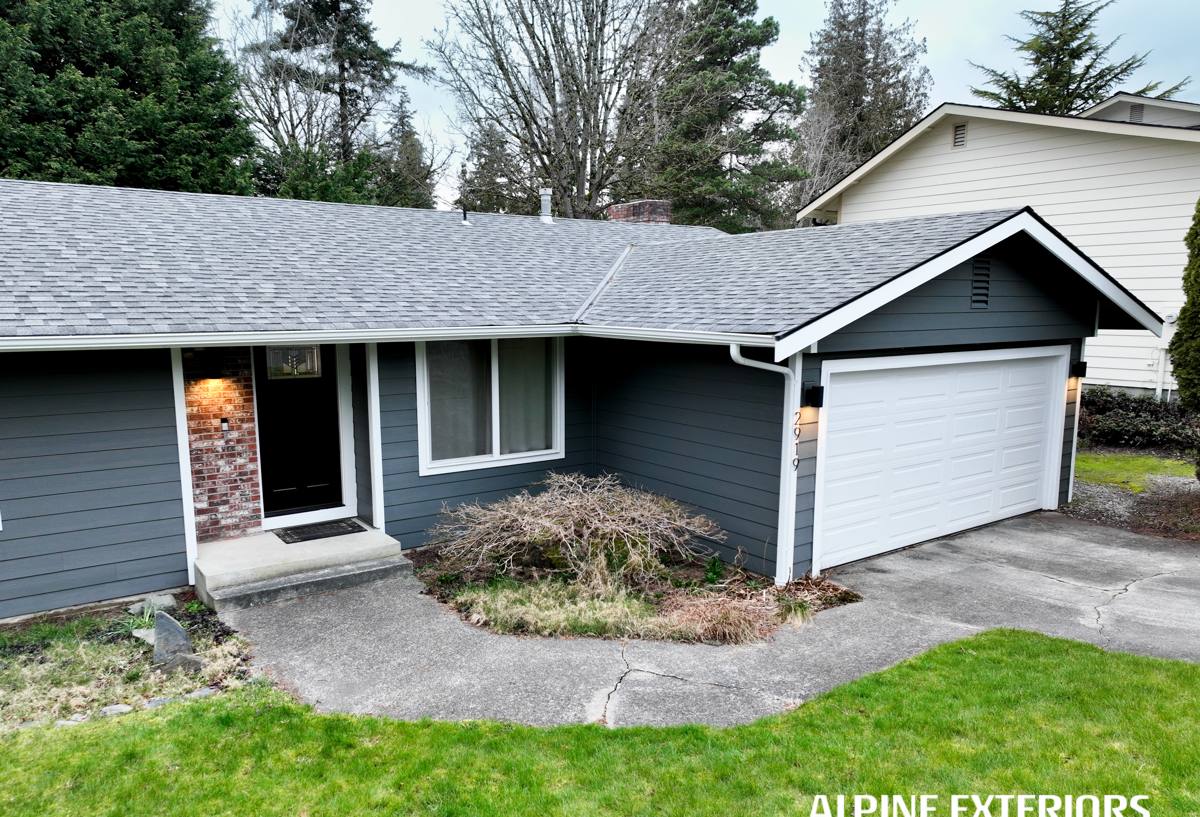
What "Correctly Installed" Actually Means
A lot of the siding problems we're called out to inspect aren't product failures — they're installation shortcuts. Correct installation isn't just nailing panels to a wall; it's a system, and every layer of that system matters in a climate like Renton's.
The Water Management Layer
Underneath the siding itself, there needs to be a continuous weather-resistive barrier, lapped shingle-style so water sheds outward and down rather than working its way behind the seams. Every window, door, and penetration needs flashing that integrates with that barrier — not just a bead of caulk bridging the gap.
The Drainage Gap
Fiber cement siding performs best with a rainscreen — a small drainage gap between the back of the siding and the weather-resistive barrier — so any moisture that does get past the outer layer has somewhere to go and dry out instead of sitting against the sheathing. In a climate where siding rarely gets a long stretch of dry, sunny days, that gap is often what keeps minor moisture intrusion from turning into a rot problem.
Fastening and Clearances
Fastener placement, siding-to-grade clearance, and gaps at trim and butt joints all follow manufacturer specifications for a reason. Panels fastened too tight, siding installed too close to grade or a deck surface, or joints caulked instead of properly flashed are the kinds of shortcuts that don't show up as problems for a year or two — and then show up all at once.
Why We Install Only James Hardie Fiber Cement
We made a deliberate decision to install one siding system — James Hardie fiber cement — and not offer vinyl, LP SmartSide, or other fiber cement brands. That's not a marketing position; it's a standard we hold ourselves to based on what we've seen hold up in this climate and what hasn't.
Fiber cement is non-combustible, which matters increasingly to insurers and homeowners alike. Hardie's ColorPlus finish is baked on at the factory under controlled conditions, giving it better fade and adhesion performance than most field-applied paint, and it's typically backed by a long-term, transferable limited warranty on both the siding itself and the factory finish. Hardie also engineers specific product formulations, including HZ5, for regions with exactly the kind of damp, moderate climate the Puget Sound area has, rather than a single product used from Arizona to Alaska.
None of that means fiber cement is foolproof — it still has to be installed to spec, with the water management details above, or it will underperform regardless of brand. But installed correctly, it's the product we're most comfortable standing behind on a Renton roofline for decades to come.
The Renton Housing Stock We See Most Often
Older Homes with Original Wood or Panel Siding
A number of homes in and around Renton were built with original wood lap or panel siding that's now decades past its realistic service life. These homes often have minimal or no rainscreen, aging or missing flashing at windows, and years of moss growth that's held moisture against the wall far longer than the original builders ever accounted for. A full tear-off is usually the right call here, since it lets us correct the water management layer instead of just covering up what's underneath.
Newer Construction and Re-Siding Projects
Newer Renton neighborhoods more often have vinyl or older fiber cement that's structurally sound but showing its age cosmetically — fading, chalking, or minor impact damage. These projects sometimes allow for a more straightforward re-side, though we still inspect the sheathing and water barrier underneath before assuming it's in good shape.
Our Installation Process, Step by Step
- Full exterior inspection, including probing for soft spots around windows, doors, and lower wall sections where moisture typically collects first.
- Removal of existing siding down to the sheathing, so we can see the actual condition of the wall rather than guessing.
- Repair or replacement of any damaged sheathing or framing found underneath — this is where problems that have been hidden for years usually surface.
- Installation of a continuous, properly lapped weather-resistive barrier and correct flashing at every window, door, and penetration.
- Installation of a rainscreen drainage gap before the siding goes on.
- Installation of James Hardie panels or lap siding to manufacturer fastening and clearance specifications.
- Trim, caulking at appropriate joints only, and final cleanup.
We walk homeowners through what we find at the sheathing stage before we close anything up, since that's the point where surprises get discovered — and the cheapest point to fix them.
Timing a Project Around the Region's Wet Season
Puget Sound's wet season runs roughly from fall through spring, with the driest, most predictable stretches typically falling in summer. Scheduling a tear-off and re-side during a longer dry window matters more than most homeowners expect — once the old siding is off, the sheathing is exposed, and the fewer days it sits open to weather, the better. A crew that's used to working around this area's weather patterns will sequence a project to limit exposed-wall time, working section by section rather than opening up an entire elevation at once when the forecast is uncertain.
Comparing Your Siding Options
Homeowners researching a re-side project usually come across the same handful of products. Here's how they generally compare on the factors that matter most in a wet, moss-prone climate like Renton's.
| Siding Type | Moisture Behavior | Maintenance | Typical Lifespan |
|---|---|---|---|
| James Hardie Fiber Cement | Does not rot or swell; performs well when rainscreen-installed | Occasional wash; factory finish reduces repainting | Multiple decades with correct install |
| Vinyl | Sheds surface water but can trap moisture behind panels; can warp under heat | Low, but color fades and it can't be repainted well | Moderate, varies with UV exposure |
| LP SmartSide (Engineered Wood) | Wood-based core is vulnerable if the protective finish is compromised | Requires diligent caulk and paint upkeep | Shorter if moisture gets behind the finish |
| Cedar / Primed Wood | Natural material that absorbs and releases moisture; prone to rot in damp climates without upkeep | High — regular refinishing needed | Shorter without consistent maintenance |
This is a general comparison, not a claim that every one of these products fails — plenty perform reasonably well when installed and maintained correctly. It's simply why, weighing moisture behavior against a Puget Sound climate and the maintenance most homeowners realistically keep up with, we standardized on fiber cement.
What Drives the Cost of a Renton Siding Job
- Whether it's a full tear-off (removing old siding and repairing sheathing) versus siding over an already sound wall
- Total square footage and the home's overall shape — more corners, gables, and trim detail take longer per square foot than a simple rectangular footprint
- The condition of the sheathing and framing once the old siding comes off
- Whether the siding style is lap, panel, or a mix, plus any trim or accent work
- Access — homes on sloped lots or with limited room around the structure take more labor time
We give homeowners a real number after we've actually looked at the home, not a phone estimate based on square footage alone — sheathing condition is often the single biggest variable in the whole project.
Signs Your Current Siding May Already Need Replacing
- Soft or spongy spots when you press on the siding, especially near the bottom of walls or under windows
- Visible moss or persistent green staining that doesn't wash off and returns within weeks
- Paint that's peeling or bubbling in a way that suggests moisture pushing out from behind, not just weathering
- Warped, cupped, or separating panels or boards
- Caulk that's cracked or missing at joints and trim, especially on elevations that catch the most wind-driven rain
Why Hiring a Crew That Already Works in Renton Matters
Siding installation isn't only a product and a technique — it's also permitting, code requirements, and knowing how a specific area's homes tend to be built. A crew that regularly works in Renton and the rest of King County already understands local permitting expectations, has a feel for how the area's housing stock was typically framed and sided over the decades, and isn't learning the region's weather patterns on your project. That familiarity shows up in fewer surprises, a smoother permitting process, and a crew that recognizes moisture damage patterns specific to this part of the Seattle area the moment they see them.
If you're noticing moss buildup, soft spots, or aging siding on your Renton home, we're happy to take a look and give you a straightforward, no-pressure assessment of what's actually going on and what it would take to fix it right. Fill out the form below to request a free estimate.