 Seattle
 Storm Damage Roof Repair in Renton: Why This Climate Makes It a Recurring Need
Renton sits at the south end of Lake Washington, in a part of King County where lake-influenced moisture, valley terrain, and Puget Sound storm systems all overlap. That combination means Renton roofs take a heavier and more frequent beating from weather than homeowners moving here from drier climates usually expect. Salt-tinged air moving in off the Sound, driving rain that comes in sideways during winter storms, and a moss season that runs most of the year on shaded roof planes all add up to roofs that are already under stress before a storm even hits — which is exactly why storm damage here often turns into a bigger problem than the storm itself if it isn't found and repaired correctly.
We handle roofing, siding, windows, and decks across Renton and the rest of King County, and storm damage repair is one of the calls we get most consistently through fall and winter. The work isn't just about patching whatever the wind tore loose — it's about finding every point a storm let water in, not just the obvious one, and making sure the fix holds up through the next storm instead of becoming a repeat call next season.
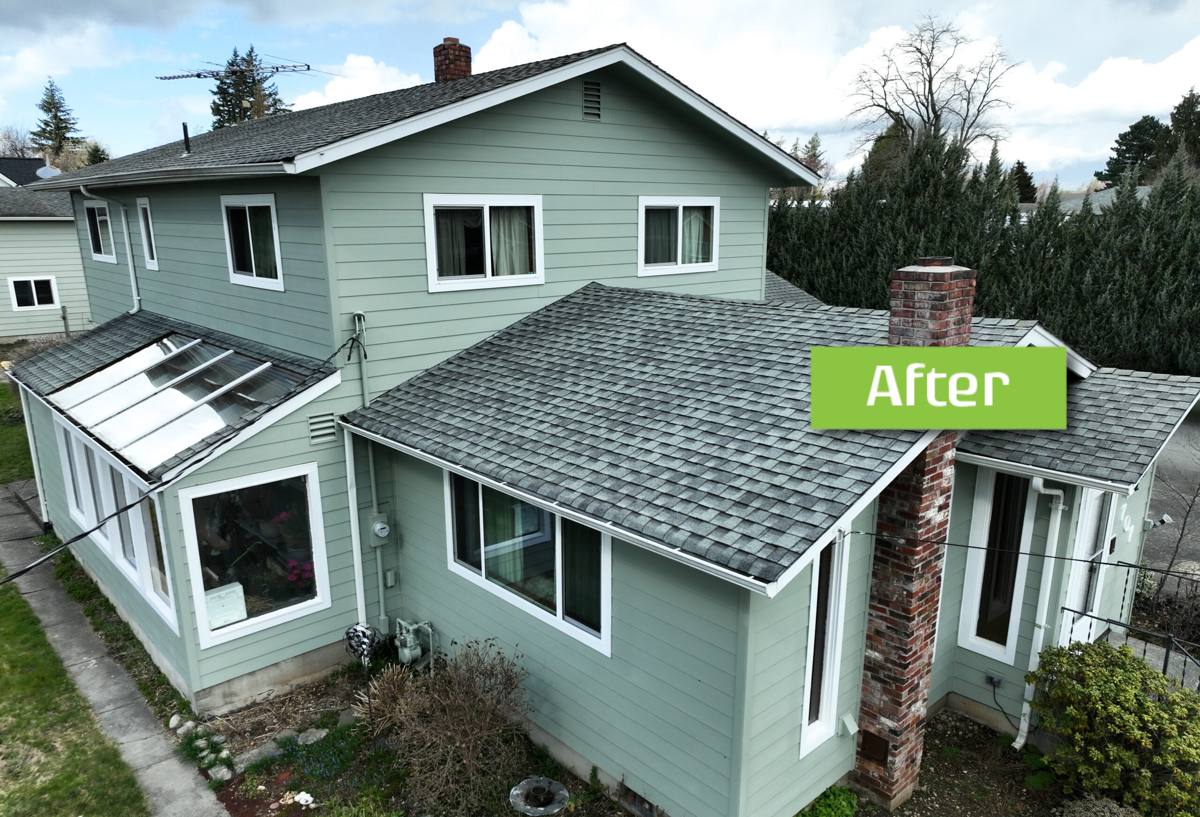
What Storm Damage Actually Looks Like on a Renton Roof
Wind Damage
Sustained wind and gusts during Puget Sound storm systems lift, crease, or tear off shingles, especially along ridge lines, roof edges, and any section where prior installation or aging adhesive has already weakened the seal. Once a shingle lifts, wind gets underneath it, and the damage tends to spread outward from that starting point rather than stay contained to one spot.
Wind-Driven Rain and Hidden Leaks
The rain that does the most damage in a storm rarely falls straight down. It gets pushed sideways into roof valleys, under flashing, and around vent pipes and chimneys — reaching gaps that a calm-weather rain would never find. That's why storm damage often shows up first as an interior leak in a different spot from the actual roof damage, which is exactly why a proper inspection matters more than a quick look from the ground.
Debris Impact
Falling branches and wind-carried debris are common during Renton storms, especially on properties near mature trees. Impact damage can crack shingles, dent metal flashing and gutters, or puncture roofing material outright, and it isn't always visible from the ground the way a missing shingle is.
Moss and Long-Term Wear Setting the Stage
A roof already carrying moss buildup or moisture-softened decking from this region's long wet season is more vulnerable to storm damage than a well-maintained one. Moss holds water against the roofing surface and can lift shingle edges before a storm even arrives, giving wind and rain an easier way in when the next system rolls through.
What a Correct Storm Damage Repair Actually Involves
A rushed storm repair is one of the most common ways a single weather event turns into a recurring leak. Doing it right means treating the call as a full diagnosis, not just a patch over the damage that's easiest to see.
- Full roof inspection, not just the section that looks obviously damaged — wind and wind-driven rain rarely limit themselves to one spot
- Interior check for water staining, damp insulation, or soft decking that points to a leak already in progress
- Temporary weatherproofing if the roof can't be fully repaired the same day, so the home stays protected through the next rain
- Matching repair materials to the existing roof as closely as possible, including shingle profile, color, and underlayment type
- Flashing repair or replacement at every point storm-driven rain could have compromised — valleys, chimneys, vent pipes, and roof-to-wall transitions
- Photo documentation of the damage and the completed repair, useful for insurance and for your own records
Skipping any of these steps is how a modest wind-lifted-shingle repair turns into a much larger interior water damage problem a year later.
Emergency Response, Full Repair, or Replacement
Not every storm call needs the same level of work, and we don't default to recommending more than a roof actually needs.
| Situation | Typical Response | What It Involves |
|---|---|---|
| Isolated wind-lifted or missing shingles, roof otherwise sound | Targeted repair | Replace damaged shingles, inspect and reseal surrounding flashing |
| Active leak right after a storm, full repair can't happen same-day | Emergency tarp | Temporary waterproofing to stop water intrusion until permanent repair |
| Damage spread across multiple slopes or a roof nearing end of life | Full repair or partial re-roof | Broader material replacement plus deck inspection for moisture damage |
| Storm damage layered on pre-existing moss or moisture damage | Replacement | Tear-off and full re-roof, since patch repairs won't hold on compromised decking |
We'll walk you through which category your roof actually falls into and why, rather than assuming the worst case or underselling real damage just to keep a quote low.
Working With Insurance on a Storm Damage Claim
Most storm damage repair work in Renton runs through a homeowner's insurance policy, and how a repair is documented matters almost as much as the repair work itself when it comes to getting a claim handled cleanly. We provide clear photo documentation of the damage before and after repair, along with a written scope describing exactly what storm-caused damage we found and what work addressed it. We're not a public adjuster and don't negotiate your claim for you, but we give your insurer a straightforward, accurate account of the damage — not an inflated scope designed to maximize a payout, which is a pattern some storm-season contractors lean on and one that can create real problems for a homeowner later.
Signs Your Renton Roof Has Storm Damage
- Shingles that are missing, cracked, curled, or visibly out of alignment after a windstorm
- Granules collecting in gutters or at the base of downspouts following heavy wind or rain
- Water staining on interior ceilings or walls, especially near exterior walls or chimneys
- Dented or dislodged gutters, downspouts, or roof vents
- Cracked shingles or punctures near where a branch or debris landed
- Flashing that looks bent, lifted, or separated from the roof surface
- A musty smell or damp insulation in the attic after a storm, even without visible ceiling stains
Any one of these is worth a prompt inspection. Storm damage left through a few more rain events tends to get worse, not better, and a small, originally-repairable issue can turn into deck damage that costs significantly more to fix.
Our Process for Storm Damage Calls
When you call after a storm, we prioritize active water intrusion first — if water is actively getting into the house, that gets a same-day response and temporary weatherproofing if a full repair can't happen immediately. From there, we do a complete inspection rather than stopping at the first damage we find, check the attic and interior for signs the water has already traveled, and give you a written scope explaining exactly what happened and what it takes to fix it correctly. We handle the repair itself with materials matched to your existing roof wherever possible, and we document the work in case you need it for an insurance claim.
Why a Crew That Already Works Renton Matters
A contractor who works storm calls across Renton and King County season after season knows how wind-driven rain and moss actually behave on real roofs here, not just how a shingle performs on a manufacturer's data sheet. That shows up in practical decisions during a storm repair: which flashing details are worth the extra time so a patch doesn't become a repeat call, how to read the difference between a cosmetic wind issue and one that's already let water into the deck, and how to document damage in a way that actually holds up with an insurance adjuster. It also means faster response when storms hit, since you're not waiting on a crew that has to drive in from outside the area or is juggling calls across an unfamiliar region.
Beyond Storm Repair: The Rest of the Exterior
Storm damage rarely stops at the roof. Wind and driving rain that lift shingles can also loosen siding, damage trim, or expose windows and doors to water they weren't built to handle. Because we work roofing, siding, windows, and decks, we can address storm damage across the whole exterior in one visit instead of sending you to find a separate contractor for every trade a bad storm touched.
If your Renton home took damage in a recent storm, or you just want a professional look at a roof before the next one hits, we're glad to come take a look. Reach out using the form below for a free, no-pressure estimate — no upsell script, just an honest read on what your roof actually needs.