 Seattle
 Roof Repair Built for Rainier Valley's Weather
Rainier Valley sits far enough from the Sound that homeowners sometimes assume salt air isn't a factor — it still is, carried on wind off Puget Sound and Lake Washington, and it shows up as premature rusting on nails, flashing, and vent boots long before the shingles themselves give out. Add Seattle's driving rain — the kind that comes in sideways during a windstorm instead of falling straight down — and you get water finding its way under laps and around penetrations that would stay dry in a calmer climate. Then there's moss season, which in King County isn't really a season at all. It's most of the year. Shaded, north-facing roof planes under mature trees barely get a dry stretch long enough to slow moss growth, and once it takes hold it holds moisture against the roofing material around the clock.
None of that means a roof needs to be replaced every few years. It means repairs have to account for the actual failure patterns this climate produces, not generic wear. That's the difference between a repair that lasts and one that's patched over a problem that comes back with the next atmospheric river.
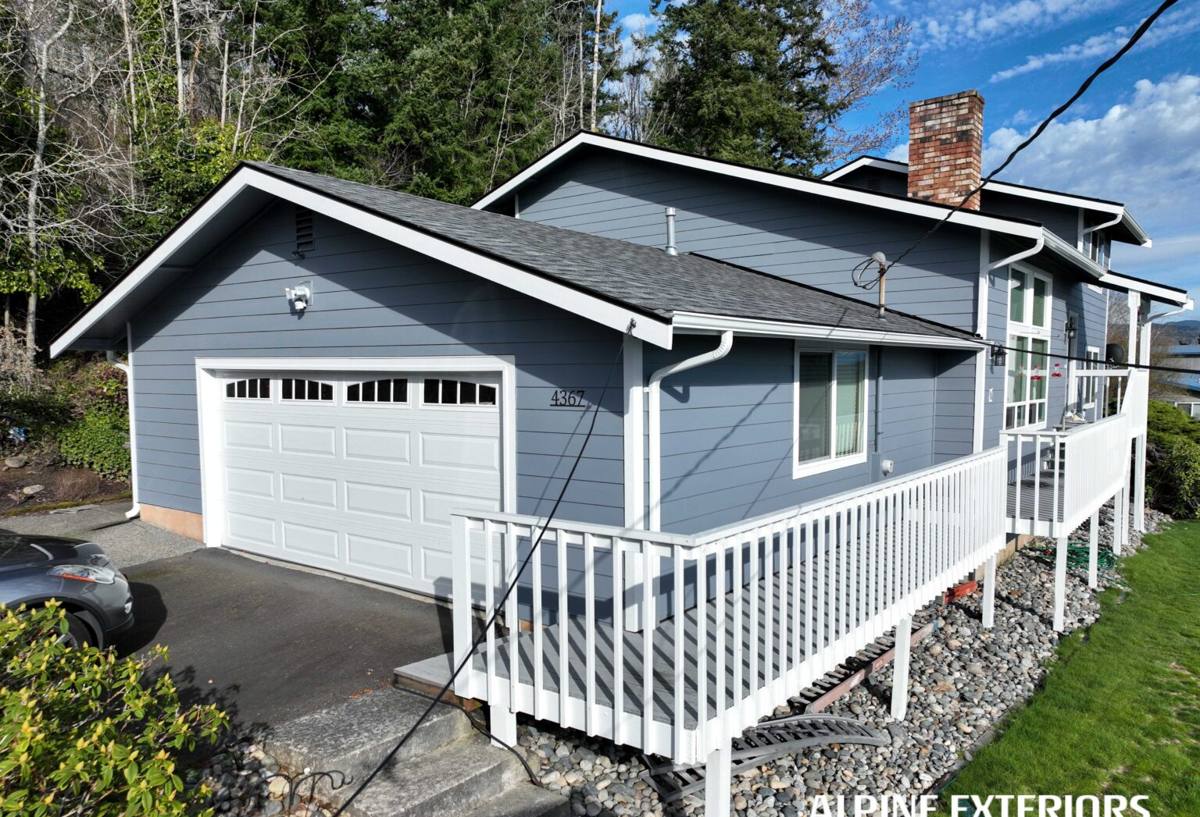
Signs a Repair — Not a Full Replacement — Is the Right Call
Most roofs don't fail all at once. They fail in the same handful of spots, over and over, while the rest of the roof still has years left in it. Watch for these before they turn into interior damage:
- A stain on a ceiling or in the attic that only appears after heavy wind-driven rain, not after ordinary rainfall
- Granules collecting in gutters or at downspout outlets — a sign of shingle wear, especially on south- and west-facing slopes that get the most sun and thermal cycling
- Visible moss or dark streaking concentrated on shaded slopes while sunnier slopes look fine
- Lifted, cracked, or missing shingles around a chimney, skylight, or roof-to-wall junction
- Rusted or visibly deteriorated flashing at valleys, vents, or where a lower roof meets a taller wall
- Soft or spongy decking felt underfoot near a known leak point
If those problems are isolated to one or two areas and the underlying roof deck and majority of the field shingles are sound, a targeted repair is the honest recommendation — not a full tear-off. We'll tell you plainly if we think you're past that point, but we don't default to "replace" when "repair" solves the actual problem.
The Problems We See Most in This Part of Seattle
Moss and Organic Growth
Moss doesn't just look bad — it lifts shingle edges as it grows, holds water against the roofing surface, and accelerates granule loss underneath it. On shaded or heavily treed lots, which are common through this part of King County, moss can return within a year or two of removal if the roof isn't treated and the surrounding tree canopy isn't managed. A one-time scrape without follow-up prevention is a short-term fix.
Flashing and Penetration Failures
Flashing around chimneys, vent pipes, and skylights takes the brunt of thermal expansion and contraction through Seattle's wet-then-dry cycling. Once the sealant or metal starts to fail, water tracks along the flashing edge rather than dripping straight down, which is why leaks often show up several feet from the actual failure point — a common source of confusion when a homeowner tries to pinpoint a leak from inside the attic alone.
Valley Wear
Roof valleys concentrate runoff from two slopes into one channel, so they see far more water volume than the open field of the roof. In driving rain, a valley with worn or improperly lapped material is one of the fastest paths for water to reach the decking.
Older Roofing Systems
Rainier Valley's housing stock spans decades, and older homes sometimes carry roofing systems — old cedar shake, older low-slope built-up sections over additions — installed before current moisture-management practices were standard. Repairing these correctly means understanding how the original system was built, not just patching over it with modern materials that don't move or breathe the same way.
What a Correct Roof Repair Actually Involves
A repair that holds up isn't just replacing what's visibly broken. It starts with figuring out why that spot failed in the first place — otherwise you're paying to fix the same leak again in two years. Our approach on every repair call:
- Diagnose from the source, not the symptom. We trace water stains and soft spots back to their actual entry point, which is often upslope or to the side of where the damage shows.
- Check the decking, not just the surface layer. If plywood or sheathing underneath has softened from sustained moisture, patching the shingles over it won't hold.
- Match materials appropriately. Shingle color and profile drift over the years as manufacturers update product lines. We aim for the closest reasonable match and are upfront when an exact match isn't possible.
- Rebuild flashing details properly, not just re-caulk them. Sealant is a backup, not the primary defense, at any valley, wall junction, or penetration.
- Confirm ventilation isn't part of the problem. Poor attic airflow causes condensation that mimics a roof leak — worth ruling out before we call a repair "done."
Repair vs. Replace: How We Help You Decide
| Factor | Leans Toward Repair | Leans Toward Replacement |
|---|---|---|
| Roof age | Under 15-20 years, or a well-maintained older system | At or beyond manufacturer's expected service life |
| Extent of damage | Isolated to one or two areas | Widespread granule loss, curling, or leaks in multiple spots |
| Decking condition | Solid, no soft spots beyond the immediate repair area | Soft or rotted decking across large sections |
| Moss/algae pattern | Localized to shaded slopes, manageable with treatment | Widespread growth with visible material degradation underneath |
| Frequency of past repairs | First or second repair call on this roof | Recurring repairs to the same areas over recent years |
We walk every roof with this kind of factor-by-factor honesty. If a repair is genuinely the right call, that's what we'll quote — and if the numbers stop making sense compared to replacement, we'll say that too, with our reasoning laid out.
Our Repair Process, Start to Finish
We keep the process straightforward and communicate at each step so there are no surprises on the invoice:
- Roof and attic inspection — we look at both sides of the deck when accessible, not just the exterior surface
- Written scope and estimate — what we found, what we recommend, and why, before any work starts
- Repair work — decking replacement where needed, matched shingle or roofing material installation, rebuilt flashing, and moss treatment if applicable
- Cleanup — old material, nails, and debris removed from the property, including a magnetic sweep of the ground
- Walkthrough — we show you what was done and what to watch for going forward
Materials: Matching and Moisture Management
For composition shingle roofs, which make up most residential roofing in this part of Seattle, we source materials that match the existing roof's weight class and profile as closely as the market allows, since mismatched shingles are one of the most common cosmetic complaints after a repair done elsewhere. For flashing, we use metal — not just sealant — at every transition point, because sealant alone degrades faster under UV and thermal cycling than a properly formed and lapped metal flashing detail. On moss-prone slopes, we can apply a moss treatment as part of the repair and talk through longer-term prevention, including keeping gutters clear and, where practical, trimming back overhanging branches that keep a slope shaded and damp.
Why a Crew That Already Works Rainier Valley Matters
Roofing problems here follow patterns tied to this specific climate and building stock — moss cycles, valley wear from driving rain, flashing fatigue from the wet-dry swings typical of King County weather. A crew that works this area regularly has already seen how those patterns play out on roofs like yours, which means less time spent diagnosing and a repair that's built around how water actually moves on a Seattle roof in this kind of weather, not a generic checklist. It also means we're a short drive away if a repair needs a follow-up check after the next big storm — something worth asking about with any contractor before you hire them.
A Homeowner's Between-Visits Checklist
A repair holds up longer with a little seasonal attention on your end. A few things worth checking yourself, or asking us about at your next visit:
- Clear gutters and downspouts before the fall rains pick up — clogged gutters back water up under the roof edge
- Look for moss starting on shaded slopes each spring, before it spreads
- Check the attic after a hard windstorm for any new staining or damp insulation
- Keep tree branches trimmed back from roof surfaces where practical
- Have flashing and valleys checked every few years even if there's no visible leak — small gaps are cheaper to fix before they become interior damage
If you're seeing any of the warning signs above, or just want an honest read on where your roof stands, we're glad to come take a look. Fill out the form below for a free, no-pressure estimate — we'll walk the roof, tell you what we actually find, and give you a straight recommendation.