 Seattle
 Building New in Shoreline? Your Windows Are Only as Good as the Install
Shoreline sits right along Puget Sound, in King County, which means new-construction homes here take on a specific mix of weather that inland builds don't deal with as much: salt-laden air off the water, wind-driven rain that hits walls sideways instead of falling straight down, and a long, damp moss season that keeps exterior surfaces wet for months at a time. If you're framing a new home or an addition in Shoreline, the window package you choose and how it's installed will set the tone for how that building performs for the next 20-30 years.
New-construction window work is different from a replacement job in an existing home. You're not working around an old frame — you're building the water-management system into the wall from scratch, which is both an opportunity and a responsibility. Get it right and the wall assembly will shed water for decades with almost no maintenance. Get it wrong and you're looking at hidden rot, mold, and expensive tear-outs a few years down the road, often well after the builder has moved on to the next project.
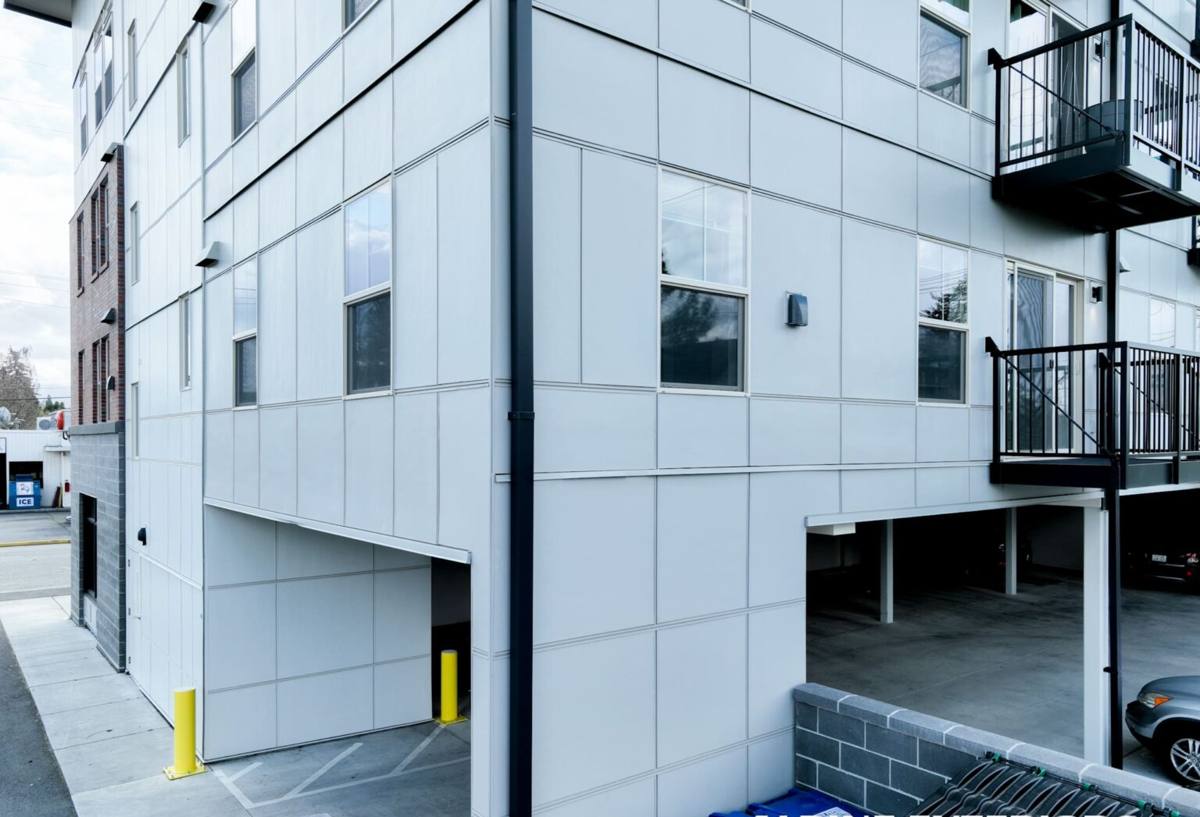
What Shoreline's Climate Actually Demands From a Window Install
Salt Air and Slow Corrosion
Homes closer to the water deal with airborne salt that settles on hardware, fasteners, and metal flashing. Over time, salt exposure accelerates corrosion on lower-grade fasteners and cheap flashing metals. It's not usually dramatic — it's slow, and it shows up as streaking, pitted hardware, or a flashing detail that fails quietly behind the siding where nobody sees it until there's a stain on the drywall.
Wind-Driven Rain
Puget Sound storms don't just drop rain straight down — wind pushes it sideways and up under laps, trim, and window flanges. A window that would perform fine in a calmer climate can leak here if the flashing sequence isn't layered correctly to shed water down and out, not just caulked and hoped for. This is the single biggest factor we design around on new builds in this area.
Moss and Prolonged Dampness
Shoreline's long wet season means exterior surfaces — sills, trim, and the tops of window openings — stay damp for extended stretches, which is exactly the condition moss and algae need to take hold. Once organic growth gets established on a sill or trim board, it holds moisture against the material and shortens its life. The fix isn't a special product; it's making sure water has a clear, fast path off the window and away from the wall instead of pooling or sheeting slowly.
New-Construction Windows vs. Replacement Windows — Why the Distinction Matters
These are genuinely different products and different installation methods, and mixing them up on a new build is one of the more expensive mistakes we see.
| Factor | New-Construction Window | Replacement (Pocket) Window |
|---|---|---|
| Installed into | Open stud framing, before siding goes on | Existing window frame, from inside an existing wall |
| Water management | Nail fin integrates with the house wrap and flashing as one continuous system | Relies on the existing frame and sealant; no fin to integrate with the wall |
| Best use case | New homes, additions, full wall rebuilds | Swapping out old windows without disturbing siding or trim |
| Long-term risk if misapplied | Low, when flashed correctly to sequence | Hidden leaks if used where a full wall assembly is expected |
On a Shoreline new build, you want a true new-construction window with a nailing fin, installed as part of a full flashing sequence — not a pocket-style window shortcut, even if it's cheaper up front. The fin is what lets the window become part of the wall's drainage plane instead of just sitting in a hole.
What a Correct Installation Actually Involves
Flashing and Water-Shedding Sequence
Every layer at the window opening has to overlap the one below it, shingle-style, so water is always directed down and out — never trapped behind a layer above it. That means the housewrap, sill pan, side flashing, window fin, and head flashing all go on in a specific order. Skipping a layer or reversing the sequence is the single most common cause of hidden window leaks in new construction, and it's invisible once the siding goes on.
Sill Pans and a Clear Weep Path
The sill is the low point of the opening, and it needs a sloped, sealed pan that carries any water that does get past the window back outside the wall — not down into the framing. In a climate that sees as much sustained rain as this one, a sill pan isn't optional extra credit; it's the backstop that protects the wall if any other detail is imperfect.
Fasteners and Sealants Rated for Marine Exposure
Given the salt air near Puget Sound, we use fasteners and sealants rated for coastal or marine exposure rather than standard-grade hardware. It costs a little more up front and makes a real difference in how the install looks and performs a decade in.
Choosing a Frame Material for a Shoreline New Build
There's no single "best" window material — the right choice depends on your budget, your home's exposure, and how much maintenance you want to take on.
| Frame Material | How It Handles Salt Air & Moisture | Maintenance |
|---|---|---|
| Vinyl | Won't corrode; performs well with good drainage details | Low — occasional cleaning |
| Fiberglass | Very stable in temperature and moisture swings; strong long-term option near the water | Low |
| Aluminum-clad wood | Good exterior protection, but any breach in the cladding exposes wood to moisture and salt | Moderate — cladding seams need periodic checking |
| Bare wood | Attractive but the most vulnerable to prolonged damp exposure and salt-driven decay | High — regular refinishing needed |
For most new-construction projects we work on in Shoreline, vinyl or fiberglass frames offer the best balance of performance and low upkeep given the marine climate. If you want a wood-look interior, clad options can still work — we just make sure the cladding and sill details are installed with zero gaps for water to find.
Our Process for New-Construction Window Projects
- Plan review and product selection. We look at your architectural plans, wall assembly, and exposure (how much wind and rain a given elevation actually takes) and recommend window specs to match.
- Coordination with your builder or GC. New-construction windows have to land in the schedule at the right moment — after the wall is framed and wrapped, before siding starts. We work directly with your framing and siding crews to avoid delays.
- Rough opening verification. Before a single window goes in, we check that every opening is square, plumb, and sized correctly. Small framing errors are cheap to fix now and expensive to fix later.
- Sequenced installation. Sill pan, flashing, window, fin integration, sealant — installed in the correct order, every time, not shortcut for speed.
- Final inspection and documentation. We check every unit for level, plumb, square, and proper operation, and confirm flashing is fully integrated with the house wrap before siding closes the wall up.
Mistakes We See on Other New Builds (and Make Sure to Avoid)
- House wrap taped over the nailing fin instead of properly lapped underneath it, trapping water against the frame
- No sill pan, or a flat sill pan with nowhere for water to drain
- Standard interior-grade sealant used on an exterior joint exposed to wind-driven rain
- Windows installed before the rough opening was checked for square, leading to operational problems later
- Head flashing skipped or installed without a drip edge, letting water track back into the wall above the window
- Mismatched fastener metal against flashing metal, which speeds up corrosion in a salt-air environment
Why It Matters That We Already Work in Shoreline
New-construction window installation done wrong doesn't usually show itself right away — it shows up two, five, or ten years later as a soft spot in the wall or a stain that traces back to a flashing detail nobody checked. A crew that's used to inland conditions or standard replacement work doesn't always think in terms of Shoreline's specific mix of salt exposure, wind direction off the Sound, and a wet season that runs long. We do, because it's the environment we install in every day, and we build our sequencing and material choices around it rather than treating this like any other job site.
We also understand how new-construction scheduling works with local builders and framing crews in King County — showing up at the right point in the build, communicating with your GC, and not holding up siding or inspections because a window detail wasn't finished on time.
Get a Straightforward Estimate
If you're planning a new build or addition in Shoreline and want windows specified and installed to actually hold up against this area's salt air, wind-driven rain, and long wet season, we're happy to take a look at your plans and walk through the options. Use the form below to request a free, no-pressure estimate.