 Seattle
 Siding Installation Built for Wallingford's Housing Stock
Wallingford is one of Seattle's older, more established neighborhoods, with a housing mix that leans heavily on craftsman bungalows and early-20th-century homes alongside newer infill construction. That combination creates a real range of siding conditions on any given block — some homes still carry original wood siding well past its service life, others have vinyl or composite siding from a previous remodel that's starting to show its age, and newer builds may already have fiber cement that just needs proper detailing at trim and penetrations. Whatever the starting point, siding installation in this part of Seattle has to account for a specific set of climate pressures that don't let up for long.
We install James Hardie fiber cement siding exclusively. That's not a marketing angle — it's a standard we've settled on after years of tearing old siding off Seattle-area homes and seeing firsthand which materials hold up to this climate and which ones don't. On a Wallingford project, that standard shapes everything from the moisture barrier underneath the siding to the fasteners we use to hang it.
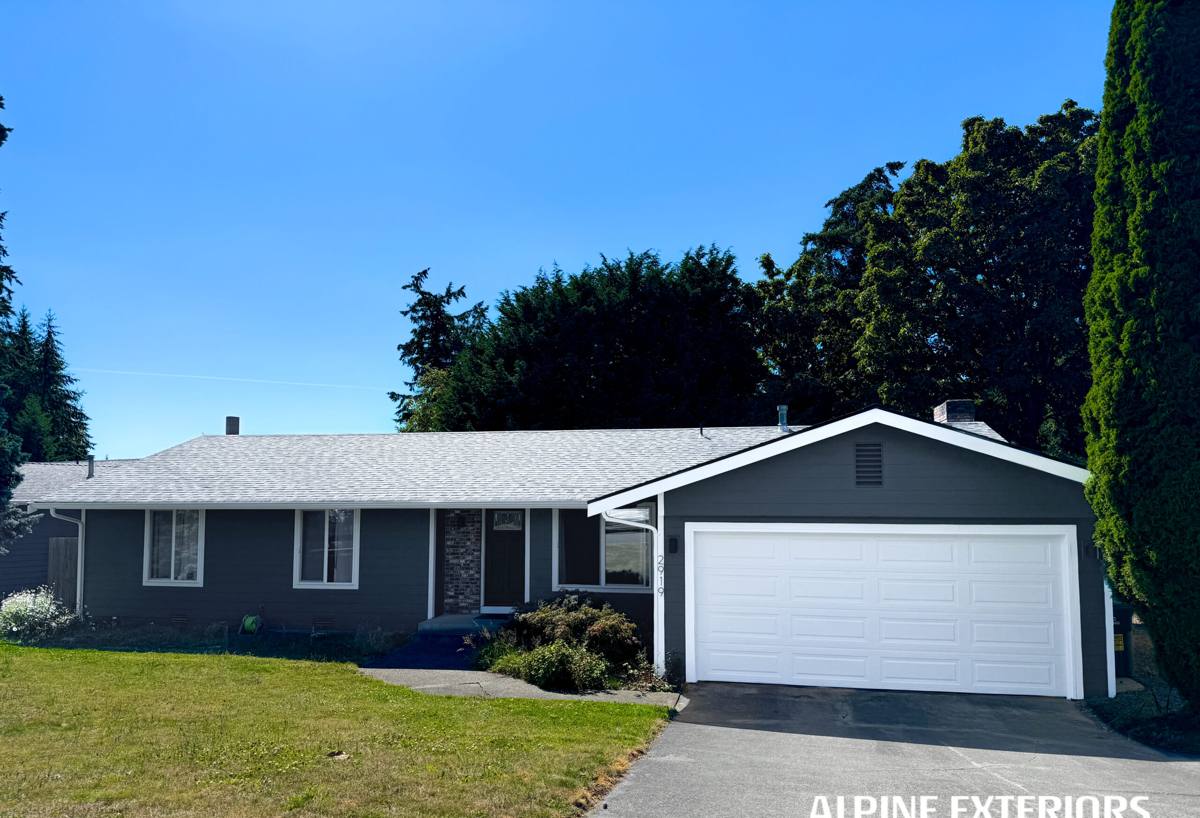
What This Climate Does to Siding
King County's marine climate is the whole reason siding choice matters here more than it does in drier parts of the country. A few things stack up against exterior cladding in Wallingford specifically:
Salt Air
Proximity to Puget Sound and the region's marine air layer means homes here are exposed to airborne salt more than most inland buyers expect. Salt-laden moisture accelerates corrosion on fasteners, flashing, and any metal trim components, and it can degrade lower-quality paint finishes faster than a dry-climate product would ever show.
Driving Rain
Seattle doesn't just get a lot of rain — it gets wind-driven rain that pushes water sideways into seams, laps, and butt joints rather than letting it run straight down. Siding systems that rely on tight seals or caulk alone to keep water out tend to fail here faster than they would in a calmer climate, because wind pressure actively forces moisture into any gap.
Moss and Prolonged Dampness
Wallingford's tree canopy and the region's long, overcast wet season mean siding surfaces can stay damp for extended stretches, especially on north-facing walls and anywhere shaded by mature trees. That's ideal growing conditions for moss and algae, which hold moisture against the siding surface and, over years, can contribute to rot in materials that aren't dimensionally stable or properly finished.
Why We Install James Hardie and Nothing Else
We don't install LP SmartSide, vinyl, Cemplank, Allura, primed spruce, or cedar. Each of those products has a legitimate place in the market, but none of them hold up to Wallingford's combination of salt air, driving rain, and moss exposure as consistently as James Hardie fiber cement does. Here's the reasoning:
- Non-combustible material. Fiber cement doesn't burn, which matters increasingly in the Pacific Northwest as wildfire smoke and ember exposure become a bigger part of regional risk planning.
- Climate-engineered product lines. James Hardie manufactures its HZ5 product line specifically for cold, wet climates like ours — it's formulated and tested for the freeze-thaw and moisture cycles the Puget Sound region actually experiences, not a generic national spec.
- Factory-applied ColorPlus finish. The finish is baked on at the factory under controlled conditions, which produces a more consistent, UV- and moisture-resistant coating than field-applied paint on wood or composite siding.
- Dimensional stability. Fiber cement doesn't swell, warp, or cup the way wood and some composite products can when they take on repeated moisture — a real advantage in a climate where siding rarely gets a long dry stretch to fully release moisture.
- Strong transferable warranty. James Hardie backs its products with a warranty that holds up over decades and can transfer to a new owner, which matters in a neighborhood where homes change hands and buyers ask pointed questions about exterior condition.
We're upfront that Hardie siding costs more upfront than vinyl or engineered wood. The trade-off is fewer moisture problems, less recoating and maintenance, and a material that's genuinely suited to what this climate does to a house year after year.
What a Correct Installation Actually Involves
Fiber cement siding is only as good as the installation behind it. A rushed or under-detailed install can undercut even the best material, and in a wet climate like Seattle's, the mistakes show up as rot, staining, or paint failure within a few years rather than decades. On every Wallingford project we handle, correct installation means:
Weather-Resistive Barrier First
A properly lapped and sealed weather-resistive barrier goes on before any siding, giving the wall assembly a secondary drainage plane in case any water does get past the siding itself. This step gets skipped or rushed more often than homeowners realize.
Flashing at Every Penetration
Windows, doors, hose bibs, vents, and any other wall penetration need proper flashing integrated with the weather barrier — not just caulk. Caulk is a maintenance item that eventually fails; flashing is a physical water diversion that doesn't depend on a bead of sealant staying intact for 20 years.
Correct Fastening and Clearances
James Hardie specifies fastener type, spacing, and clearance from grade, decks, and roof lines for a reason — get those wrong and you create entry points for moisture or conditions that trap water against the board. We follow Hardie's installation instructions to the letter, which is also what keeps the manufacturer's warranty intact.
Proper Gapping and Caulking at Seams
Butt joints and trim intersections need the gapping and sealant James Hardie specifies — not a generalized "caulk everything" approach, which can actually trap moisture in the wrong places instead of letting the wall assembly manage it correctly.
Our Process for a Wallingford Siding Project
- On-site assessment. We walk the exterior, check the condition of the existing siding and sheathing, and look specifically at shaded, north-facing, and tree-covered walls where moss and moisture tend to concentrate.
- Scope and product selection. We go over which James Hardie profile and HZ5 color line fits the home, and give a clear, honest estimate range with no pressure to decide on the spot.
- Tear-off and substrate check. Old siding comes off and we inspect the sheathing underneath for rot or damage before anything new goes on — this is where problems from a prior installation usually surface.
- Weather barrier and flashing. We install the weather-resistive barrier and flash every window, door, and penetration before a single piece of siding goes up.
- Siding installation. Panels or planks go up to James Hardie's fastening and clearance specifications, keeping reveals consistent and trim tight.
- Final walkthrough and cleanup. We review the finished work with the homeowner and clear the site of debris and old material.
Comparing Siding Materials in a Seattle Climate
| Material | Moisture Behavior | Maintenance Burden | Typical Lifespan Here |
|---|---|---|---|
| James Hardie Fiber Cement | Dimensionally stable, resists moss and moisture damage when installed correctly | Occasional wash; factory finish reduces repainting needs | Decades, with strong transferable warranty |
| Vinyl | Doesn't absorb water but can warp, crack, or gap at seams under wind-driven rain | Low, but damaged sections are hard to color-match later | Moderate, shorter in harsh UV or impact areas |
| Cedar / Primed Spruce | Absorbs and releases moisture; prone to rot and moss growth without diligent upkeep | High — regular staining, sealing, and moss treatment | Shorter without consistent maintenance |
| LP SmartSide / Composite Wood | Engineered to resist moisture but installation sensitivity affects long-term performance | Moderate; edge sealing and caulking need monitoring | Variable, dependent on install quality |
Why Hiring a Crew That Already Works Wallingford Matters
Siding work in an established Seattle neighborhood like Wallingford comes with details that a crew unfamiliar with the area can miss. Older homes often have sheathing, trim profiles, or wall assemblies that don't match newer construction, and a crew that's used to that gets it right the first time instead of improvising on-site. Local permitting and inspection expectations in Seattle and King County also move faster when a contractor already knows the process instead of learning it project by project. And practically, a crew based in the area can respond quickly if a question comes up after the job is done — something that matters more than people expect once the scaffolding comes down.
Signs Your Wallingford Home May Need New Siding
- Visible moss or algae staining that returns shortly after cleaning
- Soft spots, bubbling, or peeling paint, especially on shaded or north-facing walls
- Warping, cupping, or gaps at seams and butt joints
- Rising energy bills that suggest the wall assembly is no longer keeping moisture and air out
- Visible rot at corners, trim, or anywhere siding meets a window or door
- Siding that's simply reached the end of its expected service life for its material type
If you're seeing one or more of these, it's worth having someone take a real look before the underlying sheathing is affected — catching it early keeps the project smaller and less expensive.
Get a Straight Answer About Your Home
Every Wallingford home carries its own mix of age, sun exposure, and tree cover, and that affects what a siding project actually needs. We're happy to walk your home, point out what we see, and give you a clear, no-pressure estimate for James Hardie siding installation — fill out the form below to get started.