 Seattle
 West Seattle's Climate Puts Real Stress on Siding
West Seattle sits out on a peninsula, with Puget Sound on one side and the Duwamish waterway on the other. That location means more direct exposure to salt-laden air than homes further inland in King County get, plus the wind-driven rain that comes off the water during fall and winter storms. Add in a stretch of gray, damp months where surfaces rarely get a chance to fully dry out, and you have a climate that is genuinely tougher on exterior materials than the regional average.
Salt air accelerates corrosion on fasteners and metal trim, and it slowly breaks down finishes that weren't engineered for coastal exposure. Driving rain doesn't just fall straight down — wind pushes it sideways and up under laps, trim, and penetrations, which is exactly where poor installation work shows up first. And moss season here isn't a two-week event; it's a long stretch where north-facing and shaded walls stay damp enough for moss and algae to take hold if the siding system can't shed water and dry out between rains.
None of this means siding fails quickly in West Seattle. It means the margin for error — in the product itself and in how it's installed — is smaller here than it would be in a drier climate. A siding job that's "good enough" somewhere else can show real problems on a West Seattle home within a few years.
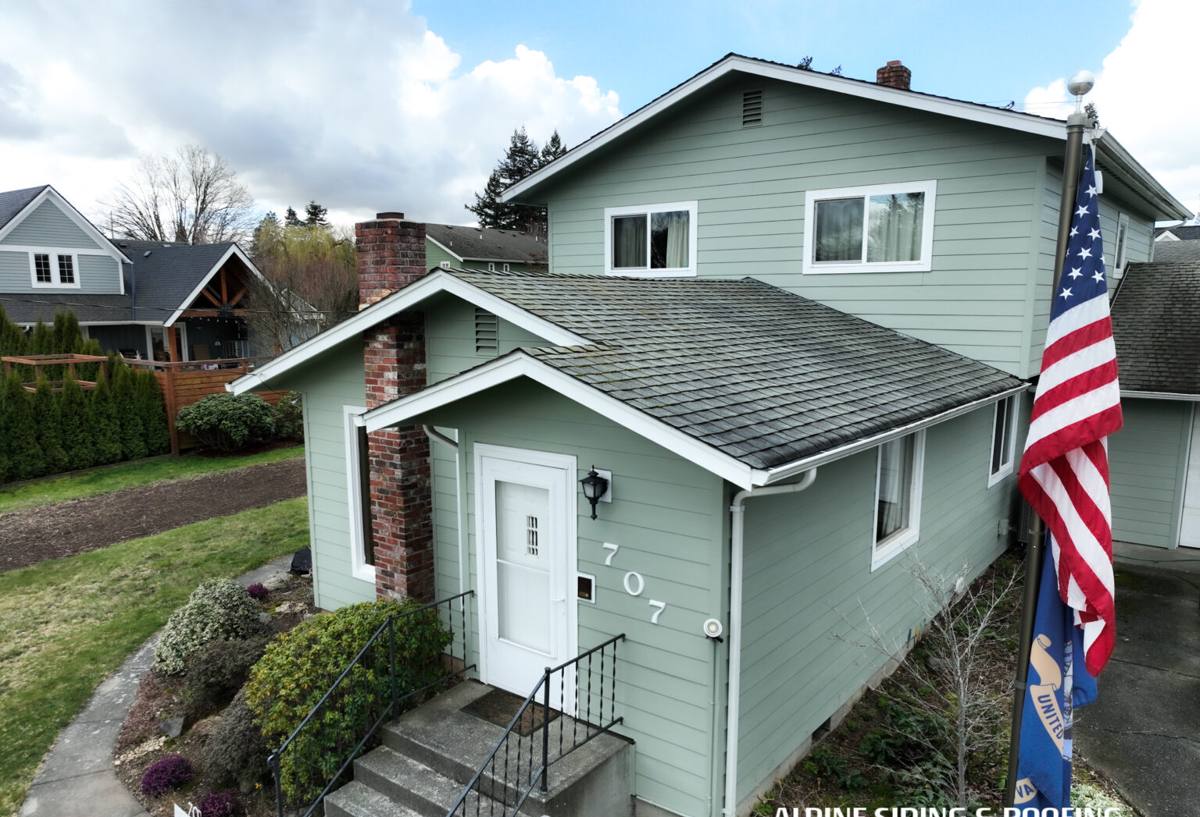
What a Correct Installation Actually Involves
Siding is a system, not a single product nailed to the wall. On a West Seattle home, we treat every layer as part of keeping water out and letting the wall assembly dry.
The Weather-Resistive Barrier Comes First
Before any siding goes up, the underlying water-resistive barrier and flashing details get evaluated and, where needed, corrected. Windows, doors, and every penetration through the wall need proper flashing so water is directed out and down, not into the sheathing. This step is invisible once the job is done, but it's the difference between siding that performs for decades and siding that hides rot behind it.
Clearances and Drainage
Fiber cement siding needs proper clearance from grade, roof lines, decks, and horizontal surfaces so water isn't wicking up into the bottom edge of the boards. In a climate with as much sustained rain as West Seattle sees, we're deliberate about these clearances and about maintaining a drainage plane behind the siding so any moisture that does get past the cladding has somewhere to go.
Fastening and Fitment
Fastener pattern, spacing, and depth all affect how well siding holds up to wind-driven rain and long-term movement. Overdriven or underdriven nails, or fasteners in the wrong location on the board, create entry points for water years down the line — the kind of thing that doesn't show up on day one but does eventually.
Caulking and Sealant, Used Correctly
Sealant has a real but limited job: sealing specific joints, not compensating for missing flashing or gaps in the water-resistive barrier. We use it where the manufacturer specifies it and don't rely on it to do the job that proper flashing and lapping should be doing.
How Our Process Works on a West Seattle Home
- Walkthrough and assessment — we look at the existing siding (or bare wall), trim, flashing, and any problem areas like north-facing walls or spots showing moss or staining.
- Scope and estimate — a clear breakdown of what's being replaced, what siding line and profile fits the home, and what the work involves.
- Prep and tear-off — removal of old siding where applicable, inspection of the sheathing underneath, and repair of any damaged wood before anything new goes on.
- Weather barrier and flashing correction — this is where a rushed job cuts corners and where we don't.
- Installation to manufacturer spec — proper clearances, fastening, and lapping for the specific James Hardie product being used.
- Trim, caulking, and final detailing — the finish work that gives the home a clean line and closes out any remaining joints.
- Final walkthrough — going over the finished job with the homeowner before we call it done.
Why We Only Install James Hardie Fiber Cement
We made a decision to standardize on James Hardie siding across every job we do, including here in West Seattle, and we don't install vinyl, LP SmartSide, Cemplank, Allura, primed spruce, or cedar. That's not a marketing position — it's based on how these products actually perform against Pacific Northwest weather over the long haul.
Vinyl siding can warp, fade, and become brittle with age, and it's not a great match for a climate with this much sustained moisture and temperature swing between seasons. Wood products like cedar and primed spruce look great initially but demand ongoing maintenance — repainting, resealing, checking for rot — that most homeowners underestimate, and moss-prone conditions like West Seattle's make that maintenance burden worse. LP SmartSide and other engineered wood or alternative fiber cement products each have their own trade-offs in moisture sensitivity, finish durability, or long-term warranty structure that we've decided aren't the right fit for what we want to put our name behind.
James Hardie fiber cement is non-combustible, holds its factory-applied ColorPlus finish far longer than field-painted materials, and Hardie engineers specific product lines (their HZ5 formulation, for instance) for wetter, harsher climates like ours. It resists moisture-driven swelling and doesn't feed moss and mildew the way wood-based products can. Backed by a strong transferable warranty and installed to spec, it's simply the product we trust to perform on a West Seattle home for decades, not years.
Signs a West Seattle Home Needs New Siding
- Soft or spongy spots when you press on the siding, especially near the bottom edges or window sills
- Persistent moss or algae growth that comes back quickly after cleaning, particularly on north or shaded walls
- Visible warping, buckling, or gaps between boards
- Paint that's peeling, bubbling, or failing faster than expected
- Rising utility bills that suggest the wall assembly isn't insulating or sealing the way it should
- Visible rot or staining around window and door trim
- Siding that's original to a home built more than 20-25 years ago, especially wood or older vinyl
Cost Factors for a West Seattle Siding Project
Every home is different, but these are the main factors that shape the scope and cost of a siding installation in this area.
| Factor | Why It Matters Here |
|---|---|
| Home size and wall complexity | More linear footage, corners, and cutouts around windows/doors means more labor and material |
| Condition of existing sheathing | West Seattle's rain exposure means tear-off sometimes reveals moisture damage that needs repair before new siding goes on |
| Siding profile and product line | Lap width, texture (smooth vs. cedar-style), and Hardie product line chosen affect material cost |
| Trim and detail work | Corner boards, window trim, and fascia detailing add labor time |
| Access and site conditions | Slope, landscaping, and proximity to neighboring structures common in West Seattle's older neighborhoods can affect staging and labor |
| Color and finish | Factory ColorPlus finish adds cost upfront but removes the recurring cost of repainting |
Why a Local Crew Matters
Siding crews that regularly work West Seattle homes get a practical understanding of the specific conditions here — which walls take the worst of the wind-driven rain, how much moss buildup to expect on shaded elevations, and how older King County homes were originally built and flashed. That's the kind of knowledge that only comes from doing the work in this specific area repeatedly, not from a general contractor passing through once.
It also means accountability. A crew based in and around Seattle isn't disappearing after the job wraps — they're the ones you call if a question comes up two years later, and their reputation in the neighborhood depends on the job holding up.
What to Expect After Installation
Correctly installed James Hardie siding is low-maintenance, but "low-maintenance" doesn't mean "no maintenance." A periodic rinse to keep moss and grime from building up, especially on shaded walls, keeps the finish looking its best. Keep an eye on caulking at trim joints over the years, and address any landscaping that's pushing moisture or plant growth up against the siding. Beyond that, the ColorPlus finish and fiber cement construction are built to hold up with minimal upkeep.
Questions to Ask Before Hiring a Siding Contractor
- Are they a certified or experienced James Hardie installer, and can they explain their flashing and water-management approach?
- Do they inspect and address the weather-resistive barrier and sheathing, not just the visible siding?
- Can they show you the specific Hardie product line they'd recommend for your home and why?
- What does their warranty cover, and how does it interact with the manufacturer's warranty?
- Do they have experience specifically with homes in West Seattle's coastal, high-moisture conditions?
If your West Seattle home's siding is showing its age, or you're planning ahead for a replacement, we're happy to take a look and walk you through what we'd recommend — no pressure, no obligation. Request a free estimate using the form below.