 Seattle
 Why Fremont Homes Wear Out Siding Faster Than You'd Expect
Fremont sits close to the Lake Washington Ship Canal, tucked under a heavy tree canopy in many blocks, and squarely inside the same marine weather system that soaks all of King County for much of the year. That combination — moist, salt-tinged air drifting in off Puget Sound, long stretches of driving rain, and shade that keeps siding damp for days after a storm — is exactly the kind of environment that breaks down siding materials that aren't built for it. Add in a moss season that can run from October through May, and you've got a neighborhood where the wrong siding choice, or a poorly executed install, shows problems within a handful of years instead of decades.
We work on siding replacement projects across Seattle, and Fremont's older housing stock — a mix of early-1900s craftsman bungalows, mid-century infill, and newer townhomes built into narrow lots — presents a specific set of siding challenges. Steep-pitched roofs that dump water onto side walls, tight setbacks between houses that limit sun and airflow, and mature trees that drop debris and hold moisture against exterior walls all accelerate wear on whatever is covering the walls.
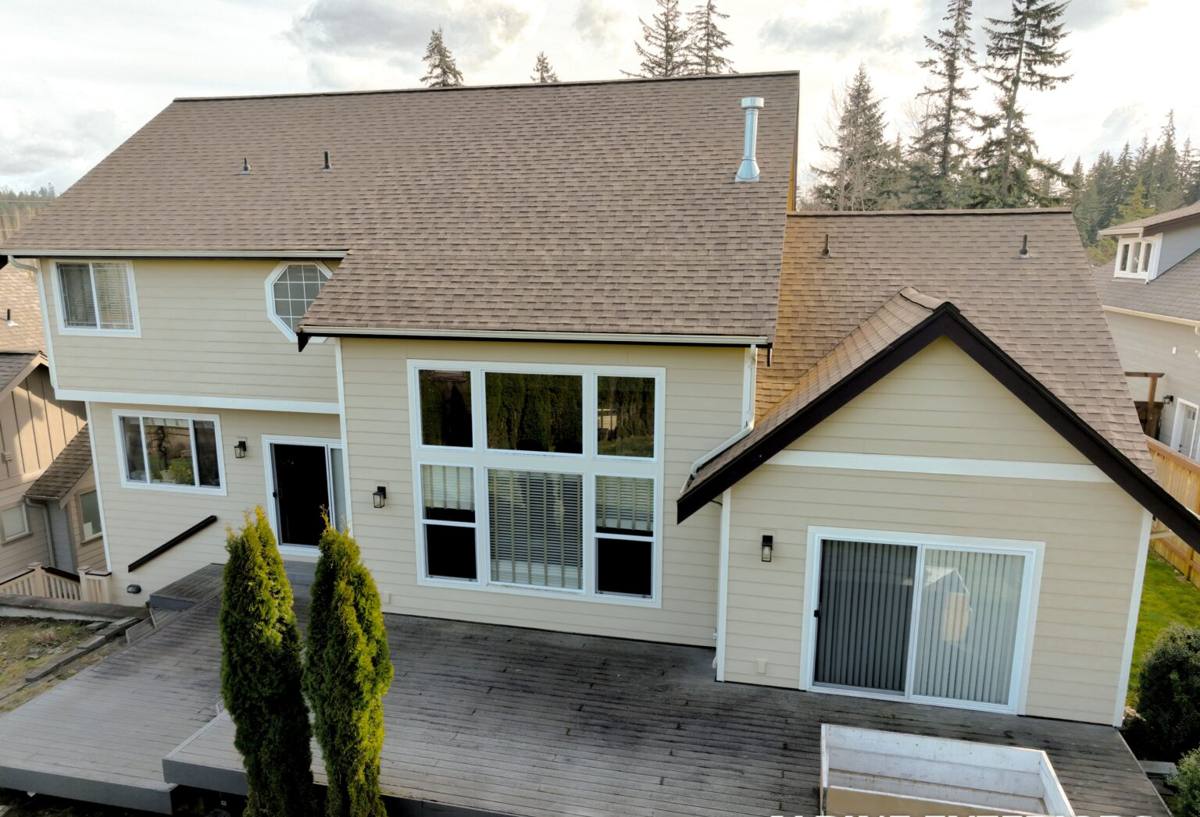
Signs a Fremont Home Needs Siding Replacement
Most homeowners don't think about siding until something looks obviously wrong, but by the time damage is visible from the sidewalk, moisture has often been getting behind the cladding for a while. Watch for:
- Soft or spongy spots when you press on the siding, especially near the bottom courses and around window trim
- Persistent moss, algae, or black streaking that comes back within weeks of cleaning
- Paint that's bubbling, peeling, or failing faster than the repaint schedule you're used to
- Visible gaps, warping, or cupping in wood-based siding panels or lap boards
- Rising energy bills that don't match your usage — often a sign the wall assembly behind the siding is no longer doing its job
- Interior signs like musty smells, staining near exterior walls, or drywall that feels cool and damp to the touch
Any one of these can be a minor fix. Several together usually mean the siding system itself — not just the surface — has reached the end of its useful life.
What a Correct Siding Replacement Actually Involves
Siding replacement is not just swapping old boards for new ones. Done right, it's a full rebuild of the wall's moisture-management system, and that's where a lot of jobs go wrong — either because the old siding is reused too aggressively, or because the details that keep water out get rushed.
Full Tear-Off, Not a Skin-Over
We remove the existing siding down to the sheathing on every job. Covering old, potentially damaged siding with a new layer might look fine at first, but it traps whatever moisture or rot is already there and gives you no way to check the wall's actual condition. A full tear-off lets us inspect sheathing, framing, and any trouble spots before anything new goes up.
Moisture Barrier and Drainage Plane
Behind every new siding installation is a water-resistive barrier and, in most cases, a drainage gap that lets any moisture that does get past the siding drain and dry out instead of sitting against the wall. In a climate like ours, this layer matters as much as the siding itself — it's the difference between a house that sheds an occasional wind-driven rain event and one that slowly rots from the inside.
Flashing and Trim Details
Windows, doors, roof-to-wall intersections, and deck ledgers are where the majority of siding failures actually start. Correct flashing — installed in the right sequence, lapped the right direction, and tied properly into the drainage plane — is what keeps water from working its way behind the cladding at these transition points. This is also the part of the job that's easiest to shortcut and hardest for a homeowner to inspect after the fact.
Why We Install Only James Hardie Fiber Cement
We standardized on James Hardie fiber cement siding for every home we work on, including here in Fremont, and we don't install vinyl, LP SmartSide, or other fiber cement or engineered wood alternatives. That's a deliberate choice, not a sales preference.
Fiber cement handles the Pacific Northwest's wet-dry cycling better than wood-based products because it doesn't swell, rot, or feed fungal growth the way engineered wood siding can once moisture finds a way in. It's also non-combustible, which matters given how close together homes sit on many Fremont lots. James Hardie's ColorPlus factory finish is baked on under controlled conditions rather than field-applied, which gives it better adhesion and fade resistance than a job-site paint job — a real advantage in a neighborhood where tree cover already keeps siding shaded and damp much of the year. Hardie also engineers its product lines by climate zone (HZ5 for regions like ours with freeze-thaw cycling and heavy moisture), so the board itself is formulated for the conditions it's going on, not a one-size-fits-all product.
None of this means other products are without merit — vinyl is inexpensive and low-maintenance in mild climates, and engineered wood siding can look good when it's kept dry and maintained closely. But between the maintenance burden, moisture sensitivity, and shorter real-world lifespan we've seen in this climate, we made the call to build our business around one product system we trust to hold up here, and stand behind that decision with every install.
What Affects the Cost of a Siding Replacement
Every Fremont home is different, and a proper estimate requires a walk-around, but the same handful of factors drive cost on most projects:
| Factor | Why It Matters |
|---|---|
| Home size and stories | More square footage and multi-story walls mean more material, more staging or lift access, and more labor hours |
| Condition of the sheathing underneath | Rot or damage found during tear-off may need repair before new siding and moisture barrier can go on |
| Trim and architectural detail | Craftsman-style homes with window casings, corner boards, and multiple rooflines take more cutting and flashing work than a simple rectangular wall |
| Siding profile chosen | Lap siding, shingle-style panels, and board-and-batten each install differently and carry different material and labor costs |
| Site access | Narrow side yards, close neighboring structures, and limited street parking — common on Fremont's tighter lots — can affect staging and timeline |
How Our Process Works
We start with an on-site assessment of the current siding, trim, and any visible moisture damage, and we're upfront about what we find — including if a full replacement isn't actually necessary yet. If replacement is the right call, we walk you through Hardie's plank, shingle, and panel options and colors so the final look fits the home rather than looking like a generic upgrade.
Once a project starts, our crew handles full tear-off, sheathing inspection and any necessary repairs, installation of the water-resistive barrier and flashing at every penetration, and then the Hardie siding itself, installed to the manufacturer's specifications so the warranty stays intact. We clean up daily and keep the site as contained as the lot allows, which matters on Fremont's tighter properties where a job site can otherwise spill into a shared driveway or a neighbor's yard.
Why a Crew That Already Works in Fremont Matters
Siding work in an established, tree-heavy neighborhood is different from siding work on an open suburban lot. A crew that regularly works in Fremont knows to plan around mature root systems and overhanging branches when staging equipment, understands how tightly some of these lots are built relative to the property line, and has already worked through Seattle's permitting expectations for exterior work. That familiarity shows up in fewer surprises mid-project — not because the work itself is different, but because the planning around it is.
It also means we've seen how these specific homes fail. Craftsman-era houses with original wood trim, homes with additions that were sided at a different time than the original structure, and newer infill builds all have their own weak points, and knowing what to look for during tear-off is the difference between catching a problem early and covering it up.
Questions to Ask Before Hiring a Siding Contractor
Whoever you hire, these questions will tell you a lot about how the job will actually go:
- Will you do a full tear-off, or install over the existing siding?
- What water-resistive barrier and flashing details do you use, and can you explain why?
- Are you a certified installer for the siding product you're recommending?
- What does the manufacturer's warranty require, and does your installation method meet it?
- Can you show me examples of siding profiles and colors before we commit to one?
- How do you handle site access and cleanup on tighter, close-set lots?
A contractor who answers these clearly and specifically — rather than in generalities — is usually one who's done the work enough times to know exactly what matters.
If your Fremont home's siding is showing its age, or you just want an honest read on how much longer it has, we're happy to take a look. Estimates are free, there's no pressure, and you can use the form below to get one scheduled.