 Seattle
 Storm Damage Roofing for Beacon Hill Homes
Beacon Hill sits up on a ridge south of downtown Seattle, and that elevation cuts both ways. The views are real, but so is the wind exposure. Roofs up here take a different kind of beating than roofs down in a sheltered valley a mile away — more direct wind load during winter storms, more wind-driven rain forced sideways under shingles and flashing, and a longer stretch of the year where moss and moisture just sit on the roof deck instead of drying out. If you own a home on Beacon Hill, your roof is dealing with a specific combination of stressors, and a repair that doesn't account for that combination tends to fail again within a season or two.
This page covers what storm damage actually looks like on Beacon Hill roofs, how a correct repair is done, and what our process looks like when you call us after a windstorm or a heavy rain event.
What Storm Damage Actually Looks Like Here
Storm damage on a Seattle-area roof rarely shows up as one dramatic hole. More often it's a handful of smaller failures that compound over a wet winter. On Beacon Hill specifically, we see a recurring pattern tied to the neighborhood's mix of exposure, tree cover, and older housing stock alongside newer construction.
Wind Damage
Because the hill sits higher than surrounding low-lying areas, gusts during a winter storm hit roofs here with more force and less obstruction than in a sheltered pocket of the city. That shows up as lifted or cracked shingle tabs, shingles torn loose at ridge lines and eaves (the two spots wind grabs first), and bent or lifted flashing around chimneys and vents. A shingle doesn't have to blow off completely to cause a problem — once the seal is broken, wind-driven rain gets underneath it on the next storm even if the shingle looks intact from the ground.
Wind-Driven Rain
Standard rain falls straight down and sheds off a roof the way it's designed to. Wind-driven rain during a King County storm comes in at an angle, sometimes nearly sideways, and it finds every gap a normal rain never would — under shingle tabs with broken seals, around step flashing that's pulled slightly away from a wall, through nail holes where sealant has cracked. This is usually how storm damage turns into an interior leak days after the storm has already passed, once water has worked its way through the underlayment.
Moss and Extended Moisture Exposure
Beacon Hill's tree canopy and the region's long damp season mean moss gets a real foothold on north-facing slopes and shaded sections of roof. Moss itself doesn't tear a roof apart, but it holds moisture against the shingle surface for months at a time, which accelerates granule loss and rot at the roof deck underneath. After a storm, moss-covered sections are also where we most often find that existing moisture damage made the roof more vulnerable to wind and impact damage in the first place — it's rarely one or the other, it's usually moss softening things up and then a storm finishing the job.
Debris and Impact Damage
Tree limbs and wind-blown debris are a bigger factor on tree-lined blocks than on more open streets. A direct limb strike can crack shingles, dent flashing, or in worse cases puncture the roof deck. Smaller debris — twigs, branches, grit — can also collect in valleys and around penetrations, holding water and blocking proper drainage during the next rain.
Why Roof Type Matters for the Repair
Beacon Hill has a genuine mix of housing — older homes with original or multiple-times-reroofed composition shingle, some cedar shake on older properties, and newer construction with low-slope or flat roof sections using membrane systems. The right storm repair approach depends heavily on which of these you have.
| Roof Type | Common Storm Vulnerability | Repair Approach |
|---|---|---|
| Composition (asphalt) shingle | Lifted/torn tabs, broken seals, granule loss from wind and moss | Replace damaged shingles in matching courses, reseal or replace flashing, treat underlying moisture |
| Cedar shake | Split or cupped shakes, moss and rot from extended moisture, wind lift on aged shakes | Selective shake replacement, deck inspection for rot, moss treatment appropriate to wood roofing |
| Low-slope / flat membrane | Seam separation, ponding after debris blocks drains, wind uplift at edges and penetrations | Seam repair or patching matched to membrane type, drain and edge inspection, not a shingle-style fix |
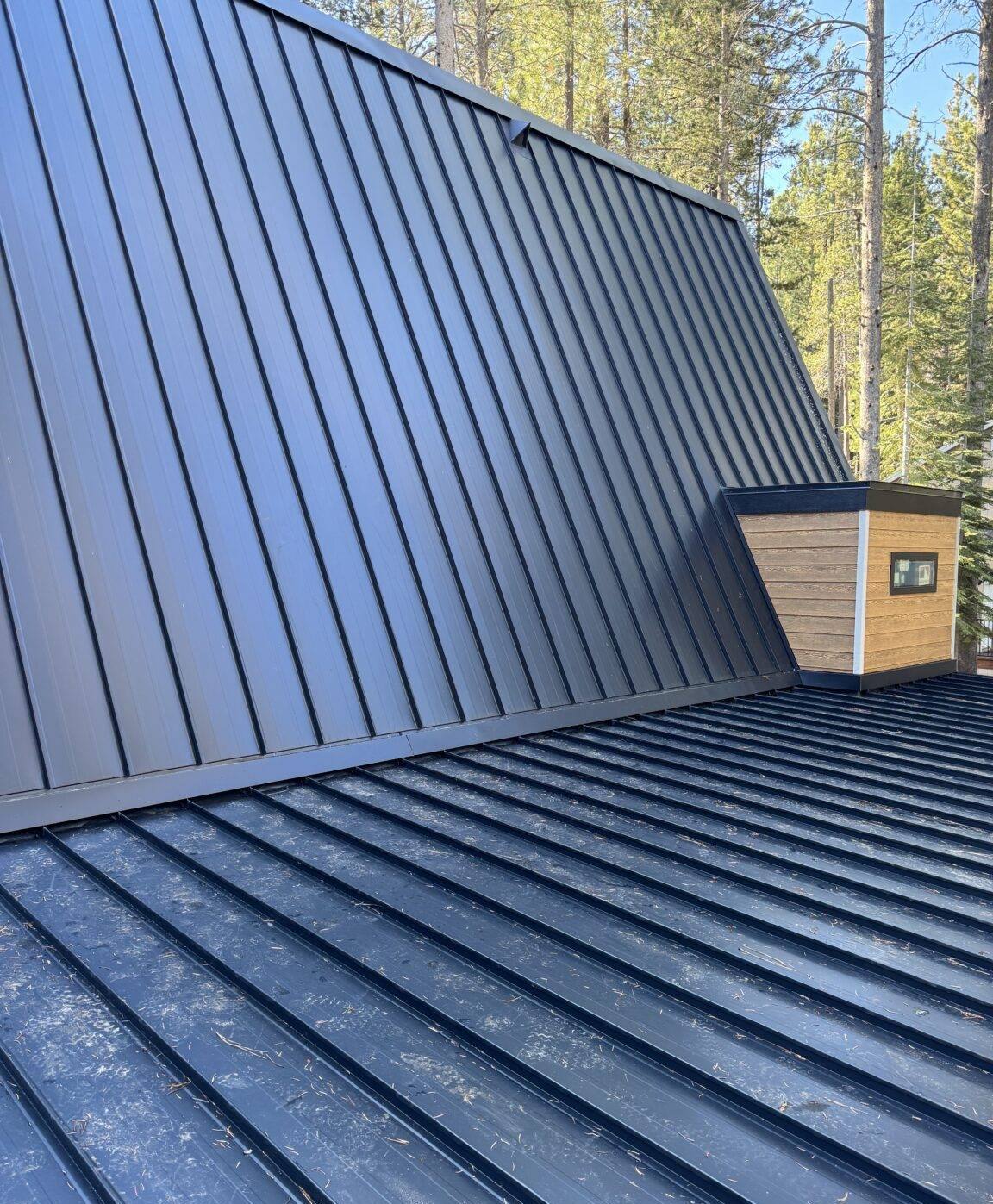
| Metal roofing | Loosened fasteners, lifted panel edges, denting from debris impact | Fastener re-torque or replacement, panel seam inspection, spot panel replacement if needed |
A crew that mainly does one roof type will sometimes apply that same fix regardless of what's actually on the house. We assess the roof you have and repair it the way that material is meant to be repaired.
What a Correct Storm Repair Actually Involves
A proper storm damage repair is not just "replace the shingles that are obviously missing." It's a sequence:
- Full roof inspection, not just the damaged spot. Wind and rain damage is often worse a few feet from where it's visible from the ground. We check the whole roof plane, not just the area you called about.
- Check the roof deck, not just the surface layer. If water got underneath shingles or membrane, the deck itself may be wet or soft. Replacing surface material over a compromised deck is a repair that fails again in the next storm.
- Flashing before shingles. Most leaks trace back to flashing — around chimneys, skylights, vent pipes, and where roof planes meet walls — rather than the field of the roof itself. We inspect and correct flashing as part of any storm repair, not as an afterthought.
- Match materials properly. Patchwork repairs using mismatched shingle color, profile, or thickness create weak points and look wrong. We match existing material where possible and explain honestly when an exact match isn't available.
- Address the moss, not just the storm damage. If moss contributed to the failure, a repair that ignores it just resets the clock on the same problem.
- Verify drainage. Gutters, downspouts, and roof valleys all need to be clear and functioning, or the next heavy rain undoes the repair.
Our Process for Beacon Hill Storm Calls
1. Fast Response and Assessment
After a storm, we prioritize calls where there's an active leak or visible structural concern. We come out, walk the roof (or use a drone/ladder inspection where roof access is limited), and document what we find with photos.
2. Emergency Tarping if Needed
If there's an active breach and full repair can't happen immediately — because of weather, parts availability, or insurance timing — we can install a temporary tarp to stop water intrusion while the permanent repair is scheduled.
3. Written Scope and Honest Options
We give you a clear, written explanation of what's damaged, what needs to be repaired versus what can wait, and a straightforward cost range. We don't pad a storm repair with unrelated upsells, and we tell you plainly if a section of roof is old enough that a repair is a short-term fix rather than a long-term one.
4. The Repair Itself
We complete the work using materials matched to your existing roof, address flashing and deck condition as part of the job, and clean up debris and old material before we leave.
5. Documentation for Insurance
If you're filing a homeowner's insurance claim for storm damage, we provide photos and a written scope of damage that you can submit to your insurer. We're happy to talk with your adjuster if that's useful, but the insurance claim itself is between you and your insurance company — we focus on giving you accurate documentation to support it.
Why It Matters to Hire a Crew That Works Beacon Hill
Storm damage repair isn't uniform across Seattle. A crew that mostly works flatter, more sheltered neighborhoods may underestimate how much wind exposure a Beacon Hill roof actually takes, or may not think to check for the moss-driven moisture damage that's common under this area's tree cover. Local, repeat experience on this specific hill means we already know what to look for the moment we get on the roof — which flashing details tend to fail first up here, which roof sections face the worst of the wind, and how the tree canopy on a given block affects moss buildup and debris.
It also matters for accountability. A local crew is easy to call back if something isn't right, and has a reputation in the neighborhood worth protecting — that's a different incentive than a crew that drove in from out of the area chasing storm work and won't be back.
Preventing Repeat Storm Damage
Once a storm repair is done, a few habits keep the next windstorm or rainy stretch from causing a repeat problem:
- Have moss removed and treated on shaded or north-facing roof sections before it spreads, not after it's already thick
- Trim back tree limbs that overhang or are close enough to strike the roof in high wind
- Clean gutters and downspouts at least twice a year given the tree cover common on Beacon Hill
- Check attic ventilation — trapped moisture from the inside accelerates the same rot that storm moisture causes from the outside
- Get a roof inspection after any storm with sustained high winds, even if you don't see obvious damage from the ground
- Re-seal or replace flashing proactively once it's more than a decade old, since flashing fails before the shingle field usually does
What to Do Right After a Storm
If you suspect storm damage, a few things help protect the roof and your insurance claim:
- Photograph any visible damage from the ground — don't get on the roof yourself in wet or windy conditions
- Check the attic and ceilings for water stains, even faint ones, in the days following a storm
- Note the date and general conditions of the storm for your records
- Call for an inspection promptly rather than waiting — small breaches get worse with every additional rain
- Avoid DIY tarping on a steep or wet roof; it's a common source of fall injuries after storms
If a recent windstorm or heavy rain has you wondering about your roof's condition, we're glad to come take a look. We offer free, no-pressure estimates for Beacon Hill homeowners — just fill out the form below and we'll get in touch to schedule a time.