 Seattle
 Storm Damage Roof Repair in Ravenna
Ravenna sits under a heavy tree canopy in north Seattle, close enough to Puget Sound and Lake Washington that winter windstorms move through with real force. Add in King County's long wet season — rain that can run from October into May with only short breaks — and you get a roof that's under more sustained stress than homes in drier parts of the country ever see. Storm damage here usually isn't one dramatic event. It's often a windstorm that lifts a few shingles, followed by weeks of rain finding that opening before anyone notices a leak inside.
This page covers what storm damage roof repair actually involves for a Ravenna home, how we assess and fix it, and what to expect if you're dealing with wind, falling limbs, or water intrusion after a storm.
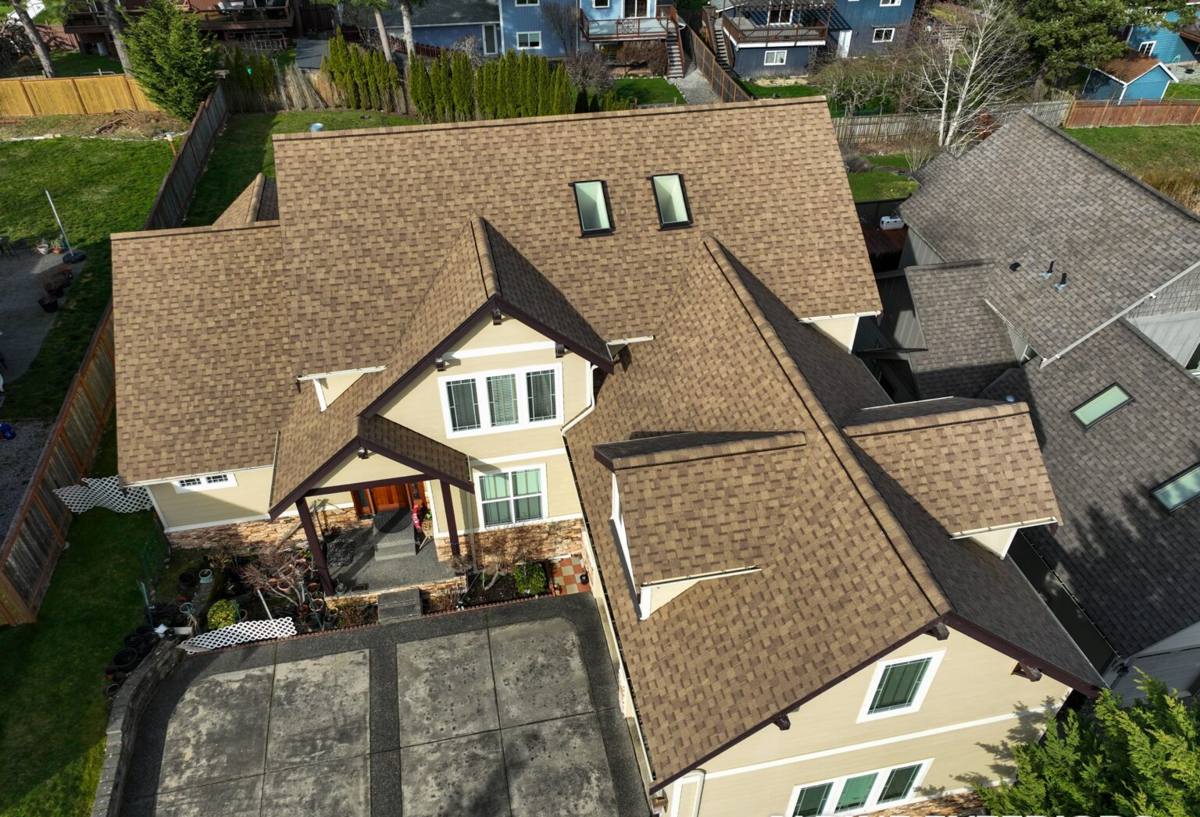
What Storm Damage Looks Like on a Seattle Roof
Wind Damage
Ravenna's tree-lined streets create wind tunnels during storms — gusts funnel between houses and mature trees in ways that don't match the open-exposure wind ratings printed on shingle packaging. The result is often localized damage: a section of shingles creased or lifted along one roof edge or around a chimney, rather than damage spread evenly across the whole roof. Lifted shingles that reseal on their own can still have broken adhesive seals underneath, which means they'll lift again in the next storm even though the roof looks fine from the ground.
Tree Limb and Debris Impact
With as much mature tree cover as this neighborhood has, falling limbs and dropped branches are one of the more common causes of storm repair calls. Impact damage ranges from a few cracked or punctured shingles to, in worse cases, damage to the roof deck itself. Even a limb that doesn't punch through can crack shingles in a way that isn't obvious until a leak shows up weeks later.
Wind-Driven Rain Intrusion
Seattle storms bring rain sideways, not just down. That matters at flashing points — chimneys, vent pipes, valleys, and wall-to-roof transitions — where wind-driven rain can work its way under materials that would keep out a normal vertical downpour. A lot of the "mystery leaks" we get called out for after a storm trace back to a flashing seam that was fine in dry weather but failed under wind pressure.
Moss and Prolonged Moisture
Moss doesn't cause storm damage directly, but it sets a roof up to be more vulnerable when a storm hits. A roof with moss buildup holds moisture against the shingle surface for months at a time, which softens granule adhesion and roofing cement over the years. A roof in that condition is more likely to lose shingles or develop a leak during a windstorm than a roof that's been kept clear.
How We Assess Storm Damage
A proper storm damage assessment isn't a five-minute look from the driveway. We check:
- The full roof surface for lifted, cracked, creased, or missing shingles — not just the side facing the street
- Flashing around chimneys, vent pipes, skylights, and roof-to-wall transitions
- Valleys, where wind-driven water concentrates and debris tends to collect
- Gutters and downspouts for damage or blockage that could redirect water back under the roofline
- The attic or roof deck from underneath, when accessible, for water staining, soft spots, or daylight coming through
- Any exposed nail heads or fasteners backed out by wind uplift
We document what we find with photos before touching anything, which matters if you end up filing an insurance claim.
Emergency Tarping vs. Permanent Repair
Right after a storm, the priority is stopping active water intrusion, not necessarily doing the final repair the same day. Weather, material availability, and sometimes insurance adjuster scheduling all affect the timeline. Here's how the two stages differ:
| Emergency Tarping | Permanent Repair |
|---|---|
| Done within hours to a day of the storm | Scheduled once materials and access are confirmed |
| Stops water from getting into the attic or living space | Restores the roof to its actual watertight, wind-rated condition |
| Uses heavy tarp material anchored to framing, not just the roof surface | Uses matched or compatible roofing materials tied into the existing system |
| Meant to hold for days to a couple of weeks | Meant to last the remaining life of the roof section |
| A temporary measure — not a substitute for the real fix | Includes flashing, underlayment, and decking repair as needed, not just shingles |
We don't consider a job finished after tarping. It buys time; the follow-up repair is the actual fix.
Insurance Claims for Storm Damage
Wind and impact damage from a storm is often covered under a standard homeowner's policy, though every policy is different and we're not the ones who make that determination — your insurer is. What we can do is give you documentation that holds up: photos of the damage before and after repair, a written scope of work, and an honest assessment of what's storm-caused versus what's pre-existing wear. Adjusters can usually tell the difference between a roof that failed from age and one that failed from a specific weather event, and inflating a claim to cover unrelated wear tends to backfire. We'd rather give you an accurate picture than a convenient one.
If you're not sure whether damage is worth filing a claim over, we can walk the roof with you and give you our honest read before you call your insurer.
Repair Materials and Matching
Matching new shingles to an existing roof is rarely perfect, especially if the roof is more than a few years old and has weathered to a slightly different shade than new product off the shelf. We source the closest match available in the same product line when possible, and we're upfront when an exact match isn't realistic — that's a manufacturer availability issue, not something we can engineer around. For underlayment at repair sites, we generally use synthetic underlayment over old-style felt paper; it holds up better to the repeated wetting this climate puts it through and doesn't degrade as fast when exposed during the repair window.
For flashing repairs, we replace rather than patch whenever the damage is at a seam or transition point. A patched flashing seam is a future callback; a properly re-flashed one isn't.
Moss, Drainage, and Preventing the Next Storm's Damage
Because Ravenna's moss season runs long, a storm repair is a good time to address contributing conditions rather than just patch the immediate damage. That usually means clearing moss and debris from valleys and gutters, confirming downspouts are actually draining away from the foundation, and checking that ventilation in the attic isn't trapping moisture that softens the deck from underneath. None of that prevents the next windstorm, but it does mean your roof goes into it in better shape than it was in before.
What to Check Before Hiring a Storm Repair Crew
- Do they carry current Washington contractor licensing and liability insurance, and will they show you proof without hesitation?
- Do they inspect the whole roof, or just the spot you called about?
- Will they document damage with photos before repair, in a form your insurer can use?
- Do they explain what's covered by manufacturer warranty versus workmanship warranty on the repair itself?
- Are they willing to give you a written scope of work before starting, not just a verbal estimate?
- Do they actually work in your neighborhood, or is this a one-off storm-chasing job?
That last point matters more than people expect. After a bad windstorm, crews from outside the area sometimes go door to door offering fast repairs. A crew that works Ravenna and the rest of Seattle regularly has a reputation to protect here and isn't gone the week after the job's done if something needs a follow-up look.
What Storm Repair Typically Costs
Cost depends heavily on the scope and location of the damage. These are broad ranges, not quotes — your actual cost depends on roof pitch, material type, and access.
| Repair Type | Typical Scope | What Drives the Cost |
|---|---|---|
| Emergency tarping | Temporary coverage of an active leak area | Roof size, pitch, and how urgent the timeline is |
| Shingle spot repair | Small area of lifted or missing shingles | Material match availability, roof accessibility |
| Flashing repair | Chimney, vent, or valley flashing replacement | Number of penetrations, extent of surrounding damage |
| Deck repair | Damaged plywood or sheathing under the roofing | Extent of water damage found once shingles are pulled back |
Ready for an Honest Assessment?
If a recent storm has left you with lifted shingles, a leak you can't quite pinpoint, or damage from a fallen limb, we're glad to come take an honest look. We'll tell you what we actually find — what needs repair now, what can wait, and what's just cosmetic — and give you a free, no-pressure estimate using the form below.