 Seattle
 Building a Deck That Actually Holds Up in Wallingford
Wallingford sits in one of Seattle's older, more established neighborhoods, with a mix of craftsman bungalows and updated mid-century homes on lots that see plenty of shade from mature trees. That combination — established tree canopy, a marine climate, and a long wet season — creates specific problems for outdoor structures that a generic deck build doesn't account for. A deck built the same way you'd build one in a dry inland climate will show its age fast here: soft spots in the decking, black streaking on rails and stringers, and hardware that rusts out well before the wood itself fails.
Building correctly for this neighborhood means designing around moisture from day one, not trying to fix it after the fact with a coat of sealant every spring.
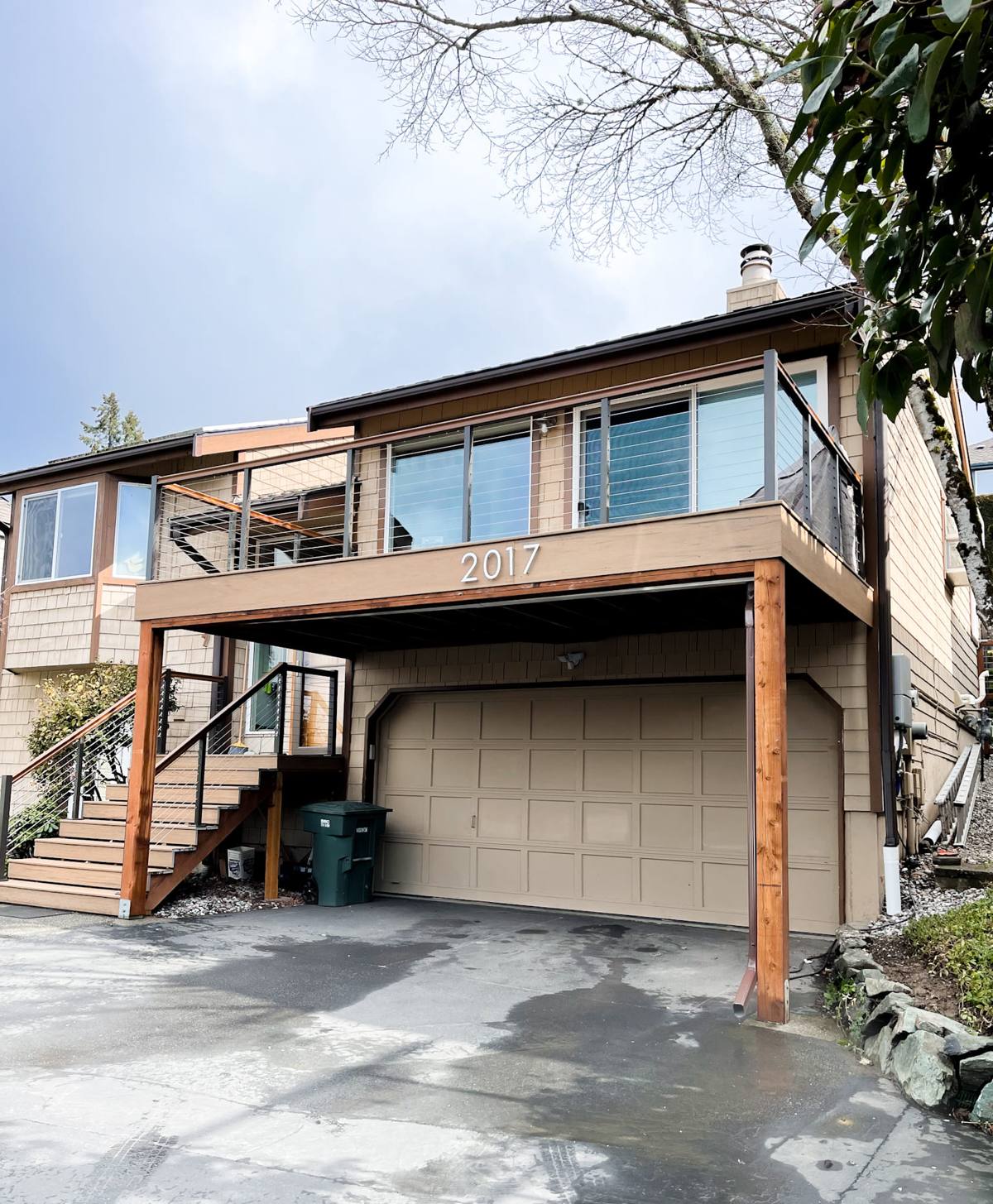
What King County's Climate Does to a Deck
Seattle and King County get a long stretch of the year where surfaces stay damp for days or weeks at a time. Add driving rain that gets pushed sideways under eaves and railings, salt-laden air drifting in off Puget Sound, and shaded yards that never fully dry out, and you get ideal conditions for moss, algae, and slow wood rot to take hold.
The three things that cause the most damage
- Trapped moisture: boards laid without gaps, or framing without airflow underneath, stay wet long after the rain stops
- Moss and algae growth: shaded, damp decking grows a slick green film that also holds moisture against the wood surface
- Corroding hardware: standard fasteners and brackets rust in this climate, staining the deck and weakening structural connections over time
None of these are dramatic failures on their own — they're slow, cumulative problems. That's exactly why they get missed by builders who aren't used to this climate. A deck that looks fine on installation day can be hiding all three of these issues within its first wet season.
What a Correctly Built Deck Involves Here
Framing and footings
Footings need to be sized and set below frost depth and rated for the actual load of the structure, not just eyeballed. In a region with as much groundwater saturation as we get through fall and winter, footing drainage matters as much as footing depth — standing water around a post base is one of the more common causes of premature rot we see in older decks.
Ledger attachment and flashing
Where a deck attaches to the house is the single most important — and most commonly under-built — connection on the whole structure. Proper flashing keeps water from working its way behind the ledger board and into the house's rim joist and sheathing. We treat this connection as a waterproofing detail first and a structural detail second, because a deck that's structurally sound but leaking water into the house framing is a bigger problem than a wobbly rail.
Decking gaps and airflow
Boards need consistent spacing to let water drain through rather than pool on the surface, and the framing below needs enough clearance for air to actually move. Decks built low to the ground or against a shaded wall with poor ventilation are the ones we get called back to soonest.
Fasteners and hardware
We use fasteners and structural connectors rated for outdoor, high-moisture use — not standard hardware that's cheaper up front but corrodes visibly within a couple of seasons. This is one of those details that costs a little more at build time and saves a lot of grief later.
Choosing Materials for a Shaded, Wet Yard
There's no single "best" decking material — it depends on how much sun and shade your specific yard gets, how much upkeep you want to do, and your budget. Here's how the common options actually perform in Wallingford's conditions.
| Material | Moisture & Moss Resistance | Maintenance | Typical Lifespan Here |
|---|---|---|---|
| Pressure-treated lumber | Good if properly sealed and maintained | Annual cleaning and re-sealing recommended | 10–15 years |
| Cedar | Naturally rot- and insect-resistant, but surface still grows moss in shade | Periodic cleaning and oiling to maintain appearance | 15–20 years |
| Composite decking | Very good — doesn't absorb water like wood, though surface film can still grow in deep shade | Occasional washing, no sealing or staining | 25+ years |
| Tropical hardwoods (e.g. ipe) | Excellent natural density and rot resistance | Periodic oiling if you want to keep the original color | 25+ years |
We're honest with clients about trade-offs rather than pushing one product. Composite costs more up front but is the lowest-maintenance option for a shaded, damp yard. Cedar and hardwoods look better to many homeowners but require an actual maintenance commitment — if that upkeep isn't going to happen, we'll say so, because a neglected wood deck in this climate ages fast.
Working With Wallingford's Older Homes and Established Lots
A lot of the housing stock in this part of Seattle predates current building code, which means an existing deck or the structure it attaches to may not meet today's standards for footing depth, ledger attachment, or railing height. When we're replacing or rebuilding a deck on an older home, we don't just match what's there — we bring the new structure up to current code, even where that means more work than a straight swap.
Mature tree cover is common in this neighborhood too, and it's worth planning around rather than fighting. Overhanging branches keep decking wetter for longer and drop debris that clogs gaps between boards and accelerates moss growth. Where it makes sense, we'll flag trimming or clearance recommendations as part of the design, but we don't make landscaping decisions for you — that's your call.
Permits and Seattle/King County Requirements
Most new decks and significant deck rebuilds in Seattle require a permit, with requirements tied to height, size, and structural attachment to the house. Requirements can vary by jurisdiction within King County, so this isn't a one-size-fits-all checklist. We handle the permit process as part of the job — pulling the right permit, building to the plans that were approved, and getting it signed off — so you're not the one chasing down inspections.
Our Process
- Site visit and assessment — we look at sun/shade exposure, drainage, soil, and the condition of anything we're replacing
- Design and material selection — sized and specified to your yard's actual conditions, not a generic template
- Permitting — we prepare and submit what's required for your project and jurisdiction
- Demolition (if replacing an existing deck) — including a check of the ledger and framing behind it for hidden moisture damage
- Framing and footings — set to code depth with proper drainage around each footing
- Decking, railing, and hardware installation — corrosion-resistant fasteners throughout
- Final walkthrough and inspection sign-off
We don't skip steps to shave time off a bid. A deck that's built right the first time costs less over its life than one that needs early repairs.
Keeping a Deck Ahead of Moss and Moisture Long-Term
Even a well-built deck needs some seasonal attention in this climate. A short annual routine goes a long way:
- Sweep debris out of gaps between boards before it decomposes and holds moisture
- Wash down decking and railings at least once a year to clear early moss and algae growth before it takes hold
- Check and re-seal or re-oil wood surfaces on the schedule appropriate to that material
- Look underneath periodically for standing water around footings or posts
- Trim back overhanging branches that keep the deck surface shaded and damp
None of this is complicated, but skipping it is how a well-built deck turns into a problem deck within a few years.
Why Local Experience in This Neighborhood Matters
A crew that's built and repaired decks throughout Wallingford and the surrounding Seattle area already knows which details matter most in this specific climate — how much drainage a footing actually needs here, which fastener grades hold up, and where moss tends to establish first on a shaded lot. That's the difference between a deck that needs attention every year and one that just quietly does its job through King County's wet seasons. We'd rather get the framing and flashing right the first time than come back for a callback that didn't need to happen.
If you're planning a new deck or need to replace one that's showing its age, we're happy to take a look and walk you through what your specific yard needs. Reach out for a free, no-pressure estimate using the form below.