 Seattle
 James Hardie Siding for West Seattle Homes
West Seattle sits out on its own peninsula, bordered by Puget Sound on one side and the Duwamish waterway on the other, connected to the rest of the city by bridge. That geography means a lot of homes here catch weather straight off the water: salt-tinged marine air, wind-driven rain that comes in sideways off the Sound, and a moss and mildew season that runs long even by King County standards. Siding on a West Seattle house works harder than siding on a home tucked further inland, and it shows in how fast the wrong product starts to fail here compared to how it performs in a drier, more sheltered climate.
We install James Hardie fiber cement siding exclusively — not vinyl, not LP SmartSide, not primed spruce or cedar, and not other fiber cement brands like Allura or Cemplank. That's not a marketing position; it's a standard we settled on after years of exterior work in this region, watching which products actually hold up against salt air, sustained moisture, and a moss season that barely takes a break. This page covers what West Seattle's climate specifically does to siding, what correct Hardie installation involves, and how our process works from first look to finished wall.
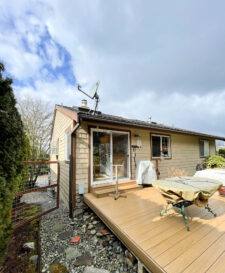
What West Seattle's Climate Does to Siding
Salt Air and Marine Exposure
Homes with direct or partial exposure to Puget Sound take in more salt-laden air than properties further inland, and that air is corrosive to fasteners, trim metal, and lower-grade siding materials over time. It also accelerates the breakdown of coatings and finishes that weren't engineered for coastal exposure. Fiber cement itself doesn't corrode, but the fasteners, flashing, and trim components used alongside it need to be rated for that exposure or they become the weak point in an otherwise sound wall.
Wind-Driven Rain
Storms off the Sound don't fall straight down — wind pushes rain sideways into wall assemblies, especially on west- and south-facing elevations that catch the brunt of it. That matters because wind-driven rain reaches laps, seams, and penetrations that would stay dry in a calmer climate. Siding that isn't installed with the right lap, clearance, and flashing detail will eventually let water behind it, and once water gets behind siding, the sheathing and framing pay the price long before anyone notices a problem from the street.
A Long Moss and Mildew Season
Mild temperatures combined with near-constant fall-through-spring moisture give moss, algae, and mildew an extended growing season across the Puget Sound region, and shaded, north-facing, or tree-covered elevations in West Seattle tend to show it first. Untreated or porous siding materials give organic growth something to hold onto; a dense, factory-finished material with a hard, consistent surface gives it much less to grip. This is one of the more visible ways siding choice shows up over time — it's rarely about a single storm, and almost always about what a material does under sustained, repeated exposure.
Moisture Cycling Without Hard Freezes
Seattle doesn't get the deep freeze-thaw cycles that crack materials in colder climates, but it gets something arguably harder on siding: near-constant damp-to-dry cycling for months at a stretch. Materials that absorb moisture and swell, then dry out and shrink, repeat that cycle enough times over a Puget Sound winter to loosen fasteners, open joints, and eventually warp. Fiber cement is dimensionally stable through that cycling in a way that wood-based and some engineered products are not.
Why We Install Only James Hardie
James Hardie fiber cement is a mix of cement, sand, and cellulose fiber, and that composition is what gives it the properties that matter most in a climate like this one: it doesn't rot, it doesn't provide food for moss or insects the way wood-based products can, and it holds its shape through repeated wet-dry cycling instead of swelling and shrinking. It's also non-combustible, which matters more every year as wildfire smoke seasons stretch further into the Pacific Northwest calendar, even for homes nowhere near an active fire line.
We stopped installing other siding materials because we kept seeing the same failure patterns on this region's older homes: swollen and delaminating engineered wood at butt joints, vinyl that had gone brittle and cracked from UV and temperature swings, and primed wood siding with rot starting behind the paint film years before it was visible from the ground. James Hardie, installed correctly, avoids the specific failure modes that show up most often in a marine climate. That's the entire basis for standardizing on one product line instead of offering several.
HZ5 Engineering and Marine Exposure
James Hardie engineers its siding by climate zone, and the HZ5 product line is built for regions like the Pacific Northwest that see sustained moisture, cooler temperatures, and marine air rather than dry heat or hard freezes. That's not a marketing distinction — the formulation and moisture-management engineering behind HZ5 siding is specifically tuned for the conditions West Seattle homes actually face, which is different from what a Hardie product engineered for the Southwest or Southeast needs to handle. Installing the correct climate-zone product is part of what "correct installation" means here; it starts before the first board ever goes on the wall.
ColorPlus Factory Finish: Built for This Climate
James Hardie's ColorPlus finish is baked on and cured at the factory under controlled conditions, rather than site-applied with a brush or sprayer after installation. That matters in a climate where field-applied paint has a narrow window of dry weather to cure properly and a long, damp season working against it the rest of the year. A factory finish goes on before the siding ever sees a West Seattle winter, and it's backed by its own finish warranty separate from the substrate warranty — a distinction worth understanding when comparing quotes, since not every siding job includes a comparable finish guarantee.
Beyond the warranty structure, the practical benefit is fewer repaint cycles. A field-painted surface in this climate typically needs attention well before a ColorPlus finish does, and repainting siding on a two-story West Seattle home isn't a small job. Choosing a factory finish is one of the more direct ways a homeowner here can reduce long-term maintenance without giving up color options — Hardie's ColorPlus palette covers a wide range of tones suited to both traditional and modern Pacific Northwest exteriors.
What Correct Installation Actually Involves
James Hardie siding performs the way it's engineered to only when it's installed to the manufacturer's specifications, and in a wet climate the margin for error is smaller than it looks. Correct installation isn't a single step — it's a series of details that all have to be right at once: proper clearance from grade, roof lines, and decks; correct fastener type, spacing, and depth; a weather-resistive barrier and flashing that actually integrates with the siding rather than just sitting behind it; and joint treatment that sheds water instead of trapping it.
| Detail | Correct Practice | Common Shortcut We See |
|---|---|---|
| Ground clearance | Minimum clearance maintained per manufacturer spec to keep siding away from splash-back moisture | Siding installed tight to grade or hardscaping, inviting constant wicking moisture |
| Fasteners | Corrosion-resistant fasteners, correct type and spacing for the product and exposure | Generic fasteners not rated for marine air, driven at inconsistent spacing |
| Butt joints | Sealed or flashed per spec, often backed with a rigid joiner | Caulk alone used to bridge a joint, which cracks and opens over time |
| Flashing integration | Weather-resistive barrier and flashing lapped so water is directed out and away from the wall | Flashing installed but not properly lapped with the barrier underneath it |
| Cut edges | Field-cut edges sealed or primed before installation to protect the exposed substrate | Cut edges left untreated, allowing moisture uptake at every trim and corner cut |
None of these are dramatic on their own, and a wall with one or two of these shortcuts can still look fine for a few years. The problem is that West Seattle's climate doesn't give a marginal installation much room to coast — sustained moisture and wind-driven rain find whichever detail was skipped, and by the time it shows up as a visible problem, there's usually already damage behind the wall.
Signs a West Seattle Home's Siding Needs Attention
- Visible moss, algae, or mildew staining that returns quickly after cleaning
- Soft spots, bubbling, or delamination, especially near butt joints and corners
- Paint or finish that's peeling, chalking, or fading unevenly across the wall
- Gaps opening up at trim, corners, or window and door surrounds
- Warping, buckling, or boards that no longer sit flat against the wall
- A musty smell or visible staining on an interior wall that shares an exterior wall with a problem area
Our Process for West Seattle Homes
We start with an on-site inspection of the existing siding and the conditions behind it where accessible — checking for moisture damage, evaluating how the current material has held up against the property's specific sun, wind, and rain exposure, and identifying anything about the site, such as grade, drainage, or roof-to-wall transitions, that needs to be addressed as part of the job rather than worked around. From there we walk through Hardie's HZ5 product options — lap siding, shingle-style siding, and panel systems — and ColorPlus color choices suited to the home and the surrounding streetscape.
Once a scope is agreed on, installation follows manufacturer spec on every detail: clearance, fastening, flashing integration, and joint treatment, with cut edges sealed before they go up rather than after. We don't treat correct flashing and drainage detailing as an upgrade — it's the standard on every job, because in this climate it's the difference between siding that performs for decades and siding that starts showing problems within a few wet seasons.
A Practical Checklist Before Hiring Anyone for Siding Work
- Confirm current Washington state contractor licensing and active liability insurance
- Ask specifically which Hardie climate-zone product (HZ5 for this region) they plan to use
- Get a written scope that separates the manufacturer's product warranty from the contractor's installation warranty
- Ask how they handle flashing and drainage integration at butt joints, corners, and penetrations
- Ask for a straightforward answer on repair-versus-replace for any siding that's only partially damaged
Why Hiring a Crew That Already Works West Seattle Matters
A contractor who works West Seattle regularly already knows how exposure varies house to house across the peninsula: which elevations catch the worst of the wind-driven rain, which shaded or tree-covered walls hold onto moisture longest, and which older housing stock tends to have flashing or drainage issues left over from a previous remodel. That familiarity shows up in decisions that don't get discussed on a quote sheet — how much clearance gets left at grade, which fastener spec gets used, how much time gets spent on flashing versus rushing to close up the wall. Those are the decisions that determine whether siding holds up for one wet Puget Sound winter or for several decades.
It also means fewer surprises with permitting and scheduling. Seattle and King County have their own permitting processes and inspection timelines, and a crew that already navigates those regularly for exterior work moves a project along without delays that come from learning local requirements on the fly. Weather-dependent scheduling matters here too — a crew that plans installation windows around this region's rain patterns, rather than around a generic schedule, is less likely to have a job interrupted mid-install with a wall partially exposed.
Let's Talk About Your Home
If your West Seattle home's siding is showing moss buildup that keeps coming back, paint that's failing faster than it should, or you're just planning ahead for a replacement, we're happy to take a look and give you a straightforward, no-pressure read on what's actually going on. Reach out below for a free estimate.