 Seattle
 Board & Batten in a Neighborhood Built on Contrast
Ballard mixes turn-of-the-century cottages and craftsman homes with a steady wave of new construction — modern farmhouses, infill townhomes, and remodels that lean into clean vertical lines. Board and batten siding shows up in both worlds. On an older home it can reinforce a traditional, almost maritime look. On new construction it's often the whole architectural statement: tall, flat panels broken by crisp vertical battens, usually paired with dark trim and simple rooflines.
That popularity is exactly why the material choice matters so much here. Board and batten depends on straight, consistent reveals and tight seams to look right — any warping, cupping, or color drift shows up immediately because the eye reads vertical lines more critically than horizontal lap siding. Get the wrong material or a sloppy install, and the same style that looks sharp on day one can look uneven within a few years.
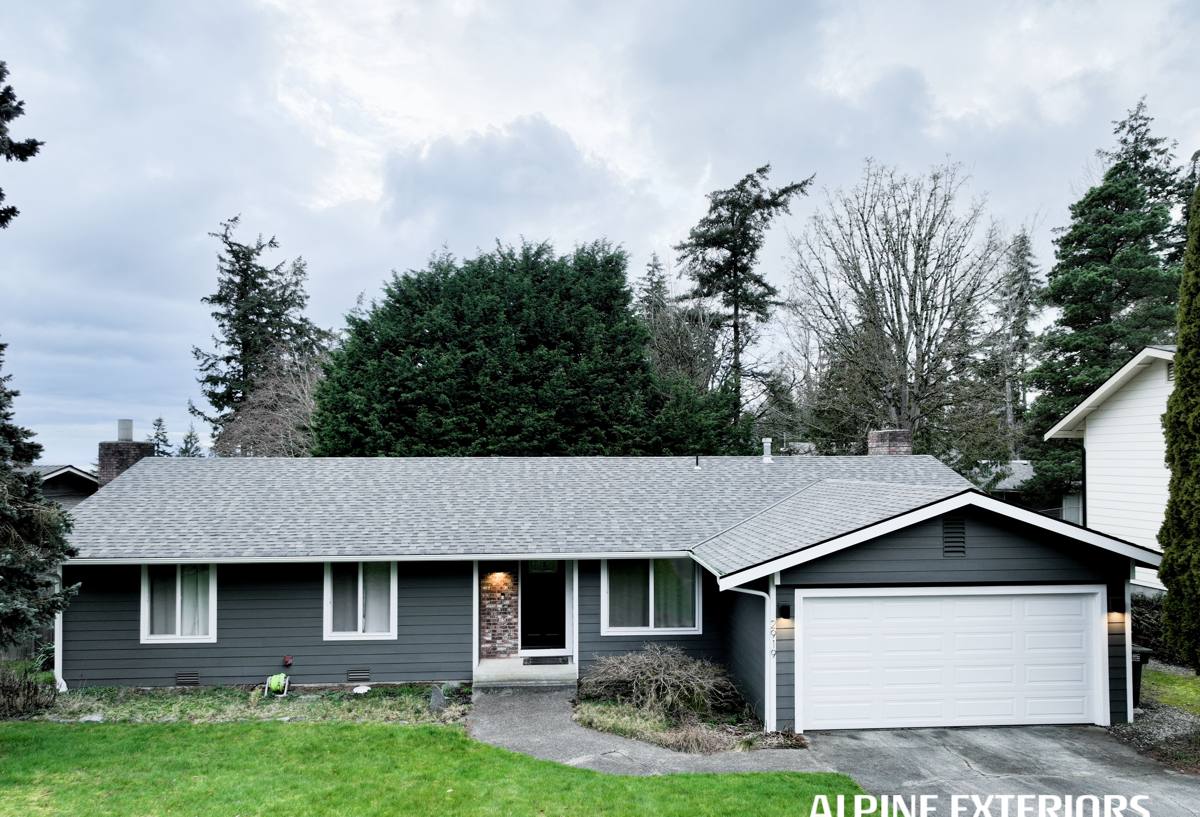
What Ballard's Climate Actually Does to Siding
Seattle's marine climate is mild, but "mild" doesn't mean easy on a building envelope. Ballard sits close to open water, which means homes here deal with a version of Pacific Northwest weather that's a notch harsher than inland King County neighborhoods.
- Salt air: Proximity to Puget Sound means airborne salt and moisture that accelerates corrosion on fasteners, flashing, and any siding material that isn't engineered to resist it.
- Driving rain: Wind off the water pushes rain sideways into wall assemblies, not just straight down. Siding and flashing details that only shed water from above will eventually let moisture behind the cladding.
- A long moss season: Grey, damp stretches from fall through spring create ideal conditions for moss, algae, and mildew to colonize any siding surface that stays wet or holds moisture at the seams.
Board and batten siding has more vertical seams per square foot than wide lap siding, and every one of those seams is a place water can find its way in if the material or the installation is wrong for the climate. That's the core challenge on a Ballard board and batten job — it's not just picking a look, it's picking a system that can take this specific weather for decades.
Why We Install Only James Hardie for Board & Batten
We install James Hardie fiber cement exclusively — including for board and batten profiles — and we don't install vinyl board and batten, engineered wood (LP SmartSide), Cemplank, Allura, or primed spruce/cedar board and batten. That's a deliberate standard, not a sales preference, and it's worth explaining honestly.
Wood board and batten has real appeal: it's a traditional material with a warm, authentic look, and it's what a lot of older Northwest homes originally wore. But raw or primed wood needs consistent repainting and sealing to resist the rot that Seattle's rain season encourages, especially at the exposed battens and bottom edges. Engineered wood products have improved a lot over the years, but they still rely on a resin-treated wood substrate, which means the long-term performance depends heavily on keeping water out of every joint and cut edge — something that's harder to guarantee on a home exposed to driving, wind-blown rain. Vinyl board and batten is low-maintenance and inexpensive, but it can warp or fade with UV and temperature swings, and it's a thinner, less rigid material that shows waviness on tall vertical panels in a way that undercuts the crisp look board and batten is supposed to deliver.
James Hardie fiber cement is non-combustible, dimensionally stable in wet-dry cycles, and factory-finished with ColorPlus technology, so the color is baked on rather than field-painted — which matters on a style where every joint line is visible. Hardie also builds region-specific formulations (their HZ product lines) engineered for the moisture exposure of climates like ours, rather than a one-size-fits-all product. For a siding style that lives or dies on straight lines and tight seams, that stability is the difference between a job that still looks sharp in fifteen years and one that needs constant touch-up.
What "Correct" Board & Batten Actually Requires
Board and batten is deceptively simple-looking, but it's one of the less forgiving siding profiles to install well. A correct job on a Ballard home typically involves:
- A water-resistive barrier and, in most cases, a rain screen gap behind the panels so any moisture that gets past the cladding can drain and dry instead of sitting against the wall sheathing.
- Panel layout planned around window and door openings so batten spacing stays even and doesn't get awkward at corners or trim.
- Corrosion-resistant fasteners driven at the correct spacing and depth — over-driven or under-driven nails are one of the most common causes of early siding failure, and salt air makes fastener choice even more important here.
- Proper flashing at every horizontal transition — window heads, roof lines, deck ledgers — since board and batten's vertical seams rely entirely on the flashing details to stay dry.
- Correctly sized gaps between panels and battens to allow for expansion and contraction without buckling.
Skip any one of these and the panels themselves can be top-quality material and the wall will still fail early. Installation quality is arguably a bigger factor in how long board and batten lasts than the material itself.
Our Process on a Ballard Board & Batten Project
1. On-site assessment
We walk the home, check the condition of the existing wall assembly, and look for moisture damage, rot, or ventilation issues that need to be addressed before new siding goes on — covering a compromised wall never solves the underlying problem.
2. Layout and material plan
We plan panel and batten spacing around the home's actual openings and trim lines, and go over color and reveal options in James Hardie's ColorPlus lineup.
3. Prep and moisture barrier
Old siding comes off, damaged sheathing gets replaced, and a water-resistive barrier (with rain screen where appropriate) goes on before a single panel is hung.
4. Installation
Panels and battens go up to Hardie's fastening and spacing specifications, with flashing integrated at every horizontal transition — this is the stage where craftsmanship shows most on a board and batten job.
5. Final walkthrough
We review the finished siding with the homeowner, check caulking and trim details, and make sure everything meets the standard we'd want on our own home.
Board & Batten Material Comparison
| Material | Performance in Salt Air & Driving Rain | Moss/Moisture Resistance | Long-Term Maintenance |
|---|---|---|---|
| James Hardie Fiber Cement | Engineered for coastal, wet climates; dimensionally stable | Resists moisture absorption; factory finish resists mildew staining | Occasional wash; no repainting needed for years |
| Untreated/Primed Wood | Absorbs moisture; prone to swelling and rot at joints | Susceptible to rot and moss growth without diligent upkeep | Regular repainting and sealing required |
| Engineered Wood (e.g., LP SmartSide) | Resin-treated but still wood-based; edge and cut protection is critical | Reasonable if sealed correctly and maintained | Periodic caulking and paint touch-up |
| Vinyl Board & Batten | Can warp or flex in temperature swings and wind exposure | Resists rot but can trap moisture behind panels if not vented | Low maintenance but limited lifespan and repair options |
Living With Board & Batten Through Ballard's Moss Season
Even the right material benefits from basic upkeep. James Hardie siding is low-maintenance, not zero-maintenance, and a few habits go a long way through a wet Seattle winter:
- Rinse siding annually, focusing on north-facing walls and areas shaded by trees or neighboring structures where moss tends to establish first.
- Keep gutters clear so overflow doesn't run down the face of the siding during heavy rain events.
- Trim back vegetation and tree limbs that keep siding shaded and damp longer than the rest of the house.
- Check caulking at trim and penetrations every year or two, since caulk is a maintenance item even on a fiber cement system.
None of this is unusual maintenance — it's just what any exterior in a marine climate needs, and it's a lot less demanding than what wood or engineered wood board and batten requires to stay ahead of rot.
Why It Matters to Hire a Crew That Already Works in Ballard
Board and batten installation isn't uniform across the region. A crew that mostly works drier inland areas may not build in the same rain screen and flashing margins a home exposed to wind off Puget Sound actually needs. A crew that regularly works Ballard and similar King County neighborhoods close to the water already knows which details to overbuild rather than treat as optional.
There's also a practical side: local crews know the older housing stock in this part of Seattle, understand common wall assemblies from different building eras, and can spot issues — old moisture damage, insufficient venting, out-of-square openings — before they become an installation problem instead of after.
What to Ask Before Hiring for Board & Batten Work
- Do you install a rain screen or drainage gap behind the panels, and when is it used versus not?
- What fastener type and spacing do you use, and is it rated for coastal or high-moisture exposure?
- How do you flash window heads, roof-to-wall transitions, and deck ledgers on a board and batten wall?
- What's included in the manufacturer's warranty, and what's covered by your workmanship warranty?
- Can you walk me through your panel and batten layout plan before installation starts?
A contractor who can answer these clearly, without hedging, is one who actually understands what board and batten needs to survive a Seattle winter — not just how to hang panels.
Get a Straight Answer About Your Home
If you're weighing board and batten for a Ballard home, the right next step is an honest, on-site look at your walls — not a sales pitch. We'll walk the exterior, talk through what your home's exposure actually calls for, and give you a clear, no-pressure estimate for a James Hardie board and batten installation done right. Use the form below to request your free estimate.