 Seattle
 Why Ballard's Weather Is Tougher on Roofs Than It Looks
Ballard sits close to Puget Sound and Salmon Bay, and that location shapes what happens to a roof over time. The marine air carries salt and moisture that settle on shingles, flashing, and exposed fasteners, and that combination speeds up corrosion and material fatigue in ways that inland Seattle neighborhoods don't experience to the same degree. Add in the wind that comes off the water during winter storms, months of low-angle sun that keep north- and shade-facing roof sections damp, and a moss season that can run from fall through spring, and you have a roof that's under near-constant low-grade stress even before a real storm hits.
When a windstorm or heavy rain event does move through King County, it's rarely a single dramatic failure. It's usually damage that builds on top of whatever moisture, moss, or wear was already present. That's the main reason storm repair on a Ballard roof needs to be treated as its own kind of job, not a generic patch-and-go visit.
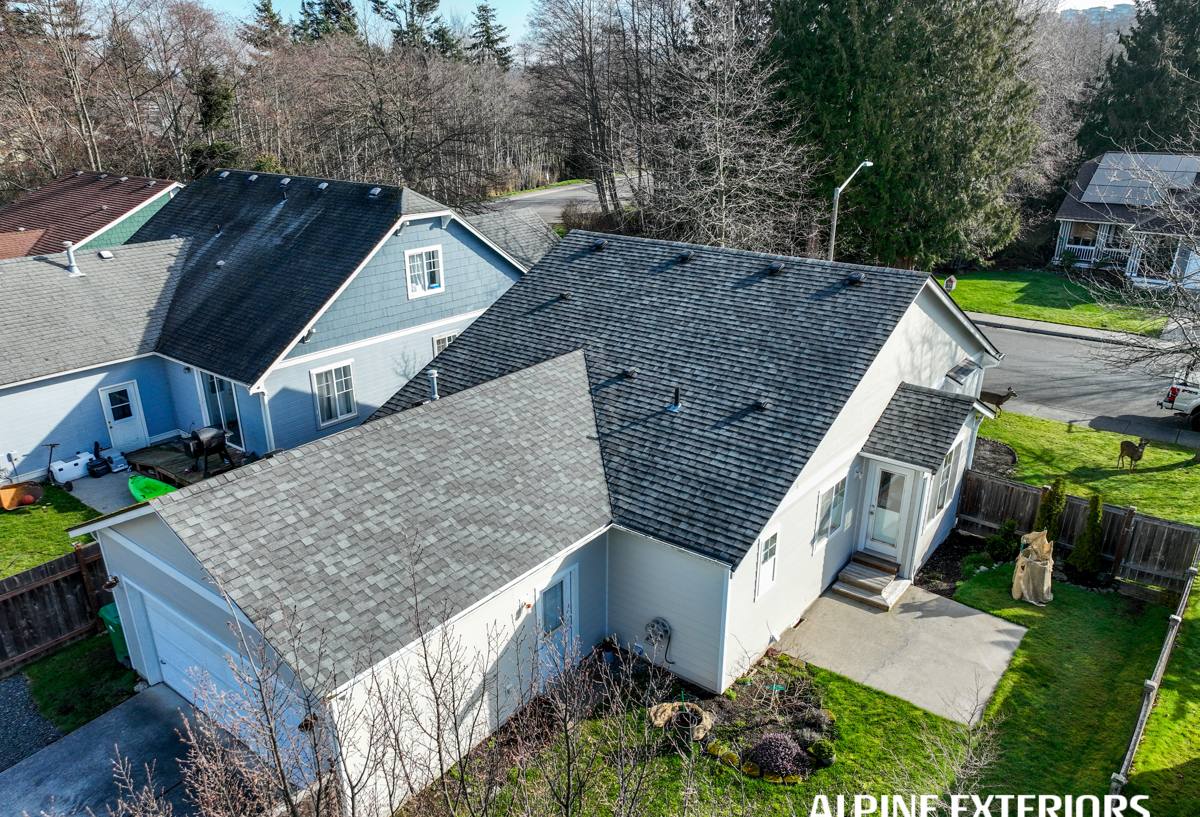
What Storm Damage Actually Looks Like on a Ballard Roof
Wind Damage
Gusts off the Sound tend to lift shingles from the edges and ridgelines first, since those areas take the most direct pressure. You'll often see creased or missing shingles, lifted tabs that haven't fully blown off yet, and bent or detached ridge cap pieces. Wind can also work flashing loose around chimneys, vents, and skylights without leaving anything obviously missing from the ground.
Rain and Moisture Intrusion
Driving rain finds its way into any gap that wind damage creates. On an older roof, that often means water tracking under a lifted shingle and soaking the underlayment or decking beneath it long before a stain shows up on an interior ceiling. Because Seattle's wet season is long, a small entry point can stay wet for weeks between storms instead of drying out, which is what turns a minor repair into a rot problem.
Moss-Related Damage
Moss doesn't cause storm damage directly, but it makes a roof far more vulnerable to it. Moss holds moisture against the shingle surface, lifts shingle edges as it grows, and clogs the granule surface that sheds water. A roof with established moss going into a windstorm is starting from a weaker position, and repair work on that roof usually needs to address the moss itself, not just the storm's damage.
Why Minor Storm Damage Shouldn't Wait
A few missing shingles or a lifted flashing edge doesn't look urgent, and it's tempting to leave it until a dry stretch. In this climate, that's usually a mistake. Storms rarely arrive one at a time here — the same wet pattern that caused the damage tends to keep bringing more rain right behind it, so an open spot in the roof surface gets tested again and again before anyone gets around to fixing it. Water that finds its way into decking or framing in a marine climate doesn't dry out on its own between storms the way it might in a drier region, and rot and mold can set in well before a homeowner notices a leak inside the house.
There's also a practical insurance reason to act quickly. Most policies have documentation and reporting expectations tied to the storm event itself, and damage that's addressed and photographed soon after the storm is much easier to tie to that specific event than damage discovered weeks later.
What a Correct Storm Damage Repair Involves
A proper storm repair is more than swapping out the shingles that are visibly gone. It should include:
- A full inspection of the affected roof plane, not just the spot visible from the ground
- Checking the decking underneath damaged areas for soft spots, staining, or rot before any new material goes down
- Replacing underlayment in the repair zone, not just the top layer of shingles
- Re-securing or replacing flashing around any penetration near the damaged area
- Matching new shingles to the existing roof as closely as possible in style, profile, and color
- Checking gutters and downspouts in the area for debris or damage that could send water back under the new repair
Skipping the decking check is the most common shortcut in storm repair work, and it's the one that causes the most repeat calls. A shingle that looks fine on top can be nailed into decking that's already gone soft underneath.
Our Ballard Storm Repair Process
Inspection and Documentation
We start by walking the roof (or using a lift or drone where pitch and access make that safer) and documenting the damage with photos tied to the storm date. This documentation is what supports an insurance claim if you decide to file one, and it also gives you an honest picture of what's actually wrong before any work starts.
Temporary Protection
If there's an active leak or an open section of roof, we get it tarped or otherwise protected the same visit whenever possible. In a climate where the next rain is rarely more than a few days away, stopping active water intrusion takes priority over scheduling the full repair.
Repair and Material Matching
Once decking is checked and any rot is addressed, we install matching shingles, underlayment, and flashing so the repaired section performs the same as the rest of the roof — not a visibly different patch that ages differently over time.
Final Check and Cleanup
We check the surrounding roof surface, gutters, and downspouts for anything else the storm may have loosened, and we clear debris from the site before we consider the job finished.
Storm Damage Repair Cost Factors
Every storm repair is different, but the price generally comes down to a handful of variables. This isn't a quote — it's a starting point for the kind of questions worth asking any contractor.
| Factor | Why It Matters | Typical Cost Impact |
|---|---|---|
| Size of damaged area | More shingles, underlayment, and labor time | Scales directly with square footage |
| Roof pitch and access | Steep or hard-to-reach roofs need more safety setup and time | Moderate to significant increase |
| Decking condition | Rotted decking must be cut out and replaced before shingles go back on | Adds material and labor per section replaced |
| Shingle age and availability | Older roofs may need a close color/style match rather than an exact one | Minor, but affects appearance |
| Flashing and penetrations involved | Chimneys, vents, and skylights each add their own flashing work | Adds per-penetration labor |
| Insurance coverage | Storm-related damage is often covered where general wear is not | Can offset most of the cost |
Working With Insurance After a Storm
Most homeowners' policies cover sudden storm damage — wind, falling debris, and similar events — while excluding damage from gradual wear like an aging roof or long-term moss buildup. That distinction matters, because it's exactly what an adjuster is looking to determine. Clear, dated photos of the damage, a written description of the storm event, and a contractor's assessment that separates storm damage from pre-existing condition all make that conversation go faster and more fairly.
We can provide the inspection documentation and a written scope of the repair for your claim, and we're glad to walk the roof with an adjuster if that's helpful. We don't handle the claim itself — that stays between you and your insurer — but we make sure the repair side of the paperwork is accurate and complete.
Why a Local Crew Matters for Ballard Roofs
Ballard's housing stock is a mix of older bungalows and craftsman-era homes alongside newer townhomes and infill construction, and each type has different roof framing, decking, and flashing conventions that affect how a repair should be approached. A crew that already works in this part of Seattle has a working sense of what's typical for a given house age and layout, which cuts down on surprises once the roof is opened up.
There's also a response-time argument. After a windstorm moves through King County, roofing companies get busy fast, and a crew based outside the area may take days to reach a Ballard address that a local crew can get to the same day or the next. In a wet climate, that gap is exactly when a small storm hole turns into a bigger interior problem.
Reducing Storm Damage Risk Going Forward
Storm damage can't be prevented entirely, but a roof that's already in good condition holds up far better when wind and rain move through. A few habits make a real difference here:
- Clear moss buildup on a regular schedule rather than letting it establish season after season
- Keep gutters and downspouts clear so wind-driven rain has somewhere to go
- Trim back branches that overhang the roof, since falling limbs are a common source of impact damage in windstorms
- Have flashing around chimneys, vents, and skylights checked periodically, since these are the first points to fail in high wind
- Address minor shingle lifting or granule loss before the next storm season rather than after
If you've had a recent storm move through Ballard and aren't sure whether your roof took damage, or you already know it did, we're happy to take a look. The estimate is free, there's no pressure to move forward, and you'll get a straight answer about what's actually wrong and what it will take to fix it correctly. The form below is the fastest way to get on our schedule.