 Seattle
 Ballard's Marine Climate Is Hard on Roofs
Ballard sits right where the city meets Puget Sound and Salmon Bay, and that location shapes everything about how a roof ages here. Homes a few blocks from the water take on a different kind of weather than homes further inland in Seattle: more salt in the air, more wind-driven rain, and shade patterns from mature trees that keep certain roof sections damp for days after a storm passes. A roof built to a generic spec sheet will survive here for a while. A roof built for Ballard specifically — with the right materials, the right flashing details, and the right ventilation — will simply outlast it, and cost less in repairs along the way.
This page is about one job: installing a new roof on a Ballard home, done in a way that accounts for what this neighborhood actually throws at a roof over 20-30 years.
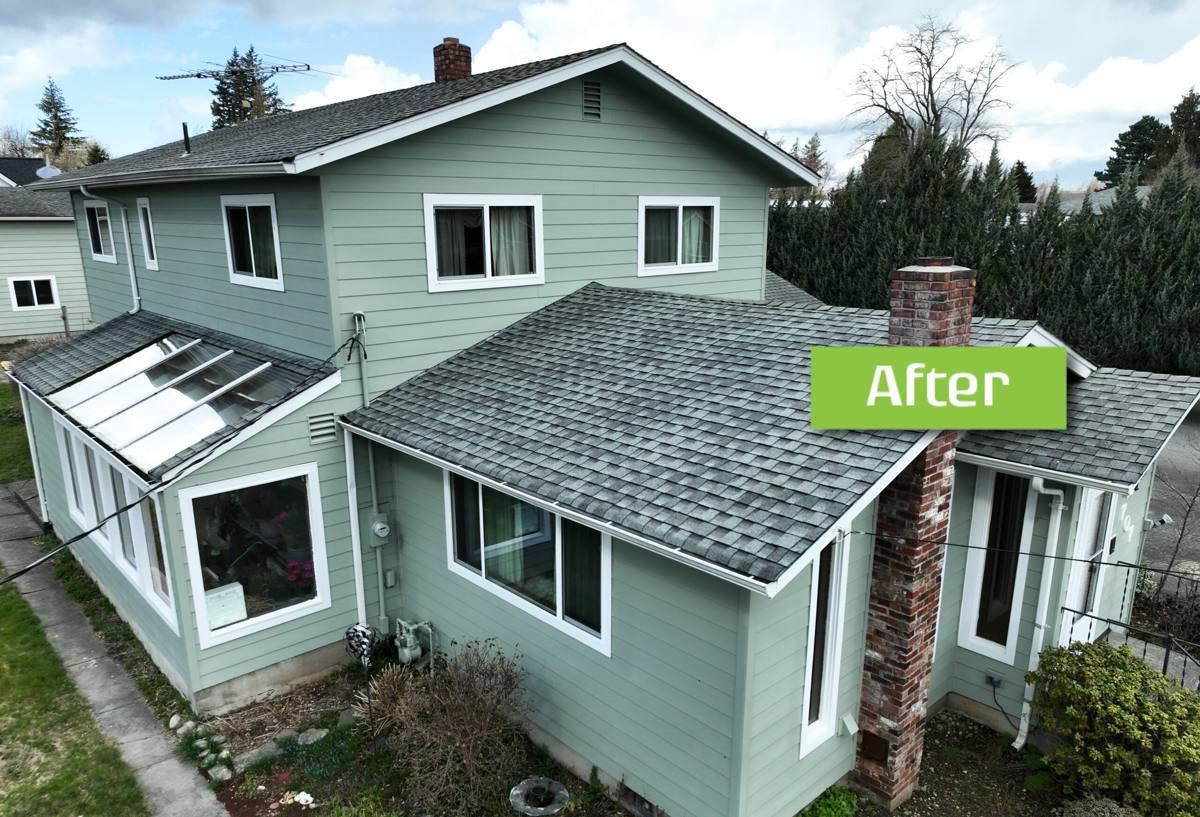
Three Things That Wear Out a Ballard Roof Faster
Salt Air
Proximity to the Sound means airborne salt settles on roofing metal — flashing, valleys, fasteners, vent stacks — and accelerates corrosion compared to a roof further from the water. Cheap electro-galvanized fasteners and unprotected steel flashing show rust streaks and pitting years before they should. It's not dramatic, it's slow, but it's the difference between flashing that's still tight at year 15 and flashing that's leaking at year 8.
Driving Rain
Storms coming off the water don't just fall straight down — wind pushes rain sideways and up under shingle edges, at valleys, and around any roof penetration. A roof that would perform fine in a calmer climate can leak here if the underlayment, valley treatment, and edge details weren't built with wind-driven rain in mind. This is one of the most common reasons we find water damage on Ballard roofs that "shouldn't" have leaked, based on the shingles alone.
A Long Moss Season
Between tree cover, marine humidity, and a rainy season that stretches most of the year, north-facing and shaded roof sections in Ballard grow moss faster than roofs in drier, sunnier parts of the region. Moss isn't just cosmetic — it holds moisture against the roofing material, lifts shingle edges as it grows, and works its way under laps over time. A new roof installed without any thought to moss resistance is starting the clock over on the same problem.
Signs It's Time for a New Roof, Not Another Repair
Not every roof problem means full replacement, but there's a point where patching stops making financial sense. Common signs we see on Ballard homes include:
- Shingles that are cupping, cracking, or losing granules across large sections, not just one spot
- Moss established in the mat of the shingle itself, not just sitting on the surface
- Daylight visible through the roof deck from the attic, or damp sheathing
- Multiple past repairs in different areas — a sign the whole roof is reaching the end of its service life together
- Flashing that's rusted, loose, or was never properly integrated at valleys and walls
- A roof original to the home and past 20-25 years old, especially on the shaded or water-facing side
If a roof is showing two or three of these at once, repair costs start adding up fast without buying much additional life. That's usually the point where a full replacement is the more honest recommendation, and it's what we'll tell you plainly during an inspection.
What a Correct New Roof Installation Involves
"New roof" sounds simple, but the quality of the job is almost entirely in the layers homeowners don't see once it's done. For a Ballard home, a correct installation includes:
- Full tear-off of the old roofing down to the deck — never a layover, which traps moisture and hides deck problems
- Deck inspection and repair, replacing any sheathing that's soft, delaminated, or water-stained before anything new goes down
- Ice-and-water shield at eaves, valleys, and around penetrations — the areas most exposed to wind-driven rain and ice damming during cold snaps
- A synthetic or felt underlayment rated for the whole field of the roof, not just the vulnerable spots
- Corrosion-resistant flashing and fasteners at valleys, chimneys, walls, and vent stacks — sized and detailed for the salt air near the Sound
- Proper intake and exhaust ventilation, balanced so moisture and heat can actually move out of the attic instead of condensing on the underside of the deck
- Algae-resistant or moss-resistant shingle selection where the roof has shaded exposure
- Careful integration at every penetration — plumbing vents, exhaust fans, skylights — since this is where the majority of roof leaks actually start
Skip any one of these and the roof might still look fine from the street. It just won't perform the way a new roof should for the money spent.
Choosing Roofing Material for Ballard's Environment
There's no single "best" roofing material — the right choice depends on the home's exposure, budget, and how much maintenance the owner wants to take on. Here's how the common options stack up specifically against Ballard's conditions:
| Material | Moss/Algae Resistance | Salt Air Performance | Typical Lifespan | Relative Cost |
|---|---|---|---|---|
| Standard architectural asphalt shingle | Moderate — better with algae-resistant granules | Good, if flashing/fasteners are corrosion-resistant | 20-30 years | $ |
| Algae-resistant (AR) architectural shingle | Strong — copper-infused granules resist growth | Good, same flashing requirements apply | 25-30 years | $$ |
| Standing seam metal | Strong — smooth surface sheds moss and debris | Excellent with proper coating and fastener spec | 40-60 years | $$$ |
| Cedar shake | Weak without diligent upkeep — natural wood invites growth | Fair — needs regular treatment near salt air | 20-30 years with maintenance | $$-$$$ |
For most Ballard homes we install algae-resistant architectural shingles, since they balance upfront cost against real moss resistance. Standing seam metal is a strong option for homeowners planning to stay long-term or with heavily shaded roofs where moss is a persistent fight. We're honest about cedar shake: it can look great, but it demands consistent maintenance to hold up in a wet, shaded climate, and we'll tell you that plainly rather than sell you something high-upkeep without saying so.
Ballard's Older Homes: Decking, Structure, and Permits
Ballard has a mix of early-1900s craftsman bungalows, mid-century houses, and newer infill construction, and the roof structure underneath varies a lot between them. Older homes sometimes have skip sheathing — spaced boards instead of solid plywood decking — which was standard when the roofs were originally covered in wood shake. If your home still has skip sheathing, it typically needs to be overlaid with solid plywood before modern shingles or underlayment can be installed correctly. This is exactly the kind of detail that only shows up once the old roofing is off, which is why we build a deck-repair allowance into every estimate rather than surprising homeowners with it later.
Seattle also requires permits for roof replacement, and King County jurisdictions outside city limits have their own requirements. We handle the permit process as part of the job, so it's inspected and documented correctly rather than left as an unpermitted repair that can complicate a future home sale.
Our Installation Process, Start to Finish
We keep the process straightforward and communicate at each stage rather than disappearing until it's done:
- Inspection and estimate — we walk the roof and attic, check the deck where accessible, and note flashing, ventilation, and moss conditions specific to your property
- Written proposal — material options, scope, and a clear price, with any deck-repair contingency explained up front, not buried
- Permitting — we pull the required permit before work starts
- Tear-off and deck inspection — old roofing removed, deck checked board by board, damaged sections replaced
- Underlayment and flashing — ice-and-water shield, underlayment, and all flashing installed to the detail level described above
- Roofing installation — shingles or metal installed per manufacturer spec, with attention to the ventilation balance
- Cleanup and magnetic sweep — job site and yard cleared of debris and nails
- Final walkthrough — we go over the finished roof with you before calling the job done
We don't rush a job to move to the next one, and we don't cut corners on the parts that aren't visible from the ground. Those are the parts that determine whether a roof lasts 15 years or 30.
Why Hire a Crew That Already Works in Ballard
Ballard's streets, alleys, and lot layouts aren't always simple to work around — narrow lots, alley-loaded garages, mature street trees, and closely spaced houses all affect how a crew stages material, sets up safely, and protects a neighbor's property during tear-off. A crew that regularly works this neighborhood has already solved those logistics and isn't learning them on your job.
Just as important, a crew familiar with Ballard knows what its houses tend to hide — where skip sheathing shows up, which flashing details fail first in this climate, and how to read a moss pattern to know whether ventilation is the underlying cause. That local pattern recognition is the difference between an estimate that's accurate the first time and one that grows once the tear-off starts.
If your roof is showing its age, or you just want a straight answer on whether repair or replacement makes more sense for your home, we're happy to take a look. The estimate is free, there's no pressure, and you'll get a clear explanation of what we find — just fill out the form below to get started.