 Seattle
 Siding Built for Beacon Hill's Hilltop Weather
Beacon Hill sits on one of Seattle's ridgelines, which means homes here take weather from more directions than houses tucked into a sheltered valley. Wind off Puget Sound carries salt-laden moisture up the slope, driving rain finds its way under poorly flashed trim, and the shaded north- and east-facing walls common on this hilly terrain stay damp long after a storm passes. Add King County's long, wet fall-through-spring stretch and you get a climate that is unusually hard on exterior cladding — especially anything wood-based or moisture-sensitive.
We install siding across Seattle, but Beacon Hill's mix of older bungalow-era homes and mid-century houses presents its own set of problems: original wood siding that's been painted over a dozen times, additions with mismatched wall assemblies, and decades-old trim details that were never built to modern water-management standards. A siding installation here isn't just a cosmetic swap — it's a chance to correct water management that's been failing quietly for years.
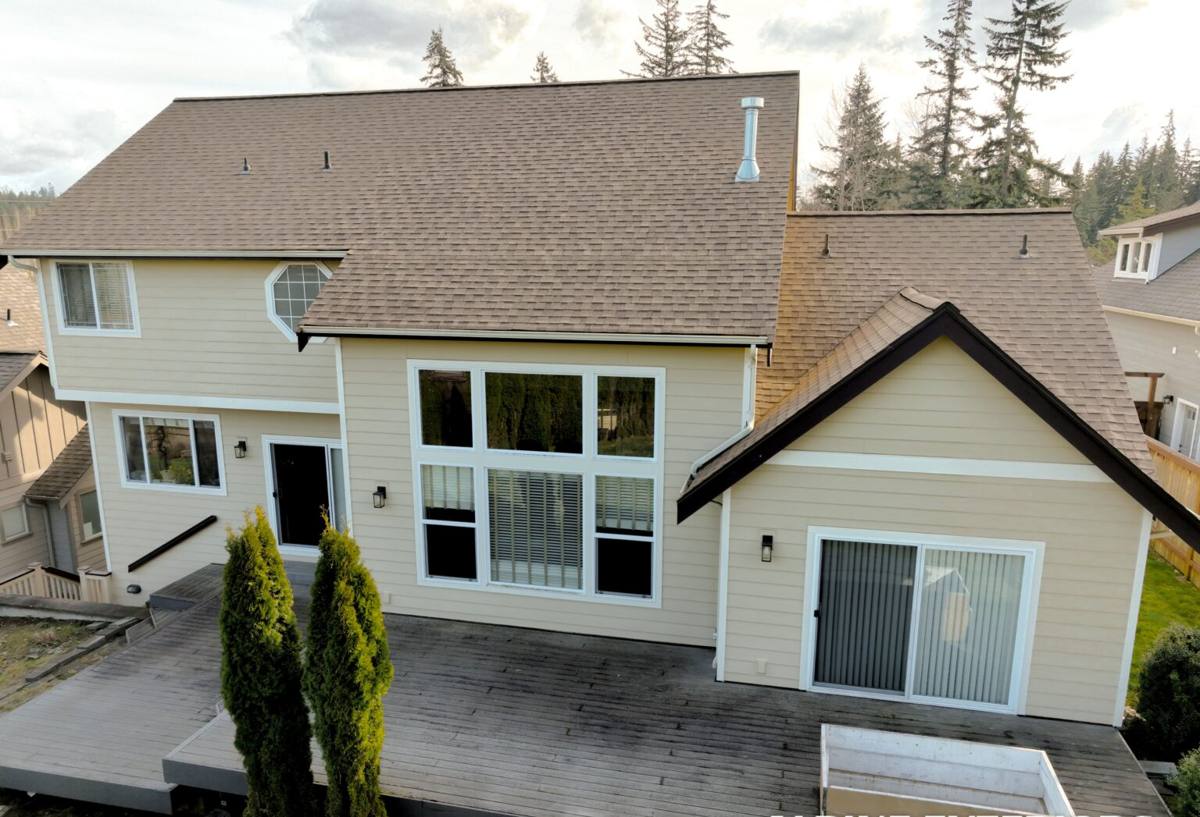
What Salt Air, Driving Rain, and Moss Season Actually Do to Siding
Salt Air
Even a few miles from open water, airborne salt accelerates corrosion on fasteners, flashing, and any exposed metal trim. Over time it also degrades cheap paint finishes faster than inland exposure would, leaving wood and composite sidings chalky, faded, or peeling years ahead of schedule.
Driving Rain
Wind-driven rain doesn't just fall — it gets pushed sideways and upward into laps, seams, and butt joints. On a hilltop neighborhood like Beacon Hill, wind exposure is higher than in more sheltered parts of the city, which means every seam, corner, and penetration is a potential entry point if it wasn't detailed correctly the first time.
Moss Season
Western Washington's moss and algae season typically stretches from fall through late spring. Anything that holds moisture — horizontal ledges, poorly ventilated wall cavities, siding installed tight to grade or landscaping — becomes a growth surface. Moss doesn't just look bad; it holds water against the siding face and, on absorbent materials, accelerates rot from the outside in.
Why We Install Only James Hardie Fiber Cement
We don't install vinyl, LP SmartSide, Cemplank, Allura, primed spruce, or cedar. That's a deliberate standard, not a limitation of what we're capable of installing. Each of those products has a real use case somewhere — but in a climate defined by prolonged moisture exposure and hilltop wind, they carry trade-offs we're not willing to put our name behind:
- Wood and primed spruce require ongoing paint maintenance and are the most vulnerable to rot once a finish fails — a real risk given how long Beacon Hill stays damp through moss season.
- Vinyl siding is affordable but can warp or become brittle with age and temperature swings, and it relies on the wall assembly behind it — not the panel itself — to manage water.
- LP SmartSide and similar engineered wood products perform well when installation is flawless, but they're wood-based at the core, which means edge swelling and moisture sensitivity are real risks if caulking or flashing details fail.
James Hardie fiber cement is non-combustible, dimensionally stable, and doesn't feed moss or algae the way wood fiber does. It's engineered specifically for climates like ours — the HZ5 product line is formulated for the Pacific Northwest's wet, temperate weather. With the factory-applied ColorPlus finish, the color coat is baked on and warranted separately from the substrate, which matters in a neighborhood where sun exposure varies wildly from one wall to the next.
What a Correct Installation Actually Involves
Fiber cement siding is only as good as the assembly behind it. A rushed or undertrained crew can install James Hardie and still leave a house vulnerable to the exact problems the product is designed to prevent. A correct job includes:
- A continuous, correctly lapped water-resistive barrier behind the siding — no gaps, no shortcuts at seams.
- Properly integrated flashing at every window, door, deck ledger, and roofline transition, so water is directed out and down, never trapped behind the cladding.
- Correct fastener placement and spacing per Hardie's engineering specs — this affects both wind resistance and long-term panel performance.
- Manufacturer-specified clearances from grade, roofing, and decks, so siding isn't sitting in a moisture trap from day one.
- Factory-cut or properly sealed field cuts, since an unsealed cut edge is one of the few ways moisture can get into fiber cement.
- Caulking only where Hardie's install guide calls for it — over-caulking traps moisture just as often as under-caulking lets it in.
Every one of these steps is spelled out in James Hardie's installation manual, and every one of them is easy to skip if a crew is moving fast or hasn't been trained specifically on fiber cement. On a wind-exposed hilltop lot, the margin for error is smaller than it looks.
Our Process for Beacon Hill Homes
1. On-Site Assessment
We walk the exterior, check the condition of the existing siding and any sheathing we can access, and look specifically for moisture damage around windows, roof transitions, and grade-level details — the spots that fail first in this climate.
2. Tear-Off and Sheathing Check
Old siding comes off cleanly, and we inspect the sheathing underneath before anything new goes up. Hidden rot or a failed water-resistive barrier gets addressed before we cover it back over — not after.
3. Water Management First
Weather-resistive barrier, flashing, and drainage details go in before a single piece of Hardie board is hung. This is the step that determines whether the siding performs for decades or fails early, and it's the step that's easiest to shortcut.
4. Installation to Manufacturer Spec
Panels, fasteners, and joints go in per James Hardie's published guidelines — not "close enough." We size the job around getting it right the first time, since re-doing fiber cement siding is far more disruptive than getting the details correct up front.
5. Final Walkthrough
We review the completed work with you, including how the ColorPlus finish is warranted and what (if any) maintenance the product needs going forward — which, compared to wood, is minimal.
Why a Crew That Already Works Beacon Hill Matters
Beacon Hill's housing stock spans decades of construction practices, and older homes here often have wall assemblies that don't match what you'd find in newer Seattle construction. A crew that's worked this neighborhood knows to check for outdated or missing water-resistive barriers, understands how the hill's wind exposure affects flashing details, and isn't guessing at how to tie new siding into an older building envelope. That local familiarity — combined with Seattle and King County permitting requirements — is the difference between a siding job that looks right at handoff and one that actually performs through its first few wet seasons.
Comparing Siding Options for a Hilltop Climate
| Factor | James Hardie Fiber Cement | Vinyl | Wood / Primed Spruce |
|---|---|---|---|
| Moisture & rot resistance | Non-combustible, does not rot; performance depends on correct install | Doesn't rot itself, but relies fully on the wall assembly behind it | Most vulnerable once paint film fails |
| Moss / algae resistance | Dense fiber cement doesn't feed organic growth | Resists growth but can trap moisture at panel laps | Wood fiber is an active growth surface |
| Wind-driven rain performance | Engineered HZ5 line built for wet climates, when flashed correctly | Adequate but panel flexing can open gaps over time | Depends entirely on paint and caulk maintenance |
| Maintenance | Repaint not required for the life of the ColorPlus finish | Low, but fades and can become brittle with age | Repainting every few years to stay protected |
| Fire resistance | Non-combustible core material | Combustible, can melt or deform near heat | Combustible |
Signs Your Beacon Hill Home May Need New Siding
- Paint that's peeling, bubbling, or needs repainting more often than every few years
- Soft or spongy spots when you press on the siding, especially near the bottom courses
- Persistent moss or dark streaking that returns shortly after cleaning
- Visible gaps, warping, or panels that have pulled away from the wall
- Rising energy bills that suggest the wall assembly isn't sealing the way it should
- Siding that's original to a home built decades ago and has never been replaced
If any of these sound familiar, it's worth having the siding — and what's behind it — looked at before a small problem becomes a sheathing or framing repair.
If you're weighing a siding project for your Beacon Hill home, we're glad to take a look and walk you through what your house actually needs — no pressure, no upsell to a product we don't stand behind. Use the form below to request a free estimate.