 Seattle
 New Roof Installation in Bellevue
Bellevue homes sit under some of the most demanding roofing conditions in King County. Long stretches of driving rain, heavy tree cover that keeps roofs shaded and damp, and a moss season that can run eight months out of the year all put steady pressure on a roof system. When it's time to replace one, the goal isn't just a roof that looks good on installation day — it's a roof that's still shedding water correctly and resisting moss five, ten, and twenty years from now. That takes the right materials, the right underlayment and ventilation details, and a crew that installs to the specifics of this climate rather than a generic spec sheet.
This page covers what a correct new roof installation looks like for a Bellevue home, the decisions that actually matter, and how our process works from first look to final walkthrough.
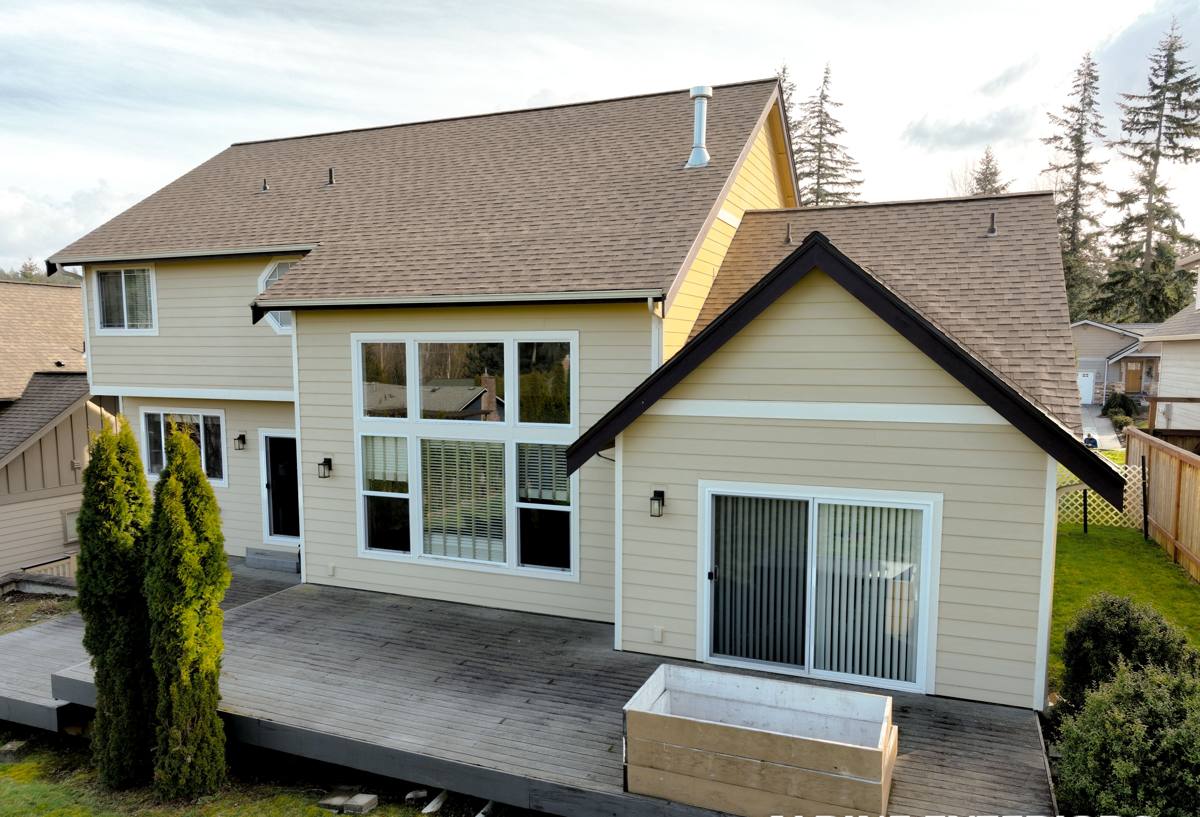
Why Bellevue's Climate Is Hard on Roofs
Bellevue doesn't get hurricane-force weather, but it gets something arguably harder on a roof over time: persistence. The combination of moisture, shade, and mild temperatures creates ideal conditions for slow, cumulative damage.
Driving rain and wind-driven moisture
Storms coming off the Sound and through the Cascade foothills often bring rain at an angle, not straight down. That matters because wind-driven rain can work its way under shingles, around flashing, and into valleys in ways that a still, vertical rain never would. A roof detailed for calm weather will eventually leak in Bellevue; one detailed for wind-driven rain generally won't.
Moss and organic growth
Shaded, north-facing slopes and roofs under mature tree canopy stay damp far longer than roofs in full sun. That extended dampness is exactly what moss and algae need to establish. Left unchecked, moss lifts shingle edges, holds water against the roof deck, and shortens the life of the roofing material significantly. A new roof installation is the best possible time to build in moss resistance, because retrofitting it later is far more limited.
Mild, wet winters and freeze-thaw cycling
King County doesn't see the deep freezes that crack roofs in colder climates, but it does see repeated freeze-thaw swings through the winter, especially at higher elevations around Bellevue. Combined with near-constant moisture, this cycling stresses flashing, fasteners, and any spot where water can pool instead of drain.
What a Correctly Installed Roof Needs Here
A roof that's going to hold up on the Eastside needs more than good shingles. It needs a system where every layer is doing its job.
- Ventilation that actually moves air. Balanced intake and exhaust ventilation keeps the attic dry and the roof deck at a stable temperature, which reduces moisture buildup from the inside as well as the outside.
- Ice-and-water shield in the vulnerable spots. Even without heavy snow, self-adhering waterproof membrane at eaves, valleys, and around penetrations gives a critical backup layer where water is most likely to find a way in.
- Synthetic underlayment across the field. A quality synthetic underlayment resists the prolonged moisture exposure common here better than older felt products, and it holds up during the install itself if weather rolls in mid-project.
- Properly lapped and sealed flashing. Chimneys, skylights, sidewalls, and roof-to-wall transitions are where most leaks actually start. Correct step flashing and counterflashing, not just caulk, is what keeps water out long-term.
- Algae-resistant shingle granules where moss and streaking are a concern. Many manufacturers offer shingle lines with built-in algae resistance, which is worth discussing for shaded Bellevue lots.
- Correct fastening for wind exposure. Nail placement and pattern matter more than most homeowners realize — under-fastened shingles are one of the most common causes of early wind damage.
Choosing Roofing Material for a Bellevue Home
Most Bellevue homes land on asphalt composition shingles, metal, or occasionally cedar or synthetic alternatives. Each has real trade-offs here, and we'll walk through them honestly rather than push whatever's easiest to install.
| Material | Moss/Moisture Behavior | Typical Lifespan Here | Best Fit |
|---|---|---|---|
| Architectural asphalt shingle | Good with algae-resistant granules; needs periodic cleaning on shaded slopes | 25–30 years | Most homes; best value-to-performance balance |
| Standing seam metal | Sheds water and moss growth very well due to smooth, sloped surface | 40–50+ years | Homeowners planning to stay long-term or wanting minimal maintenance |
| Cedar shake | High maintenance burden in a wet, shaded climate; requires regular treatment | Varies widely with upkeep | Homeowners committed to ongoing maintenance for the look |
| Synthetic composite shingle/shake | Better moisture resistance than wood with a similar appearance | 30–50 years | Homeowners who want the cedar look without the maintenance |
We don't install cedar shake as a matter of course on heavily shaded Bellevue lots — not because the material is bad, but because the maintenance schedule needed to keep it healthy in constant shade and moisture is more than most homeowners realistically keep up with, and a neglected cedar roof fails faster than almost any alternative. We'll always tell you the honest trade-offs for your specific lot and sun exposure rather than steer you toward one product.
Signs a Bellevue Roof Needs Full Replacement, Not Repair
Not every roof problem calls for a full tear-off. But there's a point where repair stops being cost-effective and starts being a way to delay an inevitable, more expensive job.
- Granule loss heavy enough that shingles look bald or patchy, especially on south- and west-facing slopes
- Moss established in mats rather than a light surface film, particularly on shaded north slopes
- Multiple past repairs in different areas of the roof rather than one isolated spot
- Soft or spongy decking felt underfoot during an inspection
- Daylight visible through the roof deck from inside the attic
- Shingles curling, cupping, or cracking across large sections rather than a few isolated shingles
- The roof is approaching or past its material's expected lifespan and starting to show multiple issues at once
If your roof only shows one or two of these in a limited area, a targeted repair may still make sense. We'll tell you that directly during an inspection rather than push a replacement you don't need yet.
Our New Roof Installation Process
1. On-site inspection and honest assessment
We walk the roof (or use a drone where pitch or access makes that safer), check the attic for ventilation and moisture signs, and look at flashing details around every penetration. You get a clear picture of condition, not just a sales pitch.
2. Material and system recommendation
Based on your roof's slope, shade exposure, and how long you plan to stay in the home, we'll recommend a material and underlayment system suited to Bellevue's conditions specifically — not a one-size-fits-all package.
3. Written scope and timeline
You get a clear written scope covering tear-off, decking repair contingencies, underlayment, flashing, ventilation, and material specifics before any work starts. No surprise add-ons mid-project.
4. Tear-off and deck inspection
Old roofing comes off down to the deck, which is inspected for soft spots, rot, or prior water damage. Any decking replacement needed is identified and priced before it's covered back up.
5. Underlayment, flashing, and ventilation installed
This is where a roof's real weather resistance is built — ice-and-water membrane at vulnerable points, synthetic underlayment across the field, correctly lapped flashing, and balanced ventilation.
6. Final roofing material installation
Shingles, panels, or shakes go on to manufacturer specification, with fastening patterns suited to Eastside wind exposure.
7. Cleanup and final walkthrough
Site is cleared of debris and nails (magnetic sweep included), and we walk the finished roof with you so you know exactly what was done and what to expect going forward.
Timing a Roof Replacement Around Bellevue Weather
Roofing can be done for much of the year in the Puget Sound region, but there are practical windows worth knowing about. Drier stretches in late spring through early fall make for the smoothest installs and the least schedule risk from rain delays. Winter installs are absolutely doable and sometimes necessary if a roof is actively failing, but they require more careful weather-day planning and temporary protection if a storm rolls through mid-project. If your roof isn't in urgent condition, planning ahead for a drier window can mean a faster, less interrupted install — but we'll never leave a home exposed waiting on ideal weather if the existing roof can't hold.
Permits, Warranty, and What to Expect Locally
Roof replacements in Bellevue and King County typically require a building permit, which we handle as part of the project rather than leaving to the homeowner. Manufacturer material warranties are separate from workmanship warranties — it's worth understanding both before signing anything, since a strong material warranty means little if the installation itself wasn't done to spec. Ask any roofer, including us, to explain both plainly.
Quick checklist before you sign a roofing contract
- Is the scope written out in detail, including underlayment type and ventilation work?
- Does the estimate distinguish material warranty from workmanship warranty?
- Is the contractor licensed and insured in Washington, and will they show you proof without being asked twice?
- Does the plan address your roof's specific shade and moss exposure, or is it a generic package?
- Is decking repair priced as a contingency rather than a vague "if needed" line?
- Will the permit be pulled by the contractor?
Why a Crew That Works Bellevue Already Matters
A roofing crew that's already worked across Bellevue and the broader Eastside knows which neighborhoods sit under heavy tree cover, which slopes hold moss longest, and which flashing details tend to fail first on homes built in different decades around King County. That familiarity shows up in fewer callbacks and a roof that's detailed for the way water and shade actually behave on your specific lot — not just built to a generic manual.
If your Bellevue roof is showing its age or you're planning ahead rather than waiting for a leak, we're happy to take a look and give you a straight assessment. Reach out using the form below for a free, no-pressure estimate.