 Seattle
 Why Windows Wear Out Faster in Kirkland
Kirkland sits on the Eastside of Lake Washington in King County, and like the rest of the Seattle metro, it gets a long, wet shoulder season instead of a short, sharp winter. That's actually harder on windows than a hard freeze. Months of low-intensity rain, wind-driven storms off the Sound, and a moss season that can run from October through May all work on the same weak points: seals, sills, flashing, and any wood that's exposed to standing moisture. A window doesn't usually fail all at once here. It fails slowly, at the corners and the bottom rail, until you notice fogging between the panes or a soft spot under the interior sill.
Custom windows aren't about aesthetics alone. In this climate, "custom" means sized and detailed correctly for the specific rough opening, wall assembly, and exposure of that wall — north-facing walls that stay damp and shaded, south and west walls that take the brunt of driving rain, and anything under a roofline that sheds water directly onto a window head. Off-the-shelf stock sizing works until it doesn't; a lot of the water intrusion problems we get called out for started with a window that was close enough in size but never sealed to the opening correctly.
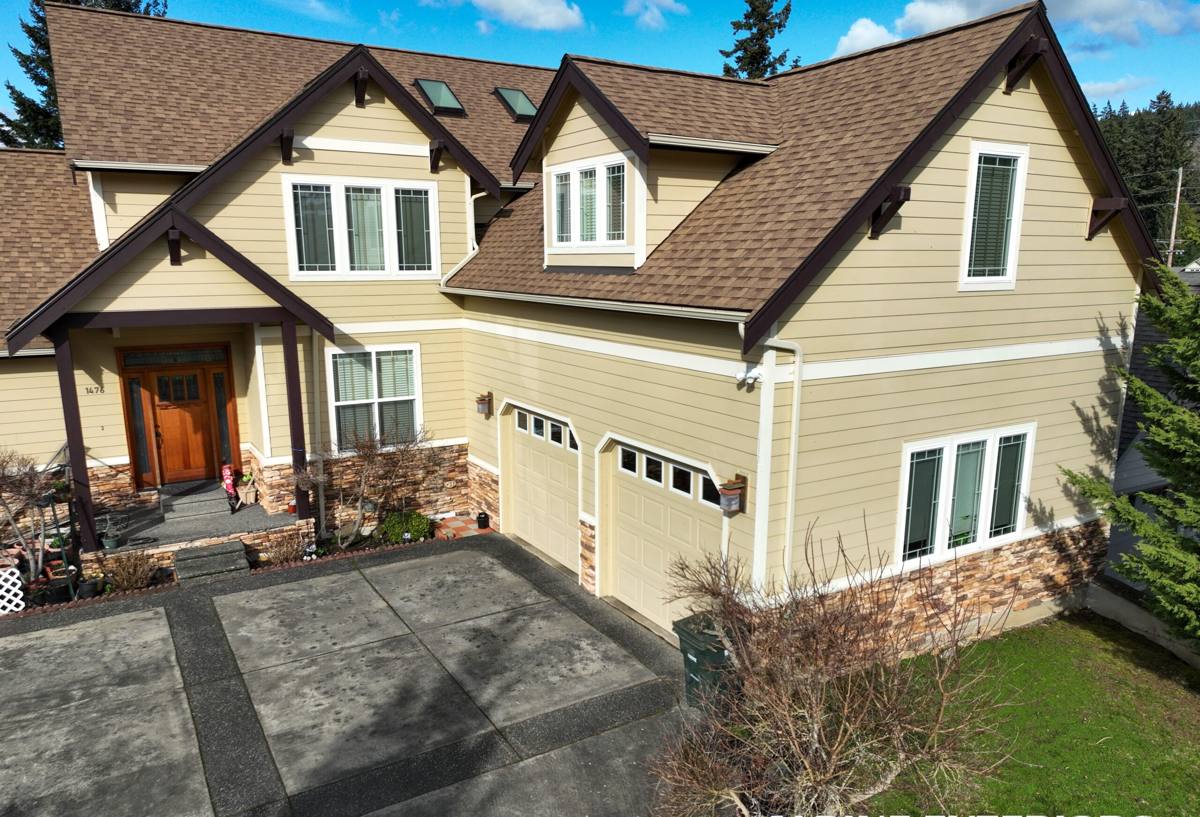
What Kirkland Homes Actually Need From Their Windows
Across the neighborhoods we work in — older homes closer to the lake and downtown core, and newer construction further out toward the plateau — the underlying performance needs are the same three things:
- Water management, not just water resistance. Every window needs a path for the small amount of water that gets past the outer seal to drain back out, not sit against wood framing.
- Condensation control. Our humidity swings between soaked outside air and heated interiors mean single-pane and older dual-pane units fog and sweat. That moisture running down the glass and pooling on the sill is a slow rot source.
- Reasonable energy performance. Washington's energy code sets minimum U-factor requirements for replacement windows, and a correctly rated unit pays you back in comfort near the glass, not just on the utility bill.
Moss deserves its own mention. It doesn't grow on the glass, but it colonizes wood trim, sills, and any horizontal ledge on the exterior, holding moisture against the surface long after the rain stops. A window detail that ignores this — flat trim ledges, unsealed end grain, no drip edge — will grow moss and rot faster than the same window installed with drainage and shedding in mind.
Signs Your Current Windows Are Losing the Battle
Most homeowners call us after noticing one or two of these, not because the window is obviously broken:
- Fogging or a milky haze between the panes that doesn't clear — the seal has failed and the gas fill is gone
- Soft or discolored wood at the bottom corners of the frame or the interior sill
- Visible moss or dark streaking on exterior trim below or beside the window
- Drafts you can feel with a hand near the frame on a windy day
- Difficulty opening, closing, or latching — often a sign the frame has swelled or shifted
- Paint that keeps failing on the exterior trim no matter how often it's redone
Any one of these on its own might just mean a repair. Several together, especially on a wall that takes direct weather, usually means the window and its surrounding flashing need to come out and be redone correctly rather than patched again.
Anatomy of a Correct Installation
Flashing and Water Management
This is where most window failures actually start, and it has almost nothing to do with the window unit itself. A sill pan under the rough opening, properly lapped house wrap or building paper, and head flashing that directs water out and away — in that order, shingle-style — are what keep incidental water from ever reaching the framing. Skipping or reversing this sequence is the single most common mistake we find when we open up a failed window, and it's invisible once the trim goes back on.
Air Sealing and Insulation
The gap between the window frame and the rough opening needs to be filled with a material that stays flexible and doesn't hold water — typically a low-expansion foam or mineral wool, not stuffed fiberglass batting, which can wick moisture and lose its insulating value once wet.
Frame Sizing and Fit
Custom-sized units are built to the exact rough opening rather than shimmed to fit a stock size. That eliminates the extra gaps and shim points that are common leak paths in retrofit work, especially on older Kirkland homes where original openings are rarely perfectly square after decades of settling.
Comparing Frame Materials for This Climate
| Material | Moisture Behavior | Maintenance | Best Fit |
|---|---|---|---|
| Vinyl | Doesn't absorb water or rot; seams can be a weak point if not welded well | Low — occasional cleaning | Budget-conscious replacements, rental properties |
| Fiberglass | Very stable in wet-dry cycling, minimal expansion/contraction | Low | Homes wanting long service life with less upkeep |
| Aluminum | Conducts cold and can condense heavily unless thermally broken | Low | Modern or commercial-style openings, not ideal without a thermal break here |
| Wood / wood-clad | Needs an intact exterior cladding or finish to keep moisture off the wood core | Higher — finish upkeep on exposed elevations | Historic or architecturally matched replacements |
We don't push one material as universally "best." We do steer homeowners away from unclad wood on exposed, weather-facing walls in this climate unless they're committed to keeping the exterior finish maintained — the maintenance burden and moisture risk are real trade-offs worth knowing before you buy, not a knock on the material itself.
What Drives Cost on a Custom Window Job
| Factor | Why It Matters |
|---|---|
| Number and size of openings | Larger and more openings mean more material and labor hours |
| Frame material and glass package | Low-E coatings, argon fill, and triple-pane options add cost but improve comfort and condensation resistance |
| Existing condition of the opening | Rotted framing or old flashing failures found during removal require repair before the new window goes in |
| Wall exposure | Weather-facing walls may warrant upgraded flashing details, adding modest labor time |
| Trim and finish matching | Matching existing exterior trim profiles or historic detailing takes more time than a standard trim-out |
We give straightforward, written estimates broken down by opening so you can see what's driving the number, rather than one lump sum.
Our Process, Start to Finish
- On-site assessment. We look at every opening being replaced, note wall exposure, and check for existing moisture damage before quoting anything.
- Measurement and product selection. Openings are measured for custom sizing, and we go over frame material, glass package, and finish options based on that wall's exposure.
- Written estimate. Line-itemed by opening, with any repair work called out separately so there are no surprises once the crew opens the wall.
- Removal and inspection. Old units come out carefully so we can inspect the rough opening and framing before anything new goes in.
- Flashing, install, and air sealing. Sill pan, house wrap integration, head flashing, low-expansion sealing — done in sequence, not shortcut.
- Trim and finish. Interior and exterior trim matched to the home, caulked and painted or finished as needed.
- Walkthrough and cleanup. Every opening operated and checked with you before we consider the job done.
Permits and Working With Kirkland's Housing Stock
Window replacement in Kirkland, like most of King County, can require a permit depending on scope — particularly if the rough opening size changes, if it's a structural or egress window, or if the job is part of a larger exterior project. We handle that coordination as part of the job rather than leaving it for the homeowner to sort out. Kirkland's housing stock spans a wide range of ages and construction styles, from older homes near the lake and downtown core to newer builds further from the water, and each era brings its own quirks — different framing depths, older single-pane originals, or additions with mismatched openings. A crew that already knows what's common in this area moves faster and catches problems before they become surprises mid-job.
Why a Local, Established Crew Matters Here
Window installation is detail work, and the details that matter are regional. A crew that mostly works drier climates can install a technically fine window and still get the flashing sequence wrong for how water actually moves in a marine climate like ours. Working Kirkland and the greater Seattle area regularly means we're used to the exposure patterns specific to lake-adjacent and Puget Sound-influenced properties, we know what King County's permitting process expects, and we've seen how moss and driving rain find the gaps that a one-size-fits-all install leaves behind. That local pattern recognition is what keeps a window installation from turning into a callback two winters later.
If your windows are fogging, drafting, or showing soft spots, or you're planning a full replacement as part of a larger exterior update, we're happy to take a look. Reach out for a free, no-pressure estimate — someone will walk your home's openings with you and give you a straight answer on what it needs.