 Seattle
 Why Bellevue Roofs Take a Different Kind of Beating
Bellevue sits in one of the wettest, greenest corners of King County, and that combination is hard on a roof. Marine air moving in off Puget Sound keeps humidity high for most of the year, driving rain finds its way under loose or aging shingles, and the tree canopy that makes Bellevue neighborhoods so pleasant also drops needles, leaves, and constant shade onto roof surfaces. Add in a moss season that can run from fall through spring, and you have a roof that's under near-constant moisture stress even when there's no storm in the forecast.
None of this means a Bellevue roof is destined to fail early. It means the maintenance and repair standard has to account for local conditions — moss that regrows if it isn't properly treated, flashing that has to shed water in sustained rain rather than the occasional downpour, and materials that hold up to repeated wet-dry cycling instead of one hard freeze a year. A repair that would be fine in a drier climate can fail here within a season if it doesn't account for that.
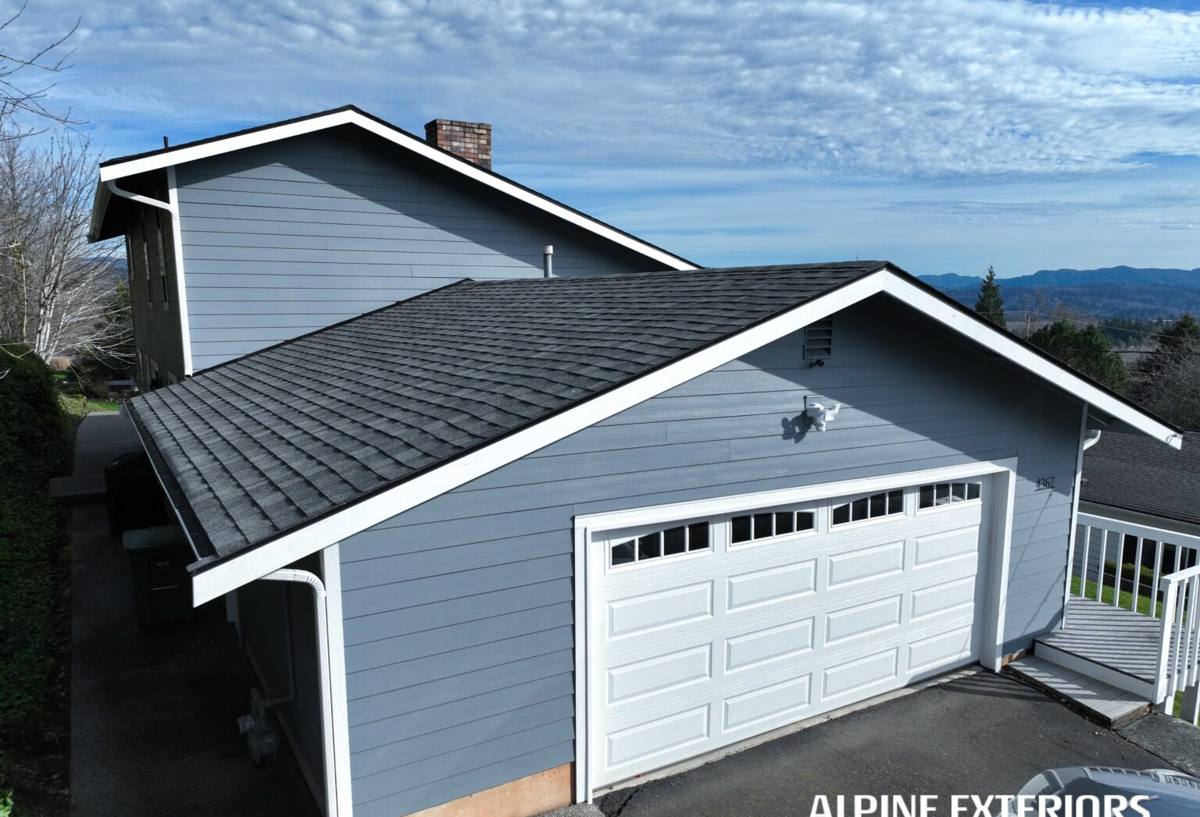
Signs Your Bellevue Roof Needs Repair, Not Replacement
Most roofs don't fail all at once — they show warning signs first. Catching those signs early is usually the difference between a straightforward repair and a full tear-off. Homeowners in Bellevue should watch for:
- Dark streaks or thick moss growth concentrated on north-facing or heavily shaded slopes
- Granules collecting in gutters or at downspout outlets, which signals shingle wear
- Curling, cupping, or lifted shingle edges, especially after a windy stretch
- Water stains on interior ceilings, particularly near chimneys, skylights, or where two roof planes meet
- Soft or spongy spots when walking the roof deck, a sign moisture has reached the sheathing
- Daylight visible through the attic roof deck, or damp insulation below it
One or two of these on an otherwise sound roof usually points to a targeted repair. Multiple issues spread across several roof planes, or damage that's reached the decking in more than one area, is often a sign the roof is past the point where patching makes financial sense.
What a Correct Roof Repair Actually Involves
It's More Than Swapping Shingles
A repair that only replaces the visibly damaged shingles but ignores what's underneath is a repair that will need to be redone. Water rarely stays where it enters — it travels along the underlayment and decking before it shows up as a stain inside the house, which means the visible damage and the actual entry point are often in different spots. A correct repair traces the leak to its source, checks the condition of the underlayment and decking in that area, and only then replaces surface material.
Flashing Gets as Much Attention as Shingles
In our experience, more Bellevue roof leaks trace back to failed flashing — around chimneys, skylights, vent pipes, and roof-to-wall transitions — than to worn-out shingle field. Flashing is metal, and metal shifts, corrodes, and loosens over time in a climate that never really dries out. Any legitimate repair inspects flashing at every penetration and valley, not just the section that's actively leaking.
Common Bellevue Roof Repair Types
| Repair Type | Typical Local Cause | What the Repair Involves |
|---|---|---|
| Moss and organic growth removal | Shaded, north-facing slopes; overhanging tree canopy | Gentle removal, treatment to slow regrowth, inspection for granule loss underneath |
| Flashing repair or replacement | Age, corrosion, thermal movement around penetrations | Removing and resetting flashing with proper underlayment integration, not just caulking over gaps |
| Wind and storm damage | Gusts common in fall and winter storm systems | Replacing lifted or missing shingles, checking surrounding fasteners and seals |
| Skylight and vent leaks | Aging seals combined with sustained rain exposure | Resealing or replacing flashing kits, confirming proper counterflashing |
| Valley and transition leaks | High water volume concentrated at roof valleys | Rebuilding the valley with correct underlayment and metal, not a surface patch |
Our Roof Repair Process
We treat every repair call as a chance to actually solve the problem, not just cover it up. Our process on Bellevue homes generally follows the same steps:
- Inspection. We walk the roof and the attic when accessible, tracing any interior leak signs back to their likely source rather than assuming the nearest visible damage is the cause.
- Diagnosis and explanation. We tell you plainly what's failing, why, and whether it's isolated or a sign of broader wear — including when a repair genuinely won't hold and replacement is the more honest answer.
- Written scope and estimate. You get a clear description of the work and a price before anything is touched.
- The repair itself. Moss and debris removal, decking checks, matching shingle or flashing material, and proper resealing — done in the sequence that actually stops water, not just the sequence that's fastest.
- Cleanup and walkthrough. We clear debris and walk you through what was done and what to keep an eye on going forward.
Materials We Use — and Why
Bellevue's mix of housing stock means we work on everything from standard asphalt composition shingles to cedar shake and, on some homes, low-slope sections with membrane roofing. Our approach to material selection is straightforward: match what's already on the roof when a partial repair makes sense, and be honest about trade-offs when a homeowner is deciding between options for a larger repair or re-roof.
A Few Honest Notes on Common Materials
- Asphalt composition shingles are the most common roofing material in the area and the easiest to repair in sections, since matching an existing color and style is usually straightforward.
- Cedar shake looks great and is common on older Bellevue homes, but it needs more frequent moss treatment and moisture management than asphalt — we're upfront that it's a higher-maintenance material in this climate, not a lower one.
- Membrane roofing on flat or low-slope sections requires seam and flashing expertise that's different from sloped-roof work, and repairs need to match the existing membrane type rather than mixing materials.
We don't push homeowners toward a specific brand or product line during a repair. Our standard is choosing whatever holds up to the moisture load a Bellevue roof actually sees and matches what's already performing on the house.
Roof Repair vs. Replacement: How We Help You Decide
This is the question that matters most on an aging roof, and it deserves a straight answer rather than a sales pitch either direction.
| Factor | Leans Toward Repair | Leans Toward Replacement |
|---|---|---|
| Roof age | Under roughly two-thirds of expected material lifespan | Near or past expected lifespan for the material |
| Extent of damage | Isolated to one or two areas | Spread across multiple roof planes |
| Decking condition | Solid, no soft spots found | Soft, water-damaged decking in multiple locations |
| Granule loss | Minimal, concentrated near damage | Widespread across the roof field |
| Repair history | First or second repair on this roof | Repeated repairs to the same areas |
When a roof falls clearly on one side of this table, the recommendation is easy. When it's mixed, we'll walk you through the reasoning and let you make the call — a repair that buys a homeowner several more good years is often the right financial decision, and we'd rather earn a repair job done well than push an unnecessary replacement.
Why Local Experience in Bellevue Matters
A crew that regularly works Bellevue roofs knows things a roofer from outside the area has to learn on the job. That includes which neighborhoods sit under heavier tree canopy and need more aggressive moss management, how King County permitting applies to larger repair or re-roof work, and how HOA guidelines in some Bellevue communities affect material color and type. It also means faster response — we're not driving in from across the region when a storm knocks a section of shingles loose and a homeowner needs a tarp on the roof same-day.
Familiarity with the housing stock helps too. Bellevue has a mix of older homes with original cedar or aging asphalt roofs and newer construction with more recent materials, and knowing what's typical for a given era of home speeds up diagnosis and helps us source matching materials without guesswork.
Maintaining Your Roof Between Repairs
A repair holds longer when it's supported by basic seasonal upkeep. We recommend homeowners keep an eye on:
- Gutters and downspouts clear of leaves and needles, especially before fall rains pick up
- Overhanging branches trimmed back to reduce shade and debris buildup on the roof
- Moss treated at the first sign of regrowth rather than left to spread over a full season
- Attic ventilation checked periodically, since poor airflow traps moisture against the roof deck from underneath
- A visual check after any major windstorm for lifted or missing shingles
None of this replaces a professional inspection, but it meaningfully extends the life of any repair we do and reduces the odds of a small issue turning into a bigger one before the next check-up.
If you're dealing with a leak, storm damage, or a roof that's showing its age, we're happy to take a look and give you a straight assessment — no pressure, no upsell, just an honest read on what your roof actually needs. Use the form below to request a free estimate for roof repair on your Bellevue home.