 Seattle
 Why Bellevue Roofs Take a Beating Every Storm Season
Bellevue sits in a part of King County that gets hit from two directions every year: Pacific storm systems that roll in off the water with driving, sideways rain, and the long gray stretch of fall and winter when a roof rarely gets a chance to fully dry out between weather events. Add in the region's salt-tinged marine air and a moss season that can run eight months or more, and you have a climate that is genuinely hard on roofing — even on a roof that was installed correctly.
Wind gusts during a strong system can lift shingle tabs, drive rain sideways under flashing, and knock branches and debris onto a roof plane. None of that damage always shows up as an obvious hole. Often it shows up months later as a stain on a bedroom ceiling, long after the actual storm has passed.
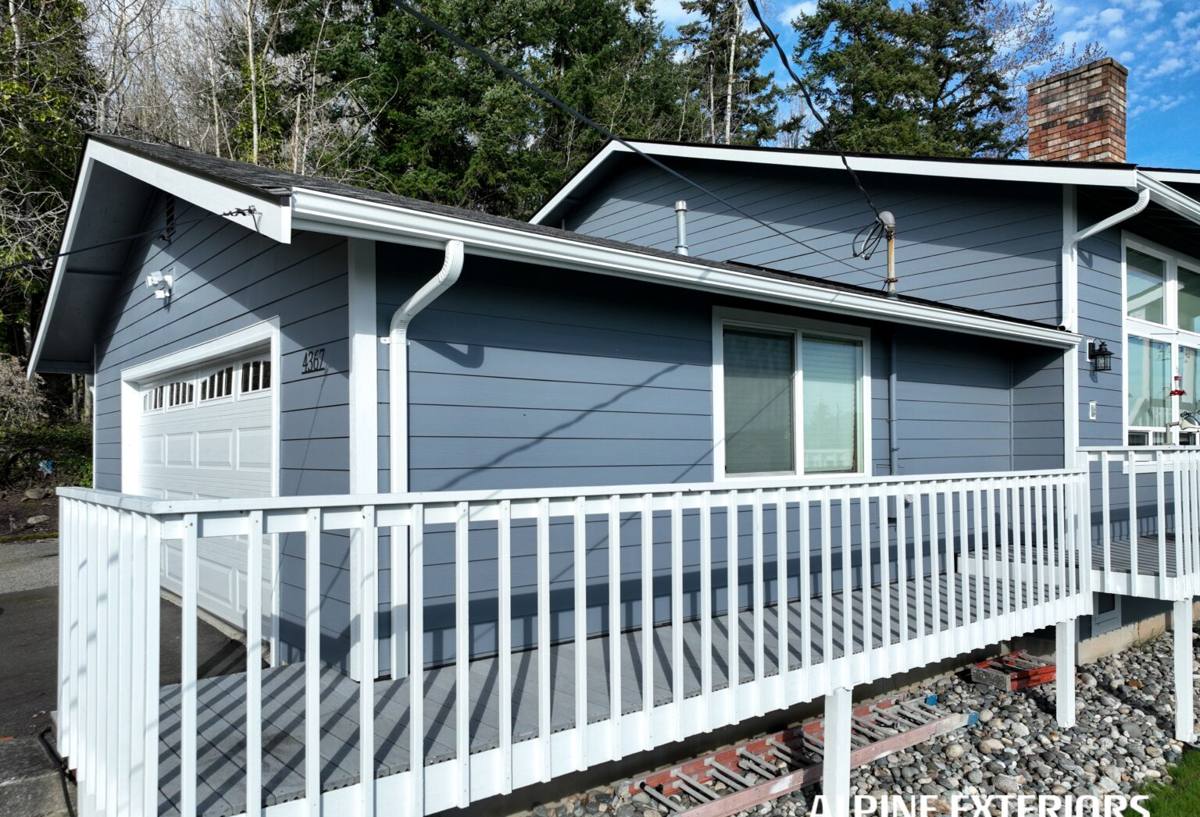
What Storm Damage Actually Looks Like on a Bellevue Roof
Homeowners usually expect storm damage to be dramatic — a tree branch through the roof, or shingles scattered across the lawn. Sometimes it is. More often, it's subtle, and it's the subtle damage that causes the most expensive problems because it goes unaddressed for months.
Common damage types we see after a storm cycle
- Lifted or creased shingle tabs where wind got underneath the edge
- Torn or missing shingles, often on the windward-facing slope or near roof edges and ridges
- Flashing pulled loose or bent around chimneys, skylights, and roof-to-wall transitions
- Granule loss from wind-driven rain and debris, which accelerates aging even without a visible leak
- Gutter and downspout damage that backs water up under the roof edge instead of away from the house
- Impact damage from falling branches — punctures, cracked decking, or bruised shingles
- Moss and debris buildup in valleys that traps moisture against the roof deck long after the storm
That last item is easy to overlook, but in this climate it matters as much as wind damage. A storm that dumps debris into a valley or behind a chimney can set up a moisture trap that does its damage slowly, over the following months of Puget Sound drizzle.
Our Storm Damage Assessment Process
A correct repair starts with a correct diagnosis, not a quick patch on the spot that's leaking. When we inspect a Bellevue home after storm damage, we're looking at the whole roof system, not just the obvious problem area.
- Exterior roof inspection — every slope, valley, ridge, and edge, checked for lifted, torn, or missing shingles and for granule loss patterns that indicate wind stress
- Flashing and penetration check — chimneys, vents, skylights, and wall transitions, where the majority of storm-related leaks actually originate
- Gutter and drainage review — because backed-up water can mimic or worsen roof damage and is often mistaken for a roofing problem when it's actually a drainage problem
- Attic and decking check — where accessible, we look for water staining, soft decking, or daylight through the roof deck that confirms how far moisture has traveled
- Photo documentation — useful for your own records and essential if you're filing an insurance claim
We give you a straight answer about what we found, what caused it, and what it will take to fix — before any work starts.
What a Correct Storm Repair Actually Involves
Storm repair done right is more than swapping out the shingles you can see are damaged. A few things separate a repair that lasts from one that fails again in the next storm cycle.
Matching materials, not just covering the hole
Shingle color and profile fade and weather over time, so an exact match on an older roof isn't always possible. We aim for the closest reasonable match and are upfront about where a patch will be visible, rather than letting you find out after the work is done.
Flashing gets rebuilt, not just re-sealed
Caulking over bent or displaced flashing is a short-term fix that fails within a season or two, especially with the amount of driving rain this area sees. If flashing was disturbed by wind or impact, we reset or replace it properly, tucked and lapped the way it should be.
Decking gets checked before shingles go back on
If water reached the roof deck, we check for soft or delaminated plywood before closing the roof back up. Shingling over damaged decking is how a small storm repair turns into a bigger problem a year or two later.
Ventilation isn't ignored
A storm repair is also a chance to check that attic ventilation is working as intended. Poor ventilation traps moisture, which compounds moss growth and shortens the life of the repair and the surrounding roofing.
Repair vs. Replacement: How We Help You Decide
Not every storm-damaged roof needs a full replacement, and not every roof can be responsibly patched. The right call depends on the roof's age, how widespread the damage is, and what condition the rest of the roofing is in.
| Factor | Leans toward repair | Leans toward replacement |
|---|---|---|
| Roof age | Under 12-15 years, otherwise sound | Near or past typical shingle lifespan |
| Damage extent | Isolated to one slope or area | Scattered across multiple slopes |
| Decking condition | Solid, dry decking underneath | Soft, stained, or delaminated decking found |
| Prior storm history | First significant damage event | Repeated patch history on the same roof |
| Material availability | Close shingle match available | Discontinued or badly faded shingle line |
We'll tell you honestly which side of that line your roof falls on. If a repair is the responsible choice, that's what we'll recommend — we're not looking to sell a full replacement when a properly done repair will hold up.
Storm Damage and Insurance Claims
Many storm repairs in this area are covered in whole or in part by homeowners insurance, particularly wind and impact damage from a specific storm event. We're not your insurance adjuster and won't promise a claim outcome, but we can help make the process smoother:
- Detailed photo documentation of the damage, tied to the storm date where possible
- A written scope of work and estimate your adjuster can reference
- Straightforward answers if your adjuster has questions about the cause or extent of damage
What we won't do is inflate a scope of work to match a claim amount or write up damage that doesn't exist. Our estimate reflects what the roof actually needs — that's the standard we hold ourselves to whether or not a claim is involved.
Preventing the Next Round of Storm Damage
Bellevue's roofing challenges don't end when a repair is finished — the same conditions that caused the damage keep going year-round. A few habits make a real difference in how a roof holds up through the next storm cycle.
Homeowner storm-season checklist
- Clear gutters and downspouts before the fall rains start, and again mid-winter if trees are nearby
- Have overhanging branches trimmed back before they become the next storm's projectile
- Address moss growth early — a light, established layer is far easier to manage than a thick mat that's been holding moisture against shingles for a season
- Check attic ventilation isn't blocked by insulation or debris
- After any significant windstorm, do a visual check from the ground for obviously lifted or missing shingles
- Don't ignore small ceiling stains — they rarely stay small
None of this eliminates storm risk entirely — nothing does, in this climate — but it narrows the gap between a minor repair and a major one.
Why Hiring a Crew That Already Works Bellevue Matters
Storm damage repair isn't a generic service. A crew that regularly works Bellevue roofs already understands how the local mix of tree cover, elevation, and lake-effect moisture plays out on specific roof types and pitches common in the area. That familiarity shows up in small but important ways — knowing which flashing details tend to fail first locally, which valleys collect moss fastest, and how to sequence a repair around whatever weather window you actually have in a Puget Sound winter.
It also means a crew that isn't guessing at material availability or scrambling to source a shingle match after already starting the job. We show up prepared because we know what this area's roofs are up against.
Our Process, Start to Finish
When you call about storm damage, here's what to expect:
- A prompt inspection — storm damage that's actively leaking gets priority scheduling
- A clear, written explanation of what we found and what caused it
- An honest repair-vs-replacement recommendation, with the reasoning behind it
- A straightforward estimate before any work begins
- Repair work done to match the surrounding roof as closely as materials allow, with flashing and decking addressed properly, not just covered over
- Photo documentation you can keep for your records or an insurance claim
If you've got storm damage on a Bellevue roof — or you're not sure whether what you're seeing is storm damage at all — we're happy to take a look. Reach out for a free, no-pressure estimate using the form below.