 Seattle
 Capitol Hill's Climate Problem for Siding
Capitol Hill sits close enough to downtown Seattle to feel every bit of Puget Sound's marine climate: long stretches of driving rain from fall through spring, salt-tinged air moving in off the water, and a mature tree canopy that keeps large sections of the neighborhood shaded and damp for most of the year. That combination is exactly what wears down siding faster than homeowners expect. Wind-driven rain finds its way into laps, seams, and fastener holes that a calmer climate would never test. Shade and moisture linger on north- and west-facing walls long after the sun comes out elsewhere in King County, which is why moss and algae growth shows up on Capitol Hill siding sooner and more persistently than in drier parts of the region.
None of this is unique to one house or one block — it's the baseline condition every exterior on this hill has to deal with, year after year. Siding that isn't engineered for it doesn't fail all at once. It fails slowly, in ways that are easy to miss until a repaint won't hold or a wall starts to feel soft underneath.
The Housing Stock: What We See on Capitol Hill Jobs
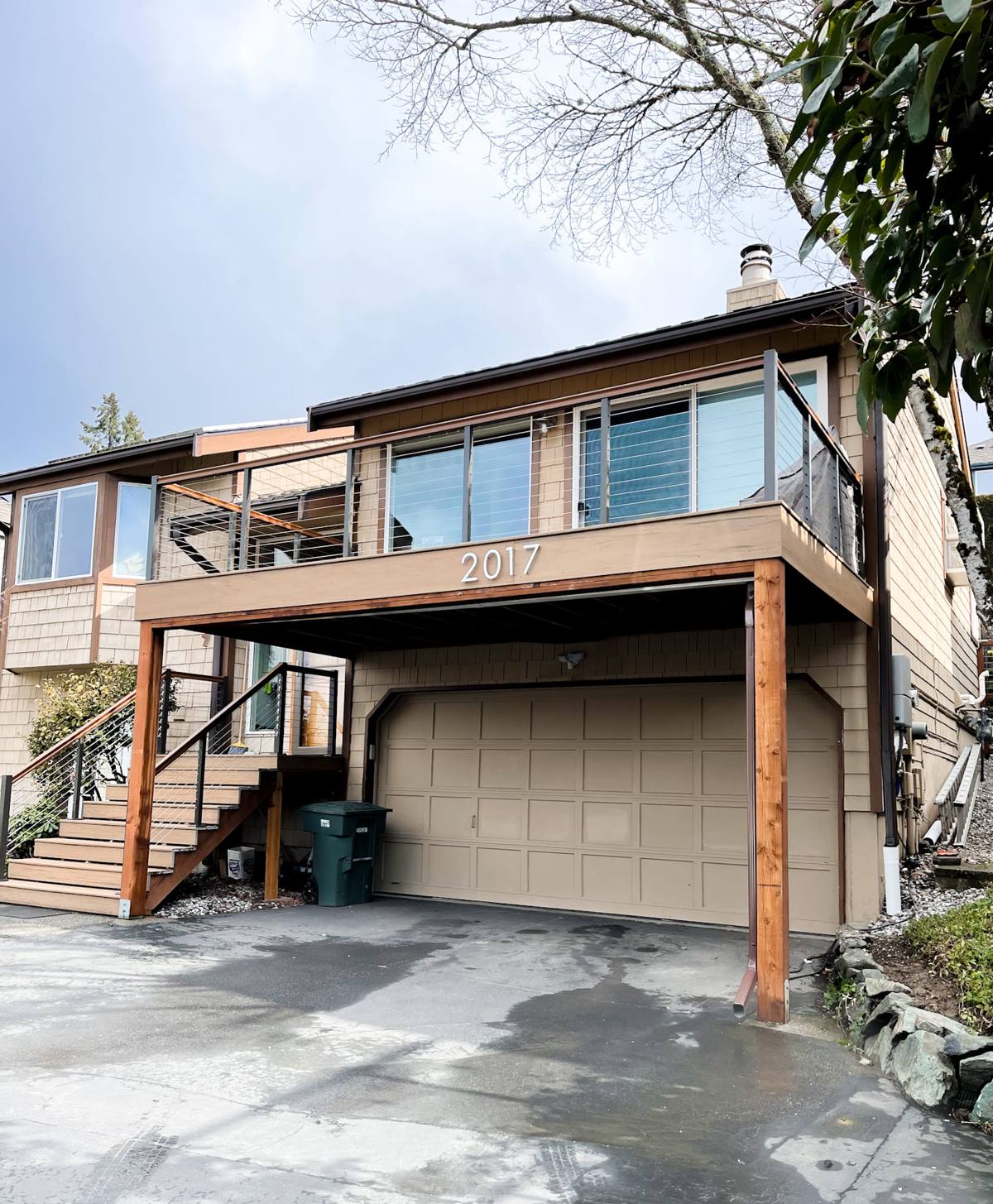
Capitol Hill is a mix of century-old craftsman and Victorian-era homes, mid-century infill, and newer multi-family construction, often packed onto narrow, hillside lots with limited side-yard access. That variety matters for siding work in a few practical ways:
Older homes
Many of the neighborhood's original homes were built with wood siding or early composite products that were never designed for decades of continuous coastal moisture exposure. By the time we're called out, we're often dealing with hidden moisture damage behind the existing siding — soft sheathing, rotted trim, or failed building paper — that has to be addressed before any new siding goes up.
Newer construction
Homes built in the last couple of decades are more likely to have vinyl or engineered wood siding installed to a builder-grade spec rather than a climate-specific one. These products can look fine for years and still be quietly trapping moisture or degrading at the edges, especially on shaded elevations.
Either way, a Capitol Hill siding job is rarely just "swap old for new." It starts with an honest look at what's underneath.
What Driving Rain and a Long Moss Season Do to the Wrong Siding
Wind-driven rain doesn't need a hole to get in — it just needs a gap. On lap siding installed with poor overlap, missing flashing, or the wrong fastener pattern, water gets pushed up and behind the boards during storms instead of running down and off. Combined with a moss season that can stretch six months or more in shaded areas, that trapped moisture rarely gets a chance to fully dry out between rain events.
Over time this shows up as:
- Swelling, cupping, or soft spots at butt joints and board edges
- Paint that blisters or peels years ahead of schedule, especially on shaded walls
- Moss and algae staining that keeps returning no matter how often it's washed off
- Soft or delaminating sheathing discovered only once the old siding comes off
- Caulk joints that crack and open small paths for water behind the cladding
The fix isn't a better caulk gun or a more aggressive power wash. It's a siding system engineered for this exact climate, installed the way it's designed to be installed.
Why We Install Only James Hardie Fiber Cement
We install James Hardie fiber cement siding exclusively. We don't install vinyl, LP SmartSide, Cemplank, Allura, primed spruce, or cedar, and that's a deliberate standard, not a lack of options. Each of those products has legitimate strengths, but every one of them asks a Puget Sound homeowner to accept a moisture or maintenance trade-off that we don't think holds up over the long haul in a climate like this one.
Fiber cement is non-combustible, which matters increasingly to insurers and homeowners alike, and it doesn't feed the freeze-swell-crack cycle that wood and engineered wood products can be prone to when moisture gets in at cut edges or fastener points. James Hardie's ColorPlus factory finish is baked on and cured under controlled conditions, which holds color and resists the fading, chalking, and peeling that field-applied paint struggles with under six months of Seattle rain a year.
Built for this specific climate
James Hardie engineers its HZ5 product line specifically for climates with prolonged moisture exposure — the Pacific Northwest is squarely in that category. That's a meaningfully different design target than a general-purpose siding product, and it shows in how the board holds up on shaded, north-facing Capitol Hill walls year after year.
A warranty that reflects confidence in the product
James Hardie backs its siding with a strong, transferable warranty — a real advantage for Capitol Hill's mix of long-time owners and a fairly active resale market. A warranty that transfers to a new owner is a selling point; a warranty that doesn't is a liability you're stuck explaining at closing.
What a Correct Fiber Cement Installation Actually Involves
Fiber cement siding is only as good as the installation behind it. The material itself resists moisture and pests, but a poor install can still let water behind the cladding — and once it's behind fiber cement, it's the sheathing and framing that pay the price, not the siding itself. A correct job includes:
Tear-off and inspection
Removing the old siding and actually inspecting the sheathing, framing, and existing moisture barrier before covering anything back up. This is where hidden rot from years of trapped moisture gets found and dealt with, rather than sealed in behind new material.
Weather-resistive barrier and flashing
A continuous, correctly lapped weather-resistive barrier, with flashing at every window, door, deck ledger, and penetration. This is the layer that actually keeps driving rain out — the siding is the second line of defense, not the first.
Manufacturer-spec fastening
Correct fastener type, spacing, and placement, with proper clearance at the bottom of the wall and around penetrations. Hardie publishes exact installation specifications for a reason — deviating from them is one of the fastest ways to void the warranty and shorten the siding's real-world life.
Joint and trim detailing
Butt joints, corners, and trim need to be detailed to shed water, not just look clean from the street. This is especially important on the shaded, moss-prone elevations common on Capitol Hill's tree-covered lots.
How Siding Options Compare in This Climate
| Material | Moisture Performance | Moss/Algae Resistance | Maintenance | Typical Lifespan |
|---|---|---|---|---|
| James Hardie Fiber Cement | Engineered for prolonged moisture exposure; won't rot or swell | Factory finish resists staining better than field-painted materials | Occasional wash; no repainting for years with ColorPlus | Multiple decades with correct install |
| Vinyl | Can warp or buckle; seams can allow water intrusion | Can trap moisture behind panels in shaded areas | Low, but limited repair options if damaged | Variable, shorter in harsh exposure |
| LP SmartSide (engineered wood) | Wood-based core sensitive to sustained moisture at cut edges | Vulnerable in prolonged damp, shaded conditions | Periodic caulking and paint upkeep | Shorter than fiber cement in wet climates |
| Cedar / Primed Wood | Requires diligent sealing and upkeep to resist moisture | Prone to moss and mildew without regular treatment | High — regular refinishing and inspection | Shortest without dedicated maintenance |
This isn't a claim that the alternatives are poorly made — it's a reflection of what each material asks of a homeowner in a climate defined by driving rain and a long moss season. We chose to standardize on the product that asks the least of homeowners over the decades it's on the wall.
Our Process for Capitol Hill Homes
Working on Capitol Hill comes with practical realities we plan around: narrow lots and limited side-yard access, hillside grading that affects staging and scaffolding, and an older housing stock where surprises behind the old siding are common rather than rare. We also account for Seattle's permitting requirements up front rather than treating them as an afterthought, since exterior work on many of these homes triggers a permit review.
Our process on a typical Capitol Hill siding job:
- On-site evaluation of the existing siding, trim, and visible moisture or moss patterns by elevation
- Tear-off with inspection of sheathing and framing before anything new goes up
- Repair of any rot or moisture damage found, documented and discussed before covering it
- Installation of weather-resistive barrier, flashing, and James Hardie fiber cement to manufacturer spec
- Final detailing at trim, corners, and joints, with particular attention to shaded and rain-exposed elevations
After Installation: Keeping Your Siding Performing
A correctly installed James Hardie system is low-maintenance, not no-maintenance. A few habits go a long way in this climate:
- Rinse siding annually, focusing on shaded, moss-prone elevations
- Keep gutters clear so overflow doesn't run down the wall face during heavy rain
- Trim back vegetation and tree limbs that keep a wall section shaded and damp
- Inspect caulking at trim and joints once a year and touch up as needed
- Address any impact damage promptly rather than letting a chipped edge sit exposed
Why Local Experience Matters
A crew that already works Capitol Hill regularly knows the neighborhood's access constraints, its older housing quirks, and exactly which elevations on a hillside lot take the worst of King County's rain and shade. That familiarity shows up in fewer surprises during tear-off, tighter scheduling around narrow-lot logistics, and detailing decisions that account for how a specific wall actually behaves through a Puget Sound winter — not just how it looks on installation day.
If you're weighing a siding replacement on a Capitol Hill home, we're glad to take a look and walk you through what we're seeing on your specific walls. Reach out for a free, no-pressure estimate using the form below.