 Seattle
 Siding That Has to Work in Columbia City's Climate
Columbia City sits close enough to Puget Sound and Lake Washington that homes here deal with a steady mix of salt-tinged air, wind-driven rain, and long stretches of overcast, damp weather that can run from October well into spring. Add in mature tree canopy on many of the neighborhood's older streets, and you get a fourth factor: moss and algae season that seems to last most of the year. Siding in this part of Seattle isn't just a cosmetic layer — it's the first line of defense against moisture intrusion, and it has to hold its finish and its shape through repeated wet-dry cycles year after year.
We install James Hardie fiber cement siding exclusively, and Columbia City is a textbook example of why that standard matters. This page covers what local homes actually need from their siding, what a correct installation involves, and how our process is built around this specific climate — not a generic weather pattern from somewhere else.
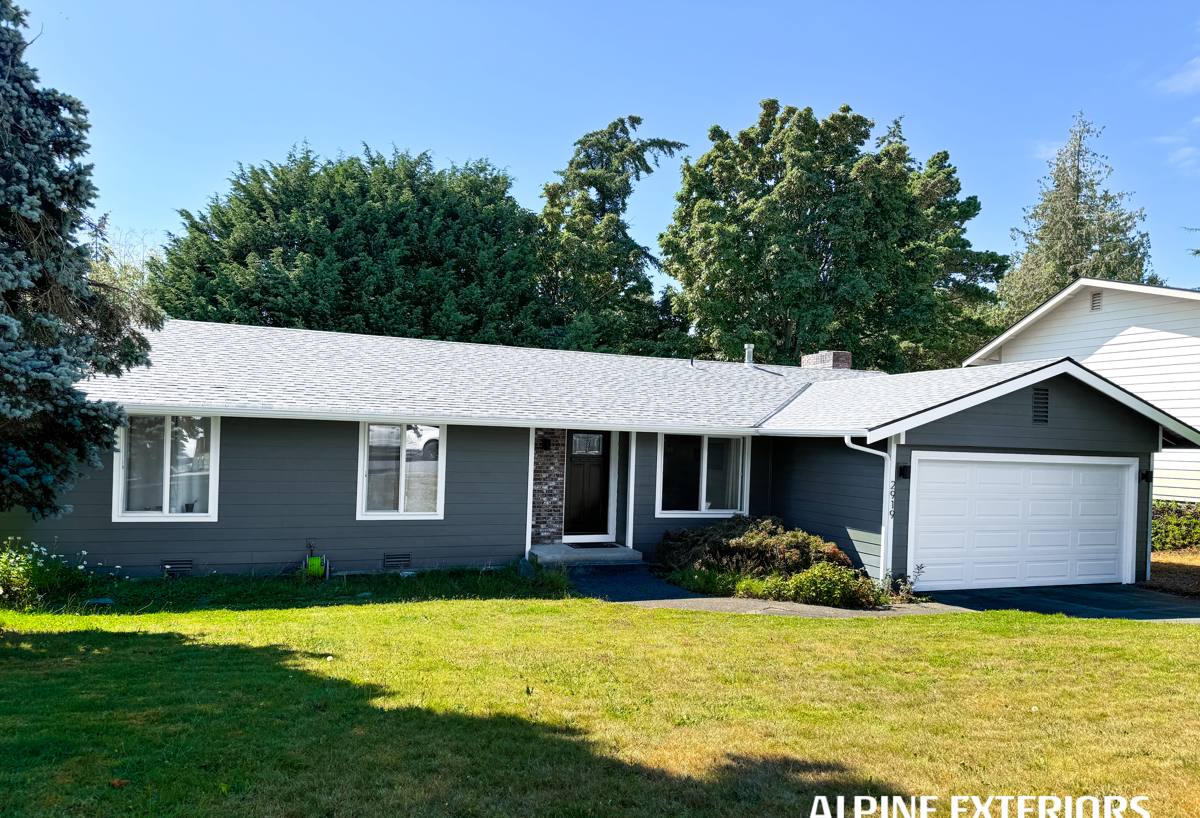
What King County's Climate Does to Siding Over Time
Seattle's marine climate is milder than most of the country, but "mild" doesn't mean "easy" on a building envelope. A few specific stressors show up again and again on siding jobs in and around Columbia City:
- Driving rain: Wind off the Sound and lake pushes rain sideways during storms, forcing water into any gap, seam, or fastener hole that wasn't sealed correctly.
- Salt-influenced air: Proximity to Puget Sound means airborne salt and moisture accelerate corrosion on fasteners, trim, and any material not rated for it.
- Moss and algae growth: Shaded, damp siding surfaces — especially on north-facing walls or under tree cover — are prime real estate for moss, mildew, and green staining if the material and finish aren't resistant to it.
- Long wet seasons with short dry windows: Materials that swell, warp, or absorb moisture get punished here because they rarely get enough consecutive dry days to fully recover before the next system rolls through.
- Temperature swings between seasons: Summers have gotten hotter and drier in recent years, which means siding now has to handle real UV and heat exposure in addition to the wet winters — a wider range of stress than the old "gray and mild" reputation suggests.
None of these factors are dramatic on their own. What causes damage is the accumulation — years of small moisture cycles working on a material or installation that wasn't built to handle them.
Why James Hardie Fits This Neighborhood
James Hardie fiber cement is engineered from cement, sand, and cellulose fibers — materials that don't absorb water the way wood-based products do and don't corrode the way some metal or composite trims can. For a neighborhood like Columbia City, that translates into a few concrete advantages:
Moisture Stability
Fiber cement doesn't swell, cup, or delaminate when it takes on repeated wet-dry cycles the way engineered wood products can. In a climate where siding might stay damp for days at a stretch, that dimensional stability is what keeps seams tight and paint lines straight over the long term.
Non-Combustible Core
James Hardie siding is non-combustible, which is a real advantage in the Pacific Northwest given the wildfire smoke and regional fire risk that's become more common in recent summers. It's not the primary reason we recommend it for Columbia City's coastal-influenced climate, but it's a meaningful bonus.
Factory-Applied ColorPlus Finish
Hardie's ColorPlus finish is baked on at the factory under controlled conditions, which gives it better fade and moisture resistance than field-applied paint. On a home that spends much of the year under cloud cover and rain, a finish that doesn't need repainting every few years is a genuine maintenance win, not just a marketing point.
Moss and Algae Resistance
The dense, non-porous surface of fiber cement doesn't give moss and algae the same foothold that porous or textured wood-based sidings can offer. On shaded lots — common on Columbia City's tree-lined streets — that matters more than most homeowners realize until they've spent a few summers pressure-washing green streaks off their siding.
Why We Don't Install Alternatives Here
We get asked regularly about vinyl, LP SmartSide, cedar, and primed spruce siding, and we're upfront about why we don't install any of them, even though each has legitimate uses in the right context.
| Material | What It Gets Right | Why We Don't Use It Here |
|---|---|---|
| Vinyl siding | Low upfront cost, minimal maintenance | Can warp or crack in temperature swings and doesn't hold up to wind-driven rain intrusion at seams as well as fiber cement |
| LP SmartSide (engineered wood) | Lighter weight, easier to install, warmer appearance | Wood-strand core is more moisture-sensitive; edge swelling and moisture intrusion are common complaints in wet marine climates over time |
| Cedar siding | Natural appearance, renewable material | Requires ongoing sealing, staining, and moisture maintenance that most homeowners underestimate in a climate this consistently wet |
| Primed spruce / wood siding | Lower material cost, traditional look | Primer is just a base coat, not a finish — it needs a maintenance schedule from day one and is highly vulnerable to rot if that schedule slips |
Our position isn't that these products are junk — it's that we've standardized on one system we can install, warranty, and stand behind consistently, and for this climate, fiber cement is the material that best matches the moisture and maintenance realities Columbia City homeowners actually deal with.
What a Correct James Hardie Installation Involves
The siding material is only half the equation. A large share of siding failures we see on older Columbia City homes trace back to installation shortcuts, not the material itself. A correct James Hardie install includes:
- Weather-resistant barrier (WRB): A properly lapped and sealed moisture barrier behind the siding, which is the real first line of defense against wind-driven rain.
- Correct fastener placement and type: Hardie specifies exact nailing patterns and fastener types by product line and exposure — get this wrong and you compromise both the warranty and the water resistance.
- Proper flashing at every penetration: Windows, doors, vents, and roof-to-wall transitions all need flashing details that direct water out and away, not just caulk covering a gap.
- Correct clearances: Hardie requires minimum clearance from grade, roofing, decks, and other surfaces so water can't wick up into the bottom of the siding.
- Field-cut edge sealing: Any cut edge needs to be sealed per Hardie's specifications so raw material isn't exposed to moisture.
- Correct joint treatment: Butt joints and panel seams need to be treated and, where required, caulked with a compatible sealant rather than left to trap water.
Skipping any one of these doesn't necessarily cause a visible problem in year one. It shows up in year five or ten, as a soft spot, a stain, or a warranty claim that gets denied because the installation didn't meet spec.
Our Process for a Columbia City Home
1. On-Site Assessment
We walk the exterior, check existing siding and sheathing condition, note problem areas — shaded walls, downspout discharge points, grade clearance — and identify anything that needs repair before new siding goes on.
2. Product and Line Selection
We help you choose the right Hardie product line and profile for your home's style and exposure, factoring in which walls take the most weather and where moss or algae growth has historically been an issue.
3. Tear-Off and Substrate Check
Old siding comes off and we inspect the sheathing underneath for any hidden moisture damage. This is often where long-term problems from a prior installation get caught before they're sealed back up under new material.
4. WRB and Flashing Installation
The weather barrier and all flashing details go in first, correctly lapped and sealed, before a single piece of siding is hung.
5. Hardie Installation to Spec
Siding is installed following James Hardie's fastening, clearance, and joint-treatment requirements — the details that protect both the performance and the manufacturer warranty.
6. Final Walkthrough
We walk the finished exterior with you, checking trim lines, joints, and finish quality before calling the job complete.
Why Local Installation Experience Matters
A crew that regularly works Columbia City and the surrounding Seattle neighborhoods already knows which walls take the worst of the wind-driven rain, where moss tends to establish first, and how the area's older housing stock is typically framed and sheathed. That local pattern recognition shortens the assessment phase and helps catch problems — like marginal grade clearance or a poorly flashed old window — before they become part of a new installation. It also means faster response if a warranty question or a storm-related concern comes up down the road, instead of waiting on a crew that has to drive in from outside King County.
Signs Your Current Siding May Be Falling Behind
If your home in Columbia City has any of the following, it's worth having someone take a look before small issues turn into structural repairs:
- Soft or spongy spots when you press on the siding, especially near the bottom courses
- Persistent moss or algae staining that returns quickly after cleaning
- Visible cupping, warping, or separated seams
- Peeling or bubbling paint, particularly on shaded or north-facing walls
- Water stains or discoloration on interior walls near exterior siding
If you're weighing a siding project for your Columbia City home, we're happy to take a look and walk you through what your home actually needs — no pressure, no generic sales pitch. Reach out for a free estimate using the form below.