 Seattle
 Roof Repair Built for Columbia City's Climate
Columbia City sits in one of Seattle's older, more established neighborhoods, with a mix of early-1900s bungalows, mid-century homes, and newer infill construction packed under a heavy tree canopy. That combination — older roof decks, mature landscaping, and King County's long wet season — creates a very specific set of roofing problems. A roof repair here isn't just about patching a leak; it's about understanding how this particular neighborhood's weather and tree cover wear a roof down over time.
Seattle's marine climate means moisture-laden air moves through the region for most of the year, driving rain comes in sideways during winter storms, and shaded, tree-covered lots stay damp long after the rain stops. Add a moss season that can run eight months or longer, and you get roofs that fail in ways homeowners in drier climates rarely deal with — granule loss from constant saturation, moss lifting shingles at the edges, and slow leaks that start small and go unnoticed until there's damage in the attic.
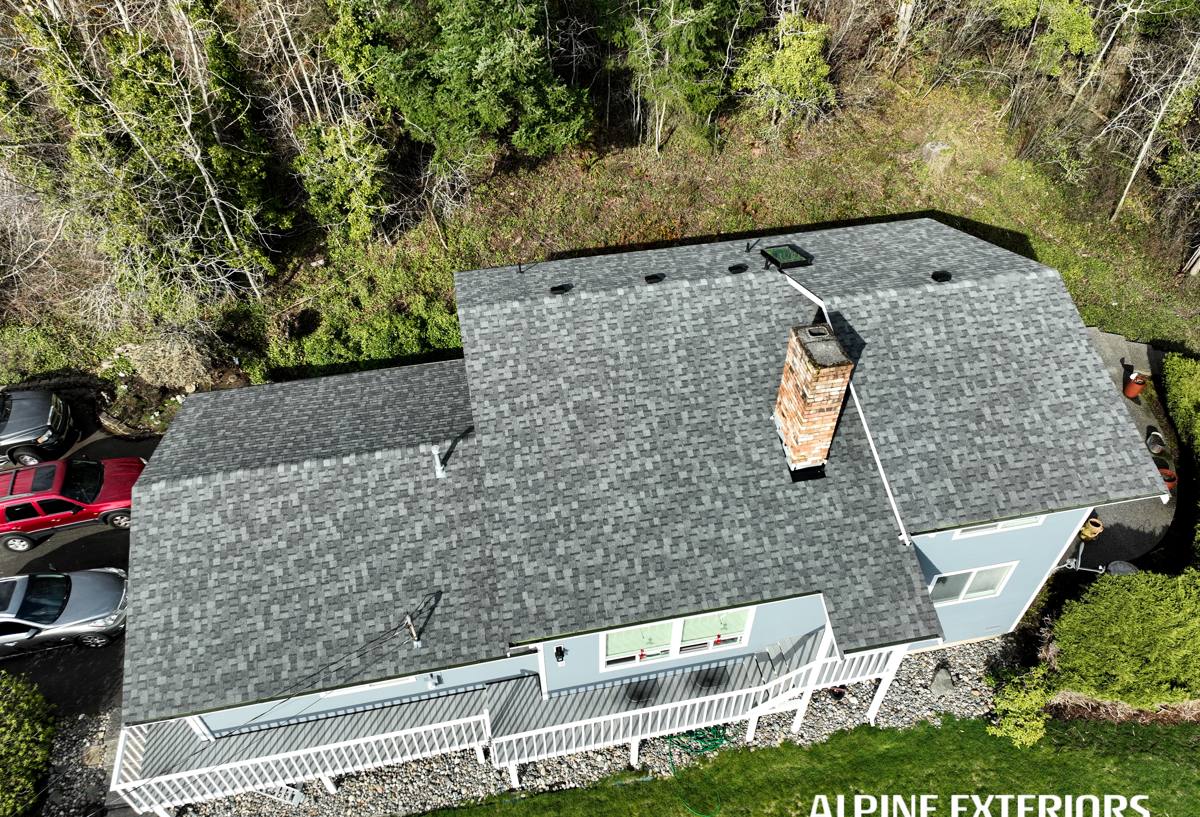
Signs a Columbia City Roof Needs Repair
Because so much roof damage here develops gradually, homeowners often don't notice a problem until it shows up inside the house. By then, the roof has usually been compromised for a while. Watch for:
- Dark streaking or green-black growth on shingles, especially on north-facing slopes that stay shaded most of the day
- Granules collecting in gutters or at the base of downspouts
- Soft or spongy spots when walking the roof deck (a sign of moisture getting into the sheathing)
- Water stains on ceilings or upper walls, particularly after a heavy storm
- Shingles that are curling, cupping, or lifting at the edges
- Visible moss or moisture buildup around valleys, chimneys, and skylights
- Daylight visible through the roof deck from inside the attic
Any one of these is worth a professional look. Several at once usually means the roof has been dealing with moisture intrusion longer than it should have.
Moss, Moisture, and the Long Wet Season
Moss is the single biggest recurring issue we see on roofs throughout this part of Seattle, and Columbia City's tree-lined streets make it worse than average. Overhanging branches drop organic debris into valleys and gutters, that debris holds moisture against the roofing material, and moss takes root in the damp granule surface of asphalt shingles or in the seams of other roofing types. Once established, moss roots work their way under shingle edges and lift them, which is exactly the mechanism that lets wind-driven rain get underneath the roofing system.
This isn't a cosmetic problem. A roof that looks mossy but otherwise intact from the ground can already have compromised shingle adhesion and early water intrusion at the deck level. Because King County's wet season runs from roughly October through April, a roof with active moss growth rarely gets a real chance to dry out and reset — the damage compounds year over year until it becomes a repair, and eventually a full section replacement.
Why Driving Rain Matters for Repairs
Seattle storms often bring rain at an angle, not straight down. That matters for repair work because wind-driven rain finds gaps that vertical rain never would — lifted shingle tabs, under-sized flashing overlaps, nail heads that have backed out slightly. A repair that only addresses the visible leak point without accounting for wind-driven moisture will often fail again in the next storm system.
What a Correct Roof Repair Actually Involves
A proper roof repair is more than sealing the spot where water is showing up inside the house. Water rarely enters where it's discovered — it travels along the underlayment or decking before dripping down in a visible spot, so tracing the actual entry point is the first and most important step.
A repair done right typically includes:
- Diagnosis at the source. Tracing the leak path from the interior stain or attic moisture back to the actual point of entry on the roof surface.
- Inspection of the surrounding area. Checking adjacent shingles, flashing, and underlayment condition, not just the failure point, since one visible leak often points to broader wear nearby.
- Removal of damaged material. Cutting out compromised shingles, felt, or decking rather than layering new material over damaged material.
- Deck assessment. Confirming the plywood or board sheathing underneath hasn't softened or delaminated from prolonged moisture exposure.
- Correct flashing and underlayment work. Most recurring leaks trace back to flashing around chimneys, skylights, and valleys, or underlayment that wasn't properly lapped — this is where repair quality shows.
- Matching materials. Using shingles or roofing material that match the existing roof's type, weight, and where possible, color, so the repair blends in and performs consistently with the rest of the roof.
- Moss and debris removal. Clearing growth and organic buildup from the repaired area and surrounding roof so the fix isn't undermined again within a season.
Roofing Materials Common in Columbia City — Repair Considerations
The right repair approach depends heavily on what the roof is made of and how old it is. Here's how the most common roofing types in this neighborhood typically hold up and what repairs usually involve:
| Roofing Material | Common Issues in This Climate | Repair Considerations |
|---|---|---|
| Composition (asphalt) shingle | Moss lifting, granule loss, curling at edges | Most repairable material; matching age/color of existing shingles matters for a clean patch |
| Wood shake or shingle | Moisture absorption, rot, moss rooting directly into the wood | Requires careful spot replacement; heavily deteriorated sections often need full section replacement |
| Flat or low-slope (torch-down, membrane) | Ponding water, seam failure, membrane cracking | Repairs are seam- and membrane-specific; patching must match the existing membrane material |
| Metal panel | Fastener backout, seam and flashing leaks | Usually localized fixes at seams and penetrations rather than panel replacement |
| Older built-up or tar-and-gravel | Age-related cracking, moisture trapped under gravel | Often the trickiest to repair correctly; frequently signals the roof is nearing end of service life |
Given the mix of housing ages in Columbia City, it's common for a single roof to have more than one material present — an original roof plus a later flat addition over a porch or garage, for example. Each surface needs to be evaluated on its own terms.
Our Roof Repair Process
We keep the process straightforward because homeowners dealing with an active leak don't need extra steps between them and a fixed roof.
1. Inspection and Honest Assessment
We get on the roof (not just a ground-level look) and trace the actual cause of the problem. We'll tell you plainly if it's a contained repair or if the damage extends further than the visible symptom suggests.
2. A Clear, Written Estimate
You get a straightforward explanation of what's wrong, what we recommend, and what it costs — before any work starts. No pressure to upgrade to a full replacement if a repair is the honest answer.
3. The Repair Itself
We remove and replace only what's actually compromised, match materials to your existing roof, and correct the underlying cause — not just the symptom — so the fix holds through the next wet season.
4. Cleanup and Debris Removal
Old material, moss debris, and any organic buildup near the repair area gets cleared so it doesn't undermine the work you just paid for.
Repair vs. Replacement: What Drives the Decision
Not every roof problem calls for a full replacement, and not every leak can be permanently solved with a patch. A few factors determine which side of that line a given roof falls on:
| Factor | Favors Repair | Favors Replacement |
|---|---|---|
| Roof age | Well within expected service life for the material | Near or past typical lifespan for that roofing type |
| Extent of damage | Localized to one area, flashing point, or section | Widespread granule loss, multiple leak points, or deck damage in several areas |
| Deck condition | Solid, no soft spots beyond the repair zone | Soft, delaminated, or rotted sheathing in multiple locations |
| History of repairs | First or infrequent issue | Recurring leaks in different spots year after year |
We'll always recommend based on where your roof actually falls on this spectrum, not on which option costs more.
Why a Crew That Already Works Columbia City Matters
Roof repair is a trade where local familiarity actually changes the outcome. A crew that regularly works this neighborhood already understands which roof types and ages are common on these streets, how the tree canopy affects moss and debris buildup on specific lots, and what King County permitting requires for repair work versus replacement. That familiarity means fewer surprises, faster accurate diagnosis, and a repair approach that's already been proven on similar roofs nearby — not a generic fix applied without context for the climate it has to survive.
It also means we're not guessing about how a repair will hold up. We've seen how Columbia City's combination of shade, moisture, and driving winter rain treats different roofing materials over multiple seasons, and we build that into how we diagnose and repair every job.
Simple Roof Maintenance to Protect Your Repair
A good repair lasts a lot longer with basic seasonal upkeep. We recommend homeowners keep an eye on:
- Clearing gutters and valleys of leaves and debris at least twice a year, more often under heavy tree cover
- Trimming back branches that overhang the roofline to reduce shade and debris buildup
- Scheduling a visual moss check before and after the wet season
- Watching attic spaces for musty odors or moisture signs after major storms
- Having a professional inspection every couple of years, even without an obvious problem
These small habits catch the early signs of moss and moisture damage before they turn into a repair — or a repair into a replacement.
If you're seeing signs of a leak, moss buildup, or general wear on your Columbia City roof, we're happy to take a look and give you an honest, no-pressure assessment. Use the form below to request a free estimate.