 Seattle
 Decking That Has to Survive Kirkland's Wet Side of the Lake
Kirkland sits close enough to Lake Washington that homes here deal with a particular mix of conditions: heavy fall and winter rain, long stretches of overcast humidity, and shaded yards where moss and algae get a real foothold. Add in the salt-tinged marine air that drifts through the greater Seattle area and King County's damp shoulder seasons, and a deck built with the wrong materials or the wrong details underneath it will show problems within a few years — soft spots, green staining, boards that cup or crown, and fasteners that work themselves loose.
Composite decking earns its keep in this environment when it's specified and installed correctly. It doesn't rot the way untreated wood does, and it resists the moss and mildew staining that's constant on shaded decks anywhere near Lake Washington. But composite is not a "set it and forget it" material just because the marketing says so. The framing underneath, the fastening system, the airflow beneath the boards, and the drainage path all matter as much as the decking itself — arguably more, since most of the failures we get called out to inspect on older decks trace back to what's hidden, not the boards on top.
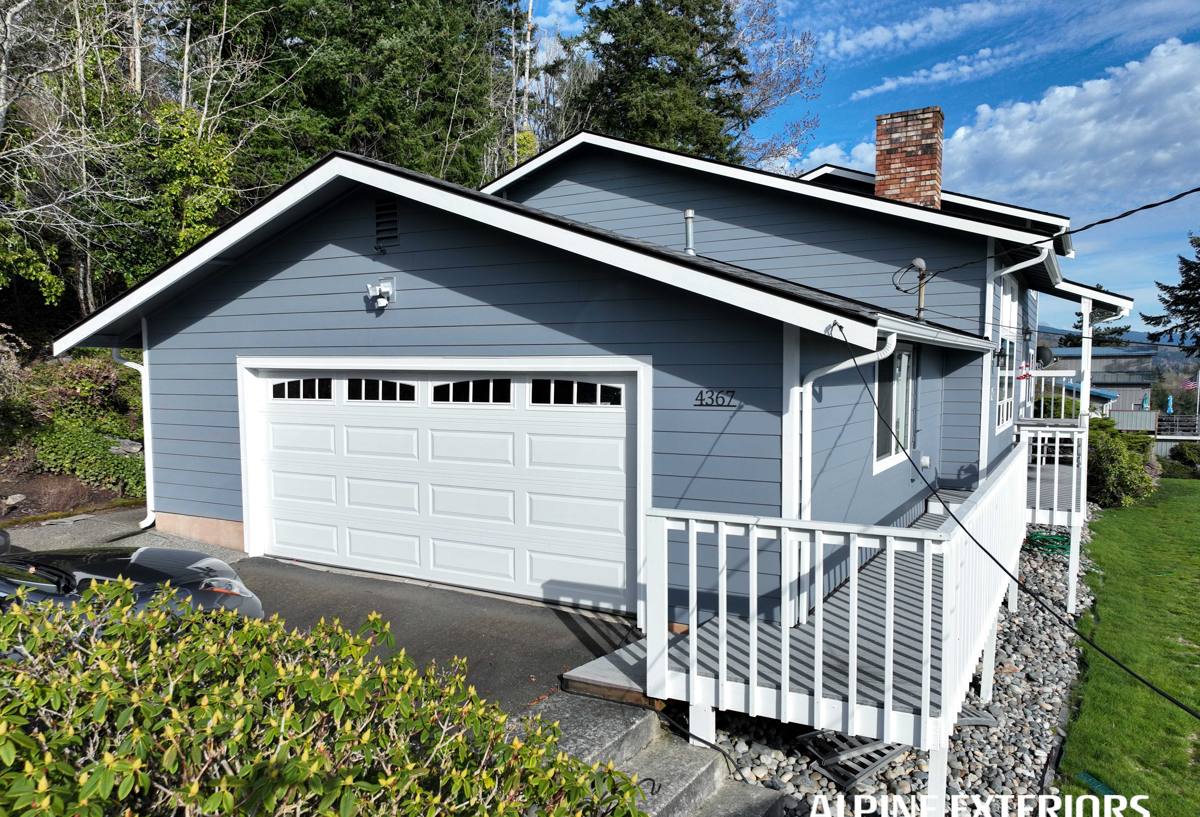
What a Correct Composite Deck Installation Actually Involves
A composite deck is only as good as the structure it sits on. In a climate like ours, a few details separate a deck that lasts decades from one that starts having problems in year five.
Framing and Joist Spacing
Composite boards flex differently than wood, and most manufacturers require tighter joist spacing than a traditional wood deck — commonly 16 inches on center, and often 12 inches on center for angled or picture-frame layouts. Using wood-deck spacing under composite boards is one of the most common shortcuts we see, and it leads to bounce, sag between joists, and boards that telegraph every footstep over time.
Ventilation and Ground Clearance
Composite doesn't rot, but the wood-frame substructure underneath it still can. In a region that gets sustained fall and winter rain, low-clearance or poorly ventilated framing traps moisture against joists and beams, which is where we actually see decay on "composite" decks — not in the decking itself, but in the wood holding it up. Correct construction keeps enough clearance for airflow and keeps organic debris (leaves, needles, moss) from packing in against the frame.
Hidden Fasteners and Board Gapping
Most composite systems today use hidden fastener clips rather than face screws, which gives a cleaner look and avoids the screw-hole water intrusion points that plague older wood decks. Gapping between boards has to be set correctly for the specific product and for our climate — enough for water to shed through and for the boards to expand and contract with temperature and moisture swings, but not so much that debris and moss pack into the gaps.
Flashing at the House Ledger
Where the deck attaches to the house is the single highest-risk point for water intrusion on any deck, composite or otherwise. Proper ledger flashing — installed correctly against the siding and water-resistive barrier, not just caulked over — is what keeps rain from working its way behind the house wall over years of exposure. We treat this as non-negotiable, regardless of what decking material sits on top.
Composite vs. Wood vs. PVC: What Actually Makes Sense Here
Every decking material has trade-offs. For Kirkland's climate, here's how the common options compare on the factors that matter most locally.
| Material | Moisture & Moss Resistance | Maintenance | Typical Lifespan | Upfront Cost |
|---|---|---|---|---|
| Pressure-treated wood | Fair — absorbs water, prone to moss/mildew in shade | Annual cleaning, periodic staining/sealing | 10–15 years before major repair | Lowest |
| Cedar | Good if maintained, poor if neglected | Regular sealing to hold up to our wet season | 15–20 years with upkeep | Moderate |
| Capped composite | Very good — shell resists moisture and staining | Occasional washing, no sealing/staining | 25–30+ years | Moderate to higher |
| PVC decking | Excellent — fully synthetic, won't absorb moisture | Low, similar to composite | 25–30+ years | Highest |
For most Kirkland homeowners, capped composite is the sweet spot: it holds up to the rain and shade far better than wood without the sealing and staining upkeep, and it costs less than full PVC while offering similar moisture performance. We steer clients away from uncapped composite (the older-generation product) for anything exposed to real weather here — without a protective shell, it absorbs moisture at the surface and is more prone to staining and mold growth in shaded, damp yards, which defeats much of the point of going composite in the first place.
Moss, Mildew, and the Maintenance Reality
No decking material is entirely maintenance-free in a climate with our rainfall and shade patterns — the difference is what maintenance actually involves. On a properly installed capped composite deck, upkeep is mostly about staying ahead of organic buildup rather than protecting the material itself:
- Sweep leaves, needles, and debris off the deck regularly through fall and winter so they don't trap moisture against the boards
- Rinse or lightly scrub the surface a few times a year, more often on shaded decks near tree cover
- Keep gutters and downspouts near the deck clear so runoff isn't dumping directly onto the decking or framing below
- Check board gaps periodically for compacted debris that can hold moisture against the edges
- Inspect the ledger flashing and any penetrations (post bases, stair stringers) once a year for early signs of water tracking
None of this involves sanding, staining, or sealing — the biggest maintenance win composite offers over wood in a market like ours, where a missed staining cycle on a wood deck can mean a full season of extra moss growth and surface damage.
Our Installation Process
We approach every composite deck project the same way, whether it's a full rebuild or new construction:
- Site and structure assessment — we evaluate existing framing (if any), grading, drainage paths, and how the deck will tie into the house
- Design and material selection — board layout, fastening system, railing, and stair details are worked out before anything is ordered
- Permitting — we handle the permit application and inspections required for the project's scope
- Demolition (if applicable) — removal of the old deck surface and, where needed, compromised framing
- Framing and structural work — joists, beams, footings, and ledger attachment built to the spacing and clearance the composite manufacturer requires
- Flashing and waterproofing — ledger flashing, post base protection, and any other water-management details before decking goes down
- Composite installation — boards, hidden fasteners, picture framing or accent details, railing, and stairs
- Final walkthrough — we go over the finished deck with you, including what upkeep (if any) it actually needs
Permits and Local Code Considerations
Deck work in Kirkland and the surrounding King County jurisdictions generally requires a permit once you're past a certain size, height, or structural scope — attaching to the house, building above a certain elevation off grade, or adding a roof or cover typically triggers review regardless of decking material. Requirements can vary by exact property and jurisdiction, so we confirm what applies to your specific project rather than assuming. Skipping required permits on a ledger-attached deck is a real liability issue at resale, and it's one of the first things a home inspector flags — we handle that process as part of the job so it isn't left for you to sort out later.
What Drives the Cost of a Composite Deck
Composite decking costs more upfront than pressure-treated wood, but the total cost of a project depends on more than just the decking material itself.
| Cost Factor | Why It Matters |
|---|---|
| Deck size and shape | Square footage plus complexity — angled layouts and picture framing add labor |
| Substructure condition | New framing vs. reusing sound existing framing changes scope significantly |
| Height and access | Multi-level or elevated decks need more structural work and railing |
| Composite product tier | Entry-level capped composite vs. premium boards with deeper wood-grain finishes |
| Railing and stair details | Composite, cable, or metal railing systems price very differently |
| Site access | Backyard slope, fencing, and material staging affect labor time |
We give straightforward, itemized estimates rather than a single lump number, so you can see where the cost is actually going and where there's room to adjust scope if needed.
Why It Matters to Hire a Crew That Already Works in Kirkland
A deck built to a generic spec sheet doesn't automatically hold up to King County's wet season. Crews that work this area regularly build in the extra joist spacing, drainage, and ventilation details that this climate demands as a matter of habit, not as an afterthought — because we've seen what happens on the decks that skip them. We also know the local permitting process and inspection expectations, which keeps projects moving instead of stalling on paperwork. That local familiarity is the difference between a deck that looks right on installation day and one that's still performing well after ten wet winters.
If you're planning a new composite deck or replacing an aging one in Kirkland, we're happy to take a look and talk through what your specific yard, home, and budget call for. Reach out for a free, no-pressure estimate using the form below.