 Seattle
 Building Decks That Actually Hold Up in Redmond
Redmond sits in a part of King County where a deck spends most of the year damp. Between fall storms, the long gray stretch of winter, and shaded lots backed up against trees and greenbelt, a deck here is rarely bone dry for more than a few days at a stretch. That's fine — decks are built to handle weather — but only if they're built correctly for it. A lot of the deck problems we get called out to look at in this area didn't start as big failures. They started as a joist that never quite dried out, a ledger board that trapped water against the house, or fasteners that weren't rated for years of damp contact. Small oversights, compounded by a wet climate, turn into soft boards and loose railings faster than homeowners expect.
We build and repair decks specifically with this region's conditions in mind. That means paying attention to drainage, material selection, and hardware in ways that a deck crew working in a dry climate simply wouldn't think about.
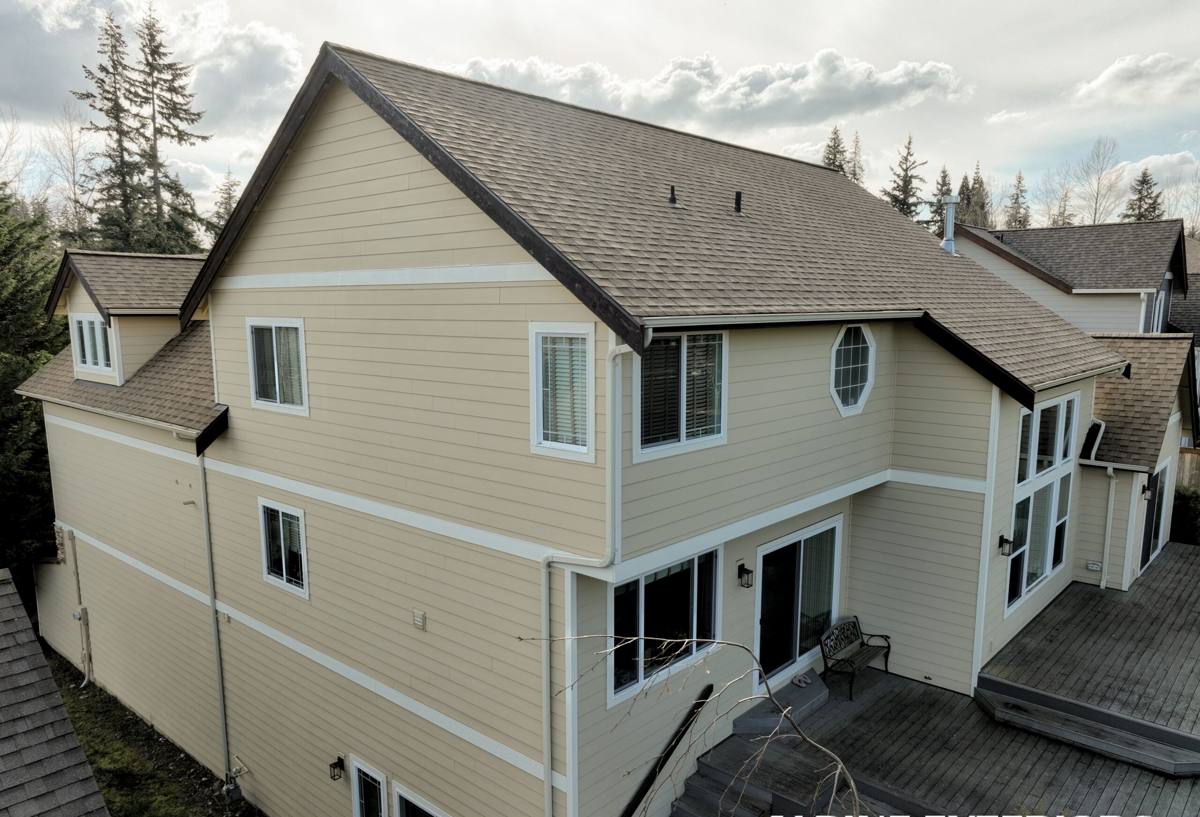
What Redmond's Climate Actually Does to a Deck
Driving Rain and Standing Moisture
Wind-driven rain doesn't just fall straight down — it gets pushed sideways under railings, into ledger connections, and between decking boards that aren't gapped correctly. Over time, water that can't drain or dry out is the single biggest cause of rot, especially where the deck meets the house.
Moss and Algae Growth
Long stretches of overcast, damp weather are exactly what moss and algae need to take hold, especially on shaded decks under mature trees — common on many Redmond lots. Moss holds moisture against the wood surface long after the air has dried out, and it also makes decking surfaces slick and slippery underfoot, which is a real safety issue on stairs and ramps.
Broader Puget Sound Marine Air
Redmond isn't right on the shoreline, but it's still part of the greater Puget Sound region, where marine air and humidity levels stay elevated most of the year compared to drier inland climates. That regional moisture load is part of why we're particular about the grade of fasteners and hardware we use, even on inland builds — cheaper coated screws and brackets corrode faster here than their spec sheets suggest.
Choosing the Right Decking Material for This Climate
There's no single "best" decking material — the right choice depends on how much upkeep you're willing to do, your budget, and how shaded the site is. Here's how the common options actually compare for a Redmond-area build:
| Material | Moisture Behavior | Maintenance | Typical Lifespan Here |
|---|---|---|---|
| Pressure-treated wood | Resists rot when sealed; absorbs water if finish is neglected | Re-stain/seal every 1-2 years | 10-15 years with upkeep |
| Cedar | Naturally decay-resistant, still needs sealing in wet shade | Annual cleaning, periodic oil/stain | 15-20 years with upkeep |
| Composite decking | Doesn't rot, but can still grow surface moss/algae in shade | Periodic washing, no staining needed | 25-30 years |
| PVC decking | Fully moisture-resistant, sheds water and doesn't absorb it | Occasional washing | 25-30+ years |
For heavily shaded lots — which describes a fair number of Redmond backyards backed up to trees or greenbelt — we lean toward steering clients away from raw untreated wood with minimal finish, since it's the option most likely to disappoint in low-sun, high-moisture spots. That's not a knock on wood as a material; it's an honest reflection of how much maintenance it needs to perform well in shade and damp. Composite and PVC cost more up front but trade that for far less upkeep, which matters if the deck sits somewhere hard to get to or easy to forget about.
What a Correct Deck Build Actually Involves
Footings and Framing
Footings need to sit below frost depth and on stable, well-draining soil — not always a given on lots with heavy clay content, which shows up in pockets around this area. Framing lumber should be rated for ground contact where it's within a few inches of soil or in a permanently damp spot, not just standard treated stock.
Ledger Board Attachment
This is the single most common failure point we see on older decks. The ledger board — where the deck attaches to the house — needs proper flashing to keep water from getting behind the siding and into the rim joist. A deck ledger without correct flashing will eventually let water in no matter how well the rest of the deck is built.
Fasteners and Hardware
We use structural screws and connectors rated for exterior, damp-climate use — not general-purpose deck screws that look fine on day one but start showing rust streaks within a couple of wet seasons. Joist hangers, post bases, and railing hardware all matter as much as the decking boards themselves.
Drainage and Spacing
Board gapping needs to account for both drainage and the wood's expansion/contraction through wet and dry cycles. Too tight, and water sits on the surface; too loose, and the deck feels unstable underfoot. Ground-level decks and covered decks in particular need a real plan for where water goes once it hits the surface.
Our Process, Start to Finish
- Site visit and assessment — we look at grade, drainage, sun exposure, and existing structure (for replacements) before quoting anything.
- Material and design conversation — honest tradeoffs on wood versus composite/PVC based on your budget, shade level, and how much upkeep you want to do.
- Permit handling — we pull the required permits and build to current code, so you're not left holding an unpermitted structure at resale.
- Framing and structural work — footings, ledger flashing, and framing done first and inspected before decking goes down.
- Decking, railing, and finish work — installed with the fastener and spacing details above, not just "whatever's fastest."
- Final walkthrough — we go over care and maintenance specific to the material you chose before we consider the job done.
Permits and Code Considerations in Redmond
Most new decks and many deck replacements in Redmond and elsewhere in King County require a building permit, particularly once a deck is attached to the house or built above a certain height off grade. Requirements and thresholds can change, and every lot is a little different depending on setbacks and prior permit history, so we don't quote exact rules here — we pull the actual permit for your specific project rather than guess. Skipping the permit step might save time up front, but it creates real problems later, especially at resale when an unpermitted structure has to be disclosed or brought up to code retroactively.
Keeping a Redmond Deck Healthy Through Moss Season
A deck built correctly still needs some seasonal attention, especially given how long the moss-prone months run here. A little consistent care goes a long way toward avoiding an expensive repair down the line.
- Sweep debris and standing leaves off the surface regularly through fall — trapped leaves hold moisture directly against the boards.
- Wash off moss and algae buildup before it gets established, rather than after it's already staining the wood.
- Check the ledger board area and any spots where the deck meets the house for early signs of water staining or soft wood.
- Keep gutters and downspouts near the deck clear so runoff isn't dumping directly onto the structure.
- Re-seal or re-stain wood decking on schedule — don't wait until the finish has visibly failed.
- Inspect railings and stair connections yearly; loose hardware is often the first sign of movement in the framing below.
Why Hiring a Crew That Already Works in Redmond Matters
A deck built by a crew that only occasionally works in the Pacific Northwest can look fine the day it's finished and still be set up to fail in three years, because the framing and hardware decisions that matter here aren't obvious if you're used to a drier climate. We work throughout the Seattle area and King County regularly, which means we're used to building for wet, shaded, moss-prone lots as the default — not the exception. That shows up in the small decisions: which fasteners we reach for, how we detail the ledger flashing, and which materials we're honest about steering clients away from in heavy shade.
It also means we're realistic about timelines. Weather windows for framing and finish work shift through the wetter months, and a crew that builds here year-round plans around that instead of getting caught off guard by it.
Get an Honest Estimate for Your Redmond Deck
Whether you're planning a new deck, replacing an aging one, or just want a second opinion on a deck that's showing its age, we're happy to take a look and give you a straightforward assessment — no pressure, no upsell. Use the form below to request a free estimate, and we'll walk the site, talk through material options for your specific lot, and give you a clear picture of what the job actually involves.