 Seattle
 Building Decks for Fremont's Climate
Fremont sits close to the water, wedged between the Ship Canal and the slopes leading up toward Phinney Ridge and Woodland Park, and that location shapes what a deck in this neighborhood actually has to survive. Homes here deal with a long, wet Pacific Northwest winter, salt-tinged air drifting up from Puget Sound, and shade patterns from mature trees and tight lot lines that keep moisture sitting on wood and composite surfaces far longer than in drier parts of King County. A deck built without that in mind will look fine for a season or two and then start showing the classic Seattle problems: soft spots near ledger boards, black streaking on railings, and a slick green film on stair treads by late fall.
We build and repair decks in Fremont with that climate as the starting assumption, not an afterthought. That means material choices, fastener selection, drainage detailing, and even the angle of a stair tread are all decided with rain volume and moss growth in mind, not just what looks good on install day.
What Fremont Homes Need From a Deck
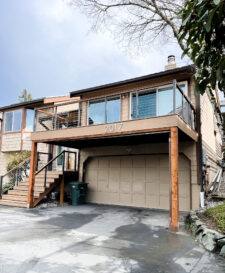
Fremont's housing stock is a mix of older bungalows and Craftsman-style homes, denser infill construction, and newer builds near the canal and business district. That mix means we see a wide range of deck conditions — from older cedar structures that have been repainted and patched for decades, to newer builds where a deck was added quickly during a remodel without much thought to long-term drainage.
A few things tend to matter more here than in drier climates:
- Ledger board attachment and flashing — this is the single most common failure point we find on older Seattle decks, since water intrusion at the house connection is hard to see until rot has already set in
- Gap spacing between boards, sized to let water drain rather than pool, especially under tree canopy where debris collects
- Fastener and hardware grade rated for coastal and marine-influenced air, since standard hardware can corrode faster this close to the Sound
- Surface texture underfoot — a smooth, moss-friendly board is a liability on stairs and ramps once King County's wet season sets in
- Structural footings sized for our soil conditions, which vary block to block in this part of Seattle between clay-heavy fill and looser glacial till
Deck Materials: What We Recommend and Why
There's no single "best" decking material — the right call depends on budget, how much upkeep the homeowner wants to take on, and how exposed the deck is to rain and shade. Here's how the common options actually perform in a Fremont-type site.
| Material | Upfront Cost | Maintenance | How It Handles Our Climate |
|---|---|---|---|
| Pressure-treated fir/hem-fir | Lowest | Annual sealing recommended | Affordable and strong, but needs consistent sealing to resist moisture cycling; skipped maintenance shows up fast as graying and splitting |
| Western red cedar | Moderate | Periodic oiling or staining | Naturally rot- and insect-resistant, ages well with care, but still needs attention in shaded, damp spots where moss and mildew take hold |
| Composite decking | Higher | Low — occasional washing | Resists rot and doesn't need sealing, though lower-end composites can trap moisture at fastener points if not detailed correctly during install |
| PVC/capped composite | Highest | Lowest | Best moisture and mold resistance of the group, good option for heavily shaded or low-airflow deck sites near mature trees |
We'll walk through these trade-offs honestly during an estimate rather than steering every job toward the highest-margin product. A well-installed cedar deck with a proper maintenance routine can outlast a poorly installed composite deck, and vice versa — installation quality matters as much as material choice.
Why Moss and Rain Cause More Damage Than People Expect
The Moss Problem
Moss doesn't just make a deck slippery — it holds moisture directly against the wood or composite surface for weeks at a time during our wet stretch of the year. On horizontal surfaces that don't get much sun, especially decks tucked under tree cover common in Fremont's older residential blocks, that trapped moisture accelerates rot in wood decking and can void warranties on some composite products if it's allowed to build up in board grooves and fastener channels.
The Rain Volume Problem
Seattle doesn't get the heaviest rainfall totals in the country, but it gets a lot of days of steady, driving rain, which matters more for decks than occasional downpours. Steady rain finds every gap in flashing, every under-sealed cut end, and every spot where a board was face-nailed instead of properly fastened. Over enough winters, that steady exposure is what causes soft ledger boards and rot at post bases — not one bad storm, but years of consistent moisture doing its work.
Salt Air's Slower Effect
Fremont isn't oceanfront, but its proximity to Puget Sound means homes here get more salt-influenced air than inland King County neighborhoods. That air accelerates corrosion on lower-grade fasteners, hinges, and railing hardware. It's a slow effect — you won't see it in year one — but it's the difference between hardware that's still tight after fifteen years and hardware that's rusted and loosening after eight.
Our Deck Building Process
Every deck project starts with an honest look at the site, not a generic quote.
1. Site and Structure Assessment
For new builds, we evaluate drainage, sun exposure, tree cover, and how the deck ties into the house. For repairs or rebuilds, we check the ledger connection, framing, and footings first — problems hiding under a deck's surface are almost always more important than the surface boards themselves.
2. Material and Layout Planning
We talk through material options against the homeowner's budget and maintenance appetite, and plan board direction, gap spacing, and railing style around how water will actually move across the structure once it's built.
3. Permitting
Deck work in Seattle often requires permitting depending on height, size, and attachment to the structure. We handle the permit process so the project meets code, particularly around guardrail height and footing depth, which inspectors here check closely.
4. Construction
We build footings and framing first, with attention to flashing at the ledger board — the point where most Seattle deck failures start. Decking, railings, and stairs go on last, with fasteners and hardware selected for our coastal-influenced climate rather than generic interior-grade hardware.
5. Walkthrough
We walk the finished deck with the homeowner, cover basic maintenance expectations for the material chosen, and answer questions before calling the job done.
Deck Repair vs. Full Rebuild
Not every aging deck in Fremont needs to be torn out. The right call depends on what's actually failing.
| Situation | Repair Usually Works | Rebuild Usually Needed |
|---|---|---|
| Surface boards graying or splintering, frame is solid | Yes | No |
| Soft or spongy spots at the ledger board | Sometimes, if caught early | Often, if rot has spread into framing |
| Railings loose or hardware rusted | Yes | No |
| Footings shifted or undersized for current code | No | Yes |
| Persistent moss and standing water despite cleaning | Sometimes, with regrading of board gaps | Sometimes, if drainage is a structural issue |
When we inspect a deck for repair, we're checking the framing and connections before we ever talk about surface boards. A deck that looks rough on top but is structurally sound is usually a repair; a deck that looks fine on top but has a soft ledger or undersized footings is a safety issue that needs a rebuild.
A Simple Pre-Winter Deck Checklist
Homeowners can catch a lot of problems early with a basic seasonal check before Seattle's wet months set in:
- Sweep debris out of board gaps and off railings so water and organic matter don't sit and feed moss growth
- Press on boards near the house connection and around stair stringers to check for soft spots
- Look at fasteners and railing hardware for rust streaks or loosening
- Check that gaps between boards are still open and not clogged with dirt or needles
- Confirm water is draining away from the house at the ledger board, not pooling against the siding
None of these take more than twenty minutes, and catching a soft board or a clogged drainage gap in October can prevent a much bigger repair by spring.
Why Local Experience Matters for This Job
A deck built to a generic national spec doesn't always hold up in Fremont's specific mix of rain, shade, and salt-influenced air. Crews that work King County regularly know which board gap spacing actually drains here, which hardware grade is worth the extra cost near the Sound, and which shaded, tree-covered lots need extra attention to moss and mildew resistance. That local pattern recognition is the difference between a deck that needs real repair work in year six and one that's still solid at year twenty.
We also know the permitting expectations for deck work in Seattle, which saves homeowners the back-and-forth of a plan getting kicked back over guardrail height or footing depth. Getting that right the first time keeps the project moving instead of stalling in review.
Get an Estimate for Your Fremont Deck
Whether you're planning a new deck, need an honest opinion on whether an aging deck needs repair or replacement, or just want a second look at soft spots you've noticed near the house, we're happy to come take a look. Fill out the form below for a free, no-pressure estimate on your Fremont deck project.