 Seattle
 Siding in Fremont: Built for Salt Air, Driving Rain, and a Long Moss Season
Fremont sits along Seattle's Lake Washington Ship Canal, close enough to Puget Sound's marine air and the damp lowland setting that comes with it that homes here take on a specific kind of exterior wear. Salt-tinged air drifts through the neighborhood off the water, winter storms push rain sideways into wall assemblies rather than straight down, and the mature tree canopy that gives Fremont so much of its character also means shaded, slow-drying walls where moss has most of the year to take hold. None of that is unusual for King County. But it adds up faster than most homeowners expect, and it's a big part of why siding that looked fine on install day can start failing within a handful of wet Seattle winters if it wasn't matched to what this climate actually does to a wall.
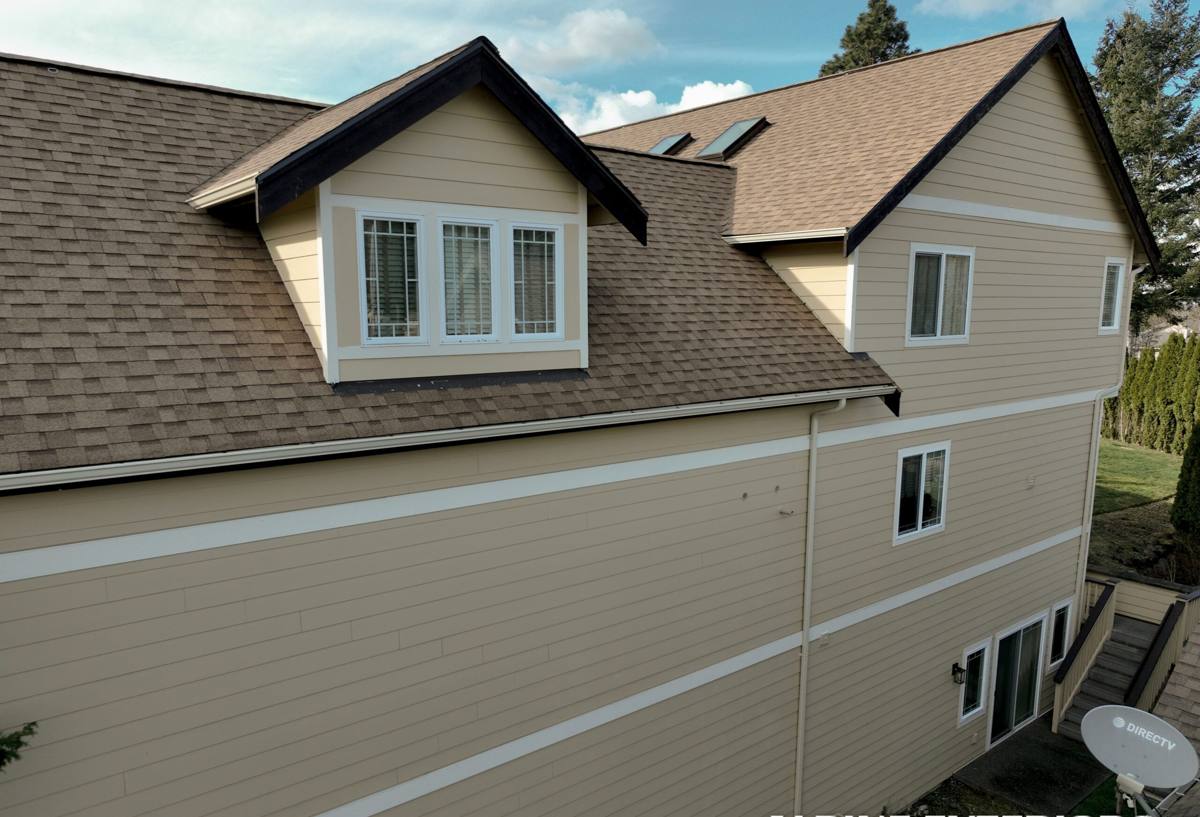
We install James Hardie fiber cement siding exclusively in Fremont and across the rest of our Seattle service area. That's not a brand preference pulled off a supplier list — it's a standard we settled on after seeing, job after job, which materials actually hold up here and which ones quietly don't.
What Fremont's Climate Does to a Wall
Salt Air and Marine Exposure
Even homes several blocks back from the Ship Canal pick up a steady dose of salt-laden air moving through this part of Seattle. Salt accelerates corrosion in fasteners, flashing, and trim hardware, and it breaks down lower-grade finishes faster than you'd see in a drier, more inland climate. A siding system chosen without that corrosion risk in mind is one of the more common reasons a job that looked fine at installation starts showing rust streaks and failed caulk lines within a few years.
Wind-Driven Rain
Rain in Seattle rarely falls straight down for long. Winter storms push it sideways into lap joints, trim details, and anywhere a wall assembly has even a small gap. That's a different and more demanding load than an annual rainfall total suggests, and it's the reason a siding product that would perform fine in a calm, dry climate can still fail here specifically because water finds its way in from the side rather than from above.
Moss, Mildew, and Shaded Walls
Fremont's tree cover and the marine layer that sits over Seattle for much of the year add up to a moss and mildew season that can run nearly year-round on north-facing or heavily shaded walls. Any siding material that's even slightly porous, or that holds moisture against the substrate rather than shedding it, becomes a growth surface over time. It typically shows up first in spots you don't look at often — behind shrubs, under eaves, on the side of the house that never gets direct sun — well before it's visible from the street or the sidewalk.
Why We Only Install James Hardie Siding
We used to offer a wider range of siding products, the same as most contractors in the area. We stopped, and the reason was practical rather than a marketing angle: what we kept finding on tear-offs and service calls in this specific climate pushed us toward one system we could fully stand behind.
- Non-combustible core: Fiber cement doesn't feed a fire the way wood-based siding products can, which matters for household safety and often for insurance underwriting as well.
- Factory-applied ColorPlus finish: The color is baked on under controlled factory conditions instead of brushed on in the field, so it resists fading, chalking, and moisture damage far longer than site-applied paint.
- Climate-engineered HZ product lines: Hardie's HZ5 formulation is built for regions with heavy, sustained moisture exposure and freeze-thaw cycling, which describes Puget Sound's marine climate well.
- Dimensional stability: Fiber cement doesn't swell, cup, or warp the way engineered wood siding can after repeated wet-season moisture cycles.
- Strong transferable warranty: Hardie backs its products with one of the more robust warranty structures in the industry, provided the installation follows spec.
We won't install LP SmartSide, vinyl siding, Cemplank, Allura, primed spruce, or cedar. Each of those products has a legitimate place in the market, and plenty of homeowners are satisfied with them elsewhere. But we made a professional call that in a climate with this much sustained moisture and salt exposure, standing fully behind one system is worth more than offering a cheaper option that quietly shifts maintenance risk onto the homeowner a few years down the road.
What a Correct Hardie Installation Involves
Material choice is only part of the equation. A James Hardie installation that actually performs the way the product is engineered to requires a weather-resistive barrier installed and lapped correctly, proper clearances from grade, decks, and roof lines, correctly lapped and fastened joints, and flashing details — especially kick-out flashing at roof-to-wall intersections — that work with the siding system rather than against it. On many Fremont homes, especially older ones, we also install furring strips to create a drainage gap behind the siding, which gives incidental moisture a path to drain and dry instead of sitting against the wall assembly. Skipping that gap on a home with this much wet-season exposure is one of the more common ways a good product ends up performing poorly.
Fastening matters just as much as the big-picture details. Hardie specifies fastener type, spacing, and placement relative to board edges, and using the wrong nail or gun pressure can crack boards or leave fasteners proud enough to wick water into the plank over time. We follow Hardie's published fastening schedule rather than whatever's fastest to run through a nail gun, because that's the difference between siding that looks right on day one and siding that still looks right in year fifteen.
Repair vs. Full Replacement
Not every siding problem on a Fremont home calls for a full tear-off. Localized damage, a section that took impact from a fallen branch, or trim that's failed around a window can sometimes be repaired and matched into existing Hardie siding. But when moisture has been tracking behind the wall for a while, or the existing material is an older product that's reached the end of its useful life, patching it usually just delays a larger job and lets hidden damage keep spreading. We'll tell you honestly which situation you're in rather than defaulting to whichever option is more profitable for us.
Choosing the Right Hardie Product Line for Your Home
Fremont's housing stock is a genuine mix — early-1900s craftsman bungalows, mid-century houses, and newer infill construction sitting on the same block in some cases. James Hardie makes several distinct product lines, and matching the right one to the home's age and style matters both for appearance and for how the siding sheds water.
| Product Line | Typical Look | Best Fit For |
|---|---|---|
| HardiePlank lap siding | Traditional horizontal lap, several width and texture options | Craftsman bungalows and most traditional Fremont home styles |
| HardiePanel vertical siding | Smooth or textured vertical panels, often with battens | Modern infill homes and accent walls or gables |
| HardieShingle siding | Staggered or straight-edge shingle profile | Homes with a cottage or shingle-style architectural detail |
| Board and batten | Wide vertical boards with raised battens over the seams | Modern farmhouse-style remodels and accent gables |
| HardieTrim boards | Smooth trim stock for corners, window and door casing, fascia | Finishing detail on any of the above, matched or contrasted |
We walk through these options during the estimate rather than defaulting to one lap profile for every house, since a product mismatch can look off on a period home even when the material itself performs perfectly.
Our Process, From Estimate to Finished Job
- An in-person walk-through of the home, including a look at the current siding, trim, and any visible moisture or rot signs before we talk price
- An honest assessment of whether the job is a repair, a partial re-side, or a full tear-off, based on what we actually find rather than what's easiest to sell
- A written estimate specifying the Hardie product line, HZ5 spec where appropriate, color, and trim details, with the drainage gap and flashing plan included rather than treated as an upsell
- Any required Seattle permitting handled before work begins, since siding scope that touches structural sheathing or window openings can trigger permit requirements
- Careful removal of the old siding, with substrate and framing inspected for rot or hidden moisture damage before anything new goes on
- Installation of the weather-resistive barrier, flashing, and furring strips where called for, sequenced so water sheds outward at every layer
- Hardie siding installed to the manufacturer's fastening and clearance specifications, with joints and corners detailed for this climate specifically
- A final walk-through with the homeowner before we consider the job finished
Siding Cost Factors in Fremont
| Factor | What It Affects | Why It Matters Here |
|---|---|---|
| Home size and wall complexity | Total material and labor | More trim, gables, and corners mean more joints where wind-driven rain can intrude |
| Tear-off vs. overlay | Labor scope and substrate access | Tear-off reveals hidden moisture damage that's common under older siding in this climate |
| Substrate condition | Repair costs before new siding goes on | Years of trapped moisture behind failing siding can rot sheathing and framing |
| Trim and color selection | Material cost and finish longevity | ColorPlus factory finishes hold up better against salt air and UV than field-applied paint |
| Site access and lot size | Labor time and equipment staging | Fremont's narrower lots and street parking can add setup and material staging time |
| Drainage gap and flashing detail | Upfront labor | Proper furring and flashing add install time but prevent the moisture problems this climate causes |
Exact numbers depend on the specific home, which is why we walk the property in person before giving a real estimate instead of quoting off a generic price sheet.
Signs Your Fremont Home's Siding Needs Attention
- Moss or dark staining that returns quickly after cleaning, especially on shaded or north-facing walls
- Soft or spongy siding, particularly low on the wall or around window and door trim
- Peeling paint, bubbling, or visible warping on siding boards
- Cracked, chipped, or missing sections after wind or storm events
- Visible gaps at seams, corners, or trim joints where water can track in
- Rust streaking near fasteners or flashing, a common early sign of salt air corrosion
- Rising energy bills that may point to a wall assembly no longer sealing properly
Roofing, Windows, and Decks Alongside Your Siding
Siding rarely fails in isolation. A leaking roof valley, a poorly flashed window, or a deck ledger board trapping moisture against the house can all show up as siding damage even though the siding itself isn't the actual source. Because we also handle roofing, windows, and decks, we can look at a Fremont home as one connected exterior system rather than diagnosing a wall on its own and missing where the water is really getting in.
Why a Crew That Already Works Fremont Matters
A crew that works across Seattle neighborhoods day in and day out sees how salt air, wind-driven rain, and moss actually behave on real houses over a full year, not just how a product performs on a spec sheet. That repeated, local exposure shapes practical decisions on install day: where extra flashing attention matters most, which wall orientations under Fremont's tree canopy stay wet the longest, and which details are worth the extra time so a homeowner isn't dealing with a callback two winters later. Fremont's mix of older bungalows on narrower lots and newer infill construction also means access and staging aren't identical from house to house, and a crew with local experience plans around that instead of showing up with a one-size-fits-all approach. Familiarity with Seattle's permitting process helps too — knowing ahead of time what triggers a permit review keeps a project on schedule instead of stalling partway through.
Get a Free, No-Pressure Estimate
If your Fremont home needs new siding, repair work, or an honest second opinion on what's really going on behind an aging wall, we're glad to take a look. Reach out using the form below to schedule a free estimate, no pressure and no upsell script.