 Seattle
 Metal Roofing Built for How Fremont Actually Weathers
Fremont sits close to the water, with the Lake Washington Ship Canal running along its edge and Puget Sound not far beyond. That location is part of what makes the neighborhood what it is, but it also means roofs here take on a specific combination of stress: damp salt-tinged air off the water, long stretches of driving rain through fall and winter, and shade from mature trees that keeps roof surfaces wet and cool far longer than homes further inland. That combination is exactly what accelerates moss growth, corrodes weak metal, and finds the small installation mistakes that never show up until year three or four.
A metal roof done right is one of the better answers to that climate, but "done right" is doing a lot of work in that sentence. Metal roofing rewards correct installation and punishes shortcuts more than almost any other roofing material. On a Fremont home, we're not installing a generic metal roof — we're installing one specced for a canal-adjacent, tree-shaded, rain-heavy microclimate inside King County.
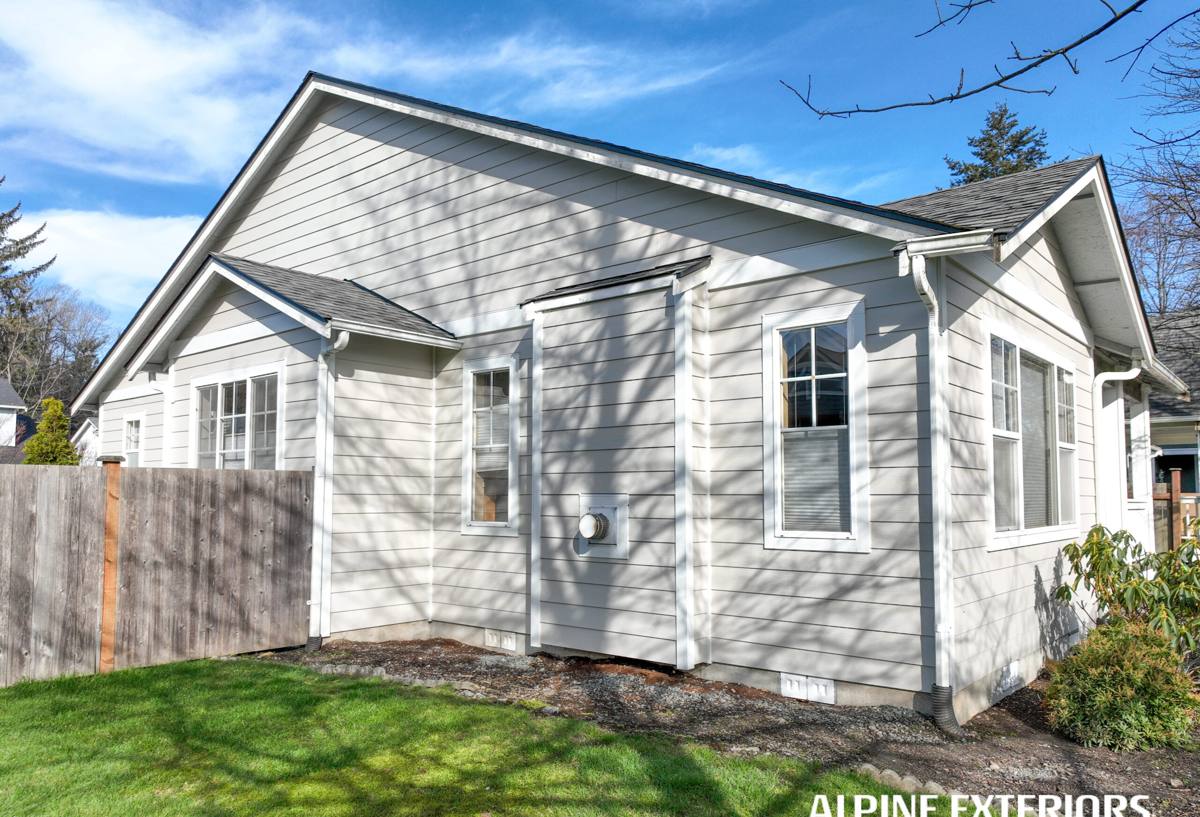
What Fremont's Climate Actually Demands From a Metal Roof
Salt Air and Corrosion
Proximity to the Sound and the Ship Canal means a low but steady level of airborne salt. Over years, that accelerates galvanic corrosion at fastener heads, cut edges, and any spot where dissimilar metals touch. This is a materials and detailing issue, not a scare story — it just means fastener coatings, flashing metal, and panel finish all need to be matched correctly instead of mixed for convenience.
Moss and Constant Moisture
Seattle's moss season isn't a few weeks — on shaded, north-facing, or tree-covered roof sections it's close to year-round. Moss holds moisture against a roof surface, and on the wrong material that moisture works its way into seams and fastener penetrations. Metal roofing doesn't feed moss the way organic roofing surfaces can, but it still needs to be installed with enough slope, clean water paths, and hardware chosen so moss and debris don't dam water at a seam or flashing line.
Driving Rain and Wind-Driven Water
Fremont's storms often come in sideways off the water. That matters most at the details — ridge caps, valleys, wall-to-roof transitions, and penetrations for vents or skylights. A metal panel field can be installed perfectly and still leak if the flashing details weren't built to handle wind-driven rain rather than just straight-down rain.
What a Correct Metal Roofing Job Actually Involves
Metal roofing is a system, not just a panel. Skipping or shortcutting any layer below the panel is where most metal roof failures actually start.
- Deck inspection and repair: soft, delaminated, or water-damaged sheathing gets replaced before anything goes down — panels installed over a bad deck just hide the problem.
- Ice-and-water or synthetic underlayment: a continuous secondary moisture barrier, especially at eaves, valleys, and low-slope sections where wind-driven rain is most likely to find a way in.
- Ventilation check: intake and exhaust airflow are confirmed or corrected so trapped attic moisture doesn't condense on the underside of the metal.
- Fastener and clip selection matched to the panel: corrosion-resistant hardware rated for coastal-adjacent exposure, not generic fasteners.
- Flashing built for this house, not a stock shape: valleys, chimneys, dormers, and wall transitions detailed to shed water even under sideways rain.
- Proper panel expansion allowance: metal expands and contracts with temperature swings; panels and clips need to be installed so that movement doesn't stress seams or fasteners over time.
Choosing the Right Metal System for a Fremont Home
Not every metal roofing profile suits every house, budget, or roof slope. The two most common approaches for residential work each have real trade-offs worth understanding before deciding.
| Factor | Standing Seam | Exposed-Fastener Panel |
|---|---|---|
| Fastener exposure | Concealed clips, fasteners not exposed to weather | Fasteners penetrate the panel face directly |
| Long-term maintenance | Lower — fewer points where sealant or gaskets can age | Higher — exposed fastener gaskets need periodic checking |
| Best fit | Homes wanting a lower-maintenance, longer-interval roof | Budget-conscious projects, outbuildings, simpler rooflines |
| Upfront cost | Higher | Lower |
| Performance in driving rain | Excellent when seams and flashing are correctly detailed | Good, but fastener seals are the first thing to watch as the roof ages |
For a lot of Fremont homes — older bungalows and craftsman-style houses with moderate to steep pitches — standing seam tends to be the better long-term match precisely because it removes exposed fasteners from the equation in a climate that's hard on hardware. Exposed-fastener panels aren't a wrong choice; they're a legitimate option where budget or roof complexity make sense for it. We'll walk through which one actually fits your roof rather than defaulting to whichever is easier to sell.
A Note on Metal Panel Finishes
Panel coating matters as much as the metal underneath it. A quality baked-on finish resists fading and chalking far longer than a bare or lightly coated panel, which matters in a spot that gets this much year-round moisture exposure. We'll talk through finish and gauge options as part of the estimate rather than assuming the cheapest coating is good enough for a canal-adjacent roof.
Moss, Debris, and Drainage: Where Metal Roofing Pulls Ahead
One honest reason homeowners in this part of Seattle move to metal is moss control. Metal doesn't give moss the organic surface it needs to root the way some roofing materials do, and its smooth surface sheds debris and standing water faster. That said, metal roofing isn't maintenance-free — gutters, valleys, and any spot where leaves and needles collect can still trap moisture against flashing if they're never cleared. The roof itself resists moss; the areas around it still need attention.
Simple Maintenance That Actually Matters
- Clear gutters and valleys of needles and leaf litter at least twice a year, more often under heavy tree cover.
- Do a visual check after major windstorms for lifted flashing or displaced debris.
- Keep overhanging branches trimmed back so they aren't dropping constant debris and shade onto one section of roof.
- Watch for any dark streaking or moss starting at a shaded valley or north-facing slope — catching it early is a five-minute fix, not a repair.
- Have fastener and sealant points checked periodically if your roof uses an exposed-fastener panel system.
Our Process for a Fremont Metal Roofing Project
1. On-Site Assessment
We look at the actual roof — deck condition, existing ventilation, tree cover, slope, and how water currently moves off the house — before recommending a system. A roof shaded by mature trees on one side gets treated differently than a fully exposed south-facing slope, even on the same street.
2. Straight Answers on Options and Cost
We walk through panel type, finish, and any deck or ventilation repairs needed, with real numbers attached — not a vague range that changes once work starts.
3. Installation
Deck repair, underlayment, ventilation correction, panel installation, and flashing detailing, in that order, with each layer inspected before the next goes down.
4. Walkthrough and Cleanup
We walk the finished roof with you, confirm drainage paths and flashing points, and make sure the site is cleared of debris and old material before we call it done.
What Affects the Cost of a Metal Roof in Fremont
Every roof is different, so exact numbers only come from an on-site look. But the main variables that move the price on a metal roofing project are consistent enough to lay out honestly.
| Cost Factor | Why It Matters |
|---|---|
| Panel system (standing seam vs. exposed fastener) | Concealed-fastener systems cost more in materials and labor but reduce long-term maintenance |
| Roof complexity (valleys, dormers, chimneys) | More flashing detail work means more labor hours regardless of panel type |
| Deck and structural condition | Rot or damage found once old roofing is removed adds necessary repair before panels go on |
| Ventilation corrections | Bringing intake/exhaust airflow up to standard protects the new roof from the inside out |
| Panel gauge and coating | Heavier gauge and higher-grade finishes cost more upfront and last longer in wet, salt-adjacent air |
| Access and roof pitch | Steeper pitches and tighter lots in older Fremont blocks can add labor time |
Metal roofing generally costs more upfront than asphalt shingles, but it's also a longer-interval investment — the honest comparison isn't sticker price alone, it's cost against expected service life for a roof that has to handle this much rain and moisture exposure every year.
Why Hiring a Crew That Already Works in Fremont Matters
Roofing code requirements, typical roof pitches, and the specific moisture challenges in this part of Seattle aren't the same as they'd be on the dry side of the state or even in a less tree-covered part of King County. A crew that regularly works Fremont and the surrounding Seattle neighborhoods already knows which details tend to fail here — where moss actually collects, how much wind-driven rain a given roof orientation takes on, and which flashing approaches hold up against salt-tinged, damp air year after year. That local pattern recognition is the difference between a roof that's technically installed correctly and one that's installed correctly for this specific climate.
It also means faster, more accurate estimates. We're not guessing at how your roof will behave through a Puget Sound winter — we've seen how similar roofs in similar conditions actually hold up.
Get a Straight Answer on Your Fremont Roof
If you're weighing a metal roof for your Fremont home, we're glad to take a look and give you an honest read on condition, options, and real cost — no pressure, no inflated urgency. Use the form below to request a free estimate, and we'll walk the roof with you before recommending anything.