 Seattle
 Siding Built for the Green Lake Microclimate
Green Lake sits close enough to the water — both the lake itself and the broader Puget Sound air mass — that homes here deal with a specific combination of moisture stress most inland Seattle neighborhoods don't get as intensely. You've got the lake's humidity sitting low in the yard on cool mornings, salt-tinged marine air blowing in off the Sound, driving rain that hits siding sideways during winter storms, and a moss season that can run nearly half the year under the tree canopy that lines so many Green Lake streets. Siding in this neighborhood isn't decorative — it's the first and most-tested layer of the building envelope.
We install James Hardie fiber cement siding exclusively, and Green Lake is one of the neighborhoods where that decision shows its value most clearly. Wood-based and vinyl products struggle with the exact conditions this area produces year-round: sustained dampness, algae and moss growth, and the freeze-thaw cycling that happens on colder Green Lake nights in January and February.
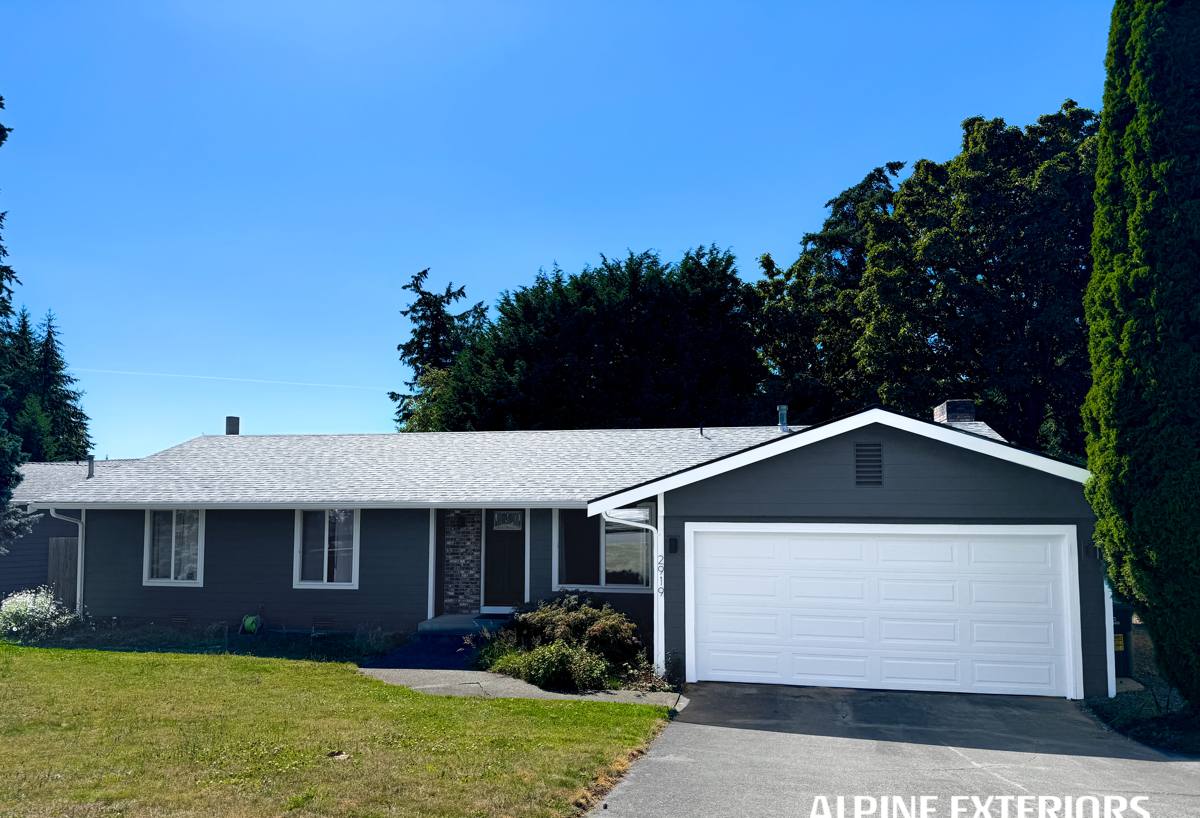
What Green Lake Homes Actually Need From Their Siding
Moisture Resistance That Doesn't Depend on Perfect Maintenance
King County gets a lot of rain, but Green Lake's tree cover and proximity to the lake mean siding here often stays damp longer after a storm than siding on a home a mile away with more sun exposure. Products that swell, warp, or rot when they hold moisture are a poor match for this. Fiber cement doesn't absorb water the way wood-based sidings do, and it won't swell or delaminate from repeated wet-dry cycles.
Moss and Algae Resistance
Anyone who's walked around Green Lake in the winter has seen how fast moss colonizes anything shaded and damp — sidewalks, roofs, fences, and siding included. Moss on siding isn't just cosmetic; it holds moisture against the surface and accelerates whatever degradation is already happening underneath. James Hardie's ColorPlus factory finish is baked on and far more resistant to the kind of surface breakdown that lets algae and moss get a foothold, compared to field-painted or raw wood surfaces.
Stability in Salt-Influenced Marine Air
Seattle isn't a coastal town in the oceanfront sense, but Puget Sound's marine air reaches well inland, and Green Lake gets its share of it. Salt-laden moisture is hard on fasteners, caulking, and any siding material with metal components or organic fibers exposed at cut edges. Fiber cement holds up well here because it's inert — it doesn't corrode, and it doesn't feed the biological growth that salt-moist air encourages.
Why We Don't Install Vinyl or Wood-Composite Alternatives Here
We get asked fairly often why we don't offer vinyl siding or wood-composite products like LP SmartSide as lower-cost options for Green Lake homes. It's a fair question, and the honest answer is about long-term performance in this specific climate, not a knock on every use case those products might have elsewhere.
- Vinyl expands and contracts significantly with temperature swings, and in a shaded, damp neighborhood like Green Lake, that movement combined with moisture behind the panels can create gaps where water and organic growth take hold over time.
- Wood-composite siding relies on factory sealing at the edges to keep moisture out. In a neighborhood with this much sustained dampness and tree cover, any breach in that seal — a bad cut, a missed caulk line, a woodpecker strike — becomes an entry point for rot that's expensive to catch early.
- Cedar and primed spruce require a maintenance schedule most homeowners underestimate: recoating, caulking, and moisture checks every few years. Skipping even one cycle in a wet neighborhood like this compounds fast.
James Hardie's fiber cement composition — cement, sand, and cellulose fiber — doesn't have an organic core to rot and doesn't rely on an intact factory seal to stay stable. That's the trade-off we've made as a standard, not just a preference.
What a Correct James Hardie Install Involves in Green Lake
The product only performs as well as the installation. A few things matter more here than they would in a drier part of the state:
Proper Rainscreen and Drainage Plane
Given how much rain Green Lake homes see, we install with a drainage gap behind the siding wherever the wall assembly calls for it, so any moisture that does get past the surface has somewhere to go instead of sitting against the sheathing.
Correct Fastener Placement and Type
James Hardie specifies fastener type, spacing, and embedment depth for a reason — get it wrong and you create stress points where the board can crack or where water can track in around the fastener head. We follow Hardie's published fastening schedules, not shortcuts.
Sealed and Flashed Penetrations
Every window, vent, and hose bib penetration is a place water wants to get in. Flashing details around these points matter more in a wet neighborhood than almost anything else in the install — it's usually where a poorly done job fails first.
Factory-Finished Edges
Cut edges on fiber cement need to be primed or sealed per Hardie's specifications before installation. Skipping this step is a common shortcut on rushed jobs, and it's exactly the kind of thing that shows up as a problem two or three winters later.
Our Process for a Green Lake Project
- Walkthrough and assessment — we look at the existing siding, sheathing condition, and any moisture or moss damage already present, since remediation sometimes needs to happen before new siding goes on.
- Product and line selection — we help you choose the right James Hardie line and ColorPlus finish for your home's exposure (shaded lake-side lots need different consideration than sunnier blocks farther from the water).
- Prep work — removal of old siding, sheathing repair where needed, and installation of the correct weather barrier and drainage plane.
- Installation to Hardie spec — fastening, flashing, and joint treatment done to manufacturer requirements, not just "close enough."
- Final walkthrough — we go over the finished work with you before calling the job done.
Why a Crew That Already Works Green Lake Matters
Green Lake's building stock spans decades, and a lot of homes here have quirks — additions, older sheathing, non-standard wall assemblies — that a crew unfamiliar with the neighborhood might not anticipate. A crew that's already worked this area knows what the tree canopy does to drying times, which blocks tend to hold more moisture longer, and where moss problems tend to start first on a typical Green Lake elevation. That local pattern recognition shows up in better prep decisions and fewer surprises mid-project.
Cost Factors for a Green Lake James Hardie Project
| Factor | Why It Matters Here |
|---|---|
| Home size and wall complexity | More corners, dormers, and trim details mean more cutting, flashing, and labor time |
| Condition of existing sheathing | Moisture-damaged sheathing found during tear-off adds repair scope before new siding can go on |
| James Hardie product line chosen | Lap siding, panel systems, and shingle-style products vary in material cost and install time |
| ColorPlus finish vs. field-painted | Factory finish costs more upfront but reduces long-term maintenance in a wet, mossy climate |
| Access and lot conditions | Sloped lots and mature trees common near the lake can affect staging, scaffolding, and cleanup time |
A Practical Checklist Before You Hire
- Ask whether the crew is a certified James Hardie installer, not just a general siding contractor who occasionally uses the product
- Confirm they're following Hardie's published fastening and flashing specifications, not a generic install approach
- Ask how they handle sheathing repair if moisture damage is found during tear-off
- Get clarity on which ColorPlus line and finish is being quoted, and why it fits your home's exposure
- Ask about warranty coverage — both the material warranty and the labor/workmanship warranty
- Check that drainage plane and rainscreen details are part of the scope, not an upsell
Long-Term Value for Green Lake Homeowners
Siding replacement is a significant investment, and in a neighborhood like Green Lake, where moisture and moss pressure are constant, the difference between a correctly installed non-combustible fiber cement system and a lower-cost alternative tends to show up within a handful of winters, not decades. James Hardie's transferable warranty and factory-baked finish are built around exactly this kind of sustained exposure, and when the installation matches the product's engineering, homeowners get a siding system that doesn't ask much of them beyond normal upkeep.
If you're planning a siding project in Green Lake, we're happy to walk your home, look at what the current siding and sheathing are telling us, and put together a straightforward, no-pressure estimate for a James Hardie install done right for this climate.