 Seattle
 Siding Repair Built for Green Lake's Wet, Shaded Climate
Green Lake homes sit under a heavy tree canopy, close to water, and squarely in Seattle's wet season for roughly eight months of the year. That combination is hard on exterior siding. Moss and algae take hold on shaded north- and west-facing walls, driving rain off the lake pushes moisture into seams and trim joints, and the mild, humid air that hangs around King County gives mold and rot the time they need to get established before anyone notices a problem. Siding repair in this neighborhood is not the same job as siding repair in a drier inland suburb — it requires knowing where water actually goes once it gets behind the cladding, not just patching what's visible on the surface.
We work on homes throughout the Green Lake area regularly, and the patterns repeat: siding that looks fine from the sidewalk but is soft, delaminating, or growing mildew where it meets trim, gutters, or grade. A good repair fixes the damage and the reason it happened. A bad one just paints over both.
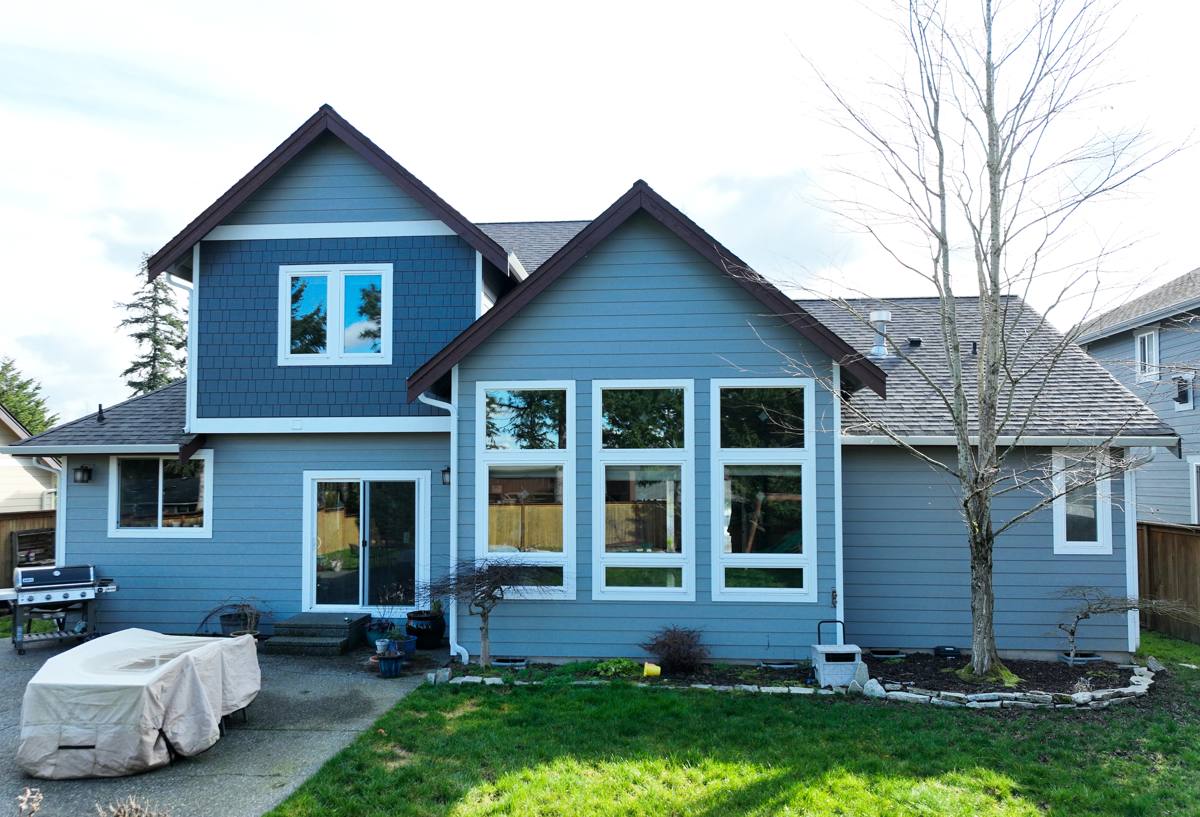
Why This Climate Is So Hard on Siding
Three things specific to this area drive most of the repair calls we get in Green Lake:
- Long moss season: Shade from mature trees plus near-constant moisture from fall through spring lets moss and algae colonize siding surfaces, especially on the north and west sides of a house. Moss holds water against the surface far longer than open air ever would.
- Driving rain: Wind off the lake and the Sound doesn't just fall straight down — it drives rain sideways into laps, corners, and trim joints, which is exactly where poorly sealed or aging siding fails first.
- Salt-tinged, humid air: Seattle's proximity to Puget Sound keeps ambient humidity high year-round. That moisture load accelerates wood rot, corrodes fasteners, and keeps caulk and paint film working harder than they would in a drier climate.
None of this means every Green Lake home needs full replacement. It means repairs have to account for how water actually moves through a wall assembly in this climate, not just how a patch looks once it's painted.
Signs Your Green Lake Home Needs Siding Repair
Most siding failures give warning signs well before they become structural problems. Homeowners in this neighborhood should walk the exterior at least once a year, ideally at the end of the wet season, and look for:
- Soft or spongy spots when you press on siding near the bottom courses or under windows
- Visible moss, algae, or dark streaking that keeps coming back after cleaning
- Cracked, bubbling, or peeling paint concentrated in one area rather than spread evenly
- Gaps or separation at butt joints, corners, or where siding meets trim
- Staining or bubbling on interior walls that lines up with an exterior wall
- Visible warping, cupping, or delamination of individual boards or panels
- Caulk that has shrunk, cracked, or pulled away from joints
Any one of these can be minor on its own. Several together, especially in the same area of the house, usually mean water has been getting behind the siding for a while.
What a Correct Siding Repair Actually Involves
Finding the Real Source, Not Just the Symptom
The visible damage is rarely the whole story. A board that's rotted at the bottom edge might be failing because of a clogged gutter dumping water down the wall, a missing kick-out flashing at a roof-wall intersection, or grade that slopes toward the foundation instead of away from it. We open up the affected area, check the water-resistive barrier and flashing underneath, and confirm the cause before we replace anything. Repairing the siding without fixing the cause just buys a few more years before the same spot fails again.
Matching Materials the Right Way
Patching in a different material, a different profile, or an unmatched paint sheen creates a repair that's obvious from the street and often performs worse than the original. When we repair fiber cement siding, we match the exposure, profile, and finish so the patch reads as part of the wall, not a visible splice. When we're asked to repair aging wood, vinyl, or other legacy siding, we're honest with homeowners about the limits of patching a product that's simply near the end of its service life — sometimes a section-by-section repair genuinely makes sense, and sometimes it's a short-term fix on a longer-term problem.
Protecting the Wall, Not Just the Surface
Every repair we do reinstates proper flashing and water-resistive barrier detailing at the repaired area — house wrap laps, window and door flashing, and drip caps at trim. In a climate that drives rain sideways for months at a time, the barrier behind the siding matters as much as the siding itself.
Repair vs. Replacement: How to Tell the Difference
| Situation | Repair Usually Makes Sense | Replacement Usually Makes Sense |
|---|---|---|
| Damage extent | Isolated to one wall or a few boards/panels | Spread across multiple elevations |
| Underlying cause | Identifiable and fixable (flashing, gutter, grading) | Systemic — original install lacked proper water management |
| Material condition | Rest of the siding is sound and holding paint well | Widespread cupping, cracking, or moisture damage elsewhere |
| Material age | Well within expected service life | At or past the material's realistic lifespan |
| Match quality | Discontinued product can still be closely matched | Product discontinued or no longer available to match |
We'll tell you honestly which category your home falls into. There's no reason to replace an entire elevation over a localized problem, and no benefit to patching a wall that's failing broadly just to delay the inevitable.
Why We Repair and Rebuild With James Hardie Fiber Cement
When a repair calls for new material — whether we're patching an existing Hardie installation or replacing a failed section of another siding product — we use James Hardie fiber cement, and only James Hardie. We don't install LP SmartSide, vinyl, Cemplank, Allura, primed spruce, or cedar, and that standard applies to repair work the same as full installs.
The reason is straightforward: fiber cement doesn't rot, doesn't feed moss and algae the way wood-based products can, and holds up to the driving rain and long damp season that define this climate far better than materials that depend on paint film or caulk staying intact to keep water out. Hardie's ColorPlus factory finish also means a repaired section can be color-matched with far more consistency than field-painted repairs, since the finish is baked on at the factory rather than applied on-site under variable weather. When a homeowner's existing siding is a different product and repair isn't realistic long-term, we're upfront that our recommendation for the replaced sections is Hardie — not because it's the only option on the market, but because it's the one we're willing to warranty and stand behind in this climate.
Our Repair Process
- On-site inspection: We assess the damaged area and check surrounding sections, trim, flashing, and gutters for related issues.
- Diagnosis: We identify the actual cause of the failure, not just the visible symptom, before recommending a scope of work.
- Honest scope and estimate: We explain what needs to happen, why, and what it will cost — including whether repair or a larger scope is the better long-term call.
- Removal and inspection of the substrate: Damaged material comes off, and we check the water-resistive barrier and framing underneath before closing anything back up.
- Correct reinstallation: Flashing, house wrap, and fastening are brought up to proper detailing, then new siding is installed and matched.
- Final walkthrough: We review the completed repair with the homeowner and point out anything worth monitoring going forward.
Why a Crew That Already Works in Green Lake Matters
Siding repair around Green Lake benefits from familiarity with a few local realities: the density of mature tree canopy that keeps certain walls shaded and damp nearly year-round, the age and construction style common to homes in this part of Seattle, and the permitting expectations that apply to exterior work within King County and the city. A crew that's already done this work nearby isn't guessing at how water behaves on a shaded, lake-adjacent lot — they've seen the pattern before and know what to check first. That familiarity shortens the diagnostic process and reduces the chance of a repair that solves the symptom but misses the cause.
It also means realistic expectations about timing. Wet-season scheduling, drying time between steps, and coordinating around Seattle's rain patterns are all things a local crew plans for as a matter of course, not an afterthought.
Maintaining Your Siding Between Repairs
A few habits go a long way toward keeping Green Lake homes from needing repair in the first place:
- Clean moss and algae off shaded siding at least once a year, using a soft wash approach rather than high-pressure spray that can force water behind panels
- Keep gutters clear so water isn't overflowing directly down exterior walls
- Trim back vegetation and tree limbs that keep siding shaded and damp longer than necessary
- Re-caulk gaps at trim and joints before they widen, rather than after
- Confirm grading and downspout extensions are directing water away from the foundation and lower walls
If you're noticing soft spots, recurring moss, peeling paint, or gaps in your siding, it's worth having someone look before the damage spreads further into the wall. We offer free, no-pressure estimates for Green Lake homeowners — an inspection costs you nothing, and it's the fastest way to find out whether you're looking at a simple repair or something bigger.