 Seattle
 A roof in Kirkland does more work than most homeowners realize. Between Puget Sound's marine air, months of steady rain, and the shade cover that lets moss take hold on north-facing slopes, a roof here is under near-constant low-grade stress. When it's time to replace one, the goal isn't just to put new material on the roof deck — it's to build an assembly that sheds water fast, breathes correctly, and resists the moss and moisture problems that shorten roof life across King County. That's the standard we hold every new roof installation to.
Kirkland's Climate Puts Real Demands on a Roof
This isn't a climate that destroys roofs quickly and obviously — it's one that wears them down slowly, through moisture that never fully dries out. Several things stack up against a roof here:
- Driving rain: Wind-driven rain off the Sound can push water sideways under poorly lapped shingles or thin flashing, not just straight down.
- Salt-tinged marine air: Metal fasteners, flashing, and vents that aren't rated for coastal exposure corrode faster than their inland equivalents.
- Long moss season: Shaded, north- and east-facing roof planes stay damp for extended stretches, giving moss and algae months to establish themselves each year.
- Mature tree cover: Many Kirkland lots have significant tree canopy, which means more organic debris in valleys and gutters, and more shade holding moisture on the roof surface.
None of this means a roof is doomed — it means the installation details that get skipped elsewhere can't get skipped here.
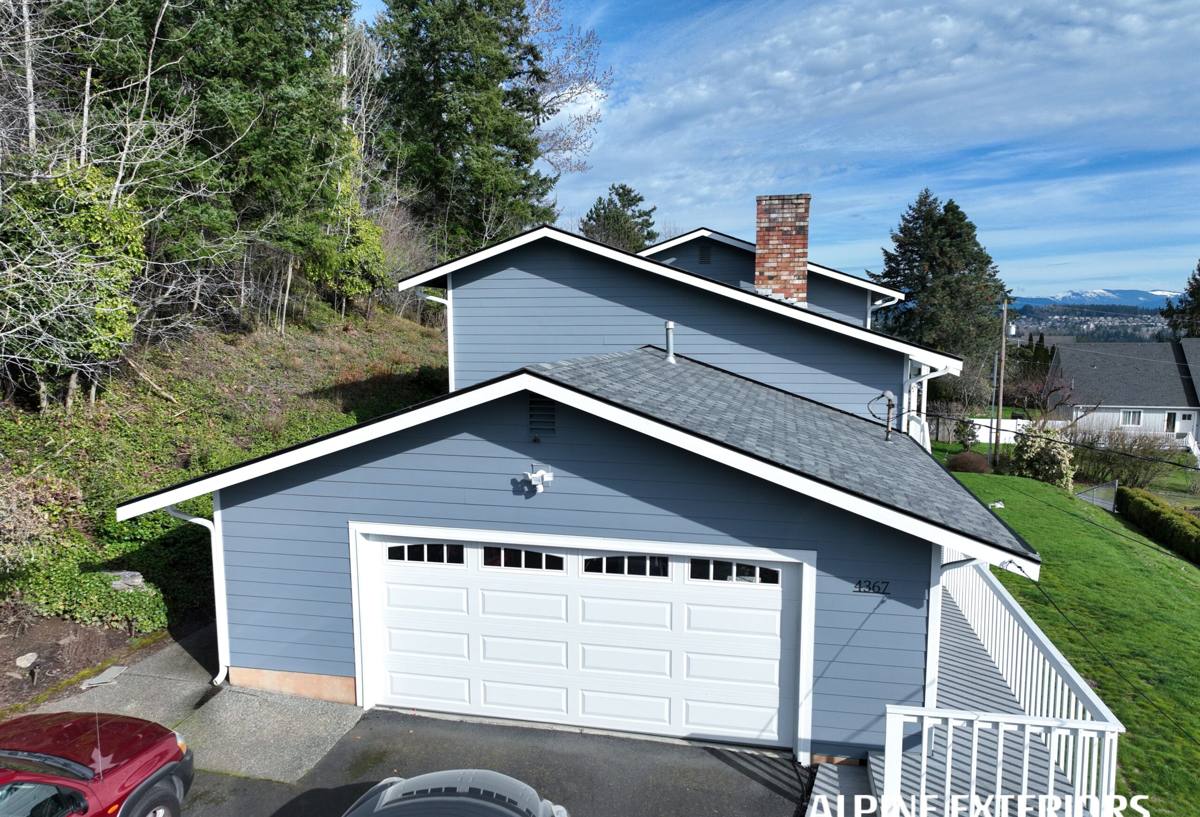
Is It Time? Signs a Kirkland Roof Needs Full Replacement
Not every roof problem calls for a full tear-off. But there are signs that patching is no longer the honest answer:
- Granule loss heavy enough that shingles look bald or gravel collects in gutters
- Moss growth that returns within a season or two of cleaning, especially on shaded slopes
- Soft or spongy decking felt underfoot, or daylight visible through the attic roof boards
- Shingles cupping, curling, or cracking, particularly on the roof's south and west exposures
- Recurring leaks at valleys, chimneys, or skylights despite repeated repairs
- A roof approaching or past the upper end of its material's expected service life
We'll always tell you honestly if a section can be repaired instead of replaced. A full new roof only makes sense when the underlying deck and structure are worth building on.
What Correct New Roof Installation Looks Like
The material on top gets all the attention, but most roof failures in this region trace back to what's underneath it. A correct installation gets these layers right, in order.
Tear-Off and Deck Inspection
We remove the old roofing down to the deck rather than layering over it. That's the only way to actually see the condition of the sheathing — soft spots, rot around old flashing, or water staining that signals a leak path you'd never spot from the attic. Any compromised decking gets replaced before anything new goes down; nailing new material to soft plywood just hides the problem for a few more years.
Underlayment and Ice/Water Protection
Synthetic underlayment goes down as the roof's secondary water barrier — the layer that protects the deck if wind ever drives water past the shingles themselves. In vulnerable areas like eaves, valleys, and around penetrations, we add self-adhering waterproof membrane, which is far more forgiving of the wind-driven rain this area sees than felt paper alone.
Ventilation That Actually Works
A roof deck needs continuous airflow from soffit to ridge to stay dry from the underside. Without it, warm, moist household air condenses against the sheathing, which rots the deck from the inside and feeds moss growth on the surface above. We size and balance intake and exhaust ventilation as part of every installation — not as an afterthought.
Flashing and Edge Details
Flashing at chimneys, walls, valleys, and skylights is where most leaks actually originate, not in the open field of shingles. We install new flashing, sized and lapped correctly, rather than reusing old pieces or relying on sealant to bridge a gap that should be solved with metal.
Choosing a Roofing Material for This Area
There's no single "best" material — the right choice depends on your roof's exposure, your home's style, and how much long-term maintenance you want to take on. Here's how the common options compare for a Kirkland roof specifically.
| Material | Moss & Moisture Resistance | Maintenance | Typical Lifespan |
|---|---|---|---|
| Architectural asphalt shingle | Good, especially with algae-resistant granules | Low to moderate | 25-30 years |
| Standing seam metal | Excellent — sheds moisture fast, little surface for moss to grip | Low | 40-50+ years |
| Cedar shake | Requires diligent upkeep in shaded, damp areas | High | 20-30 years with upkeep |
| Synthetic shake/slate composite | Good, resists rot that natural cedar is prone to | Low to moderate | 40-50 years |
Cedar shake has real curb appeal, but on shaded, moisture-prone slopes it demands consistent cleaning and maintenance to avoid the rot and moss problems that shorten its life — that's a maintenance commitment we walk homeowners through honestly rather than overselling. Architectural asphalt with algae-resistant granules remains the most common, cost-effective choice for full-sun and mixed-exposure roofs, while metal is worth considering on steep or heavily shaded planes where shedding water fast matters most.
Our Process From First Call to Final Walkthrough
- On-site inspection: We walk the roof and attic, check ventilation, and assess deck condition before quoting anything.
- Written estimate: A clear scope covering material, tear-off, ventilation work, and flashing details — no vague line items.
- Tear-off and deck repair: Full removal of old material, with any damaged sheathing replaced and documented before we cover it up.
- Underlayment, flashing, and ventilation install: The water-management layers go in first, correctly, before the finish material.
- Material installation: Shingles, metal, or your chosen material installed to manufacturer specifications and local code.
- Cleanup and walkthrough: Jobsite magnet-swept for nails, debris hauled off, and a final walk with you to review the finished roof.
Why Local Experience in Kirkland Matters
A roofer who already works in this part of King County isn't guessing at how the climate will treat your roof — they've seen which north-facing slopes grow moss fastest, which older homes need extra attic ventilation added, and how tree cover on wooded lots affects debris buildup in valleys. That experience also extends to the practical side of a project: knowing what the local permitting process requires, working around narrow or sloped driveways common on hillier Kirkland lots, and scheduling around the rainy stretches of the year so tear-off days aren't left exposed longer than necessary.
It also means being straightforward about what your specific roof needs instead of applying a one-size-fits-all approach. A roof on a shaded, tree-covered lot near the lake needs different ventilation and material choices than one on an open, sun-exposed slope — and a crew with local reps under their belt will treat those differently from the start.
Cost Factors to Expect
Every roof is quoted after an on-site look, but these are the main factors that move the price up or down, and why.
| Factor | Why It Affects Cost |
|---|---|
| Roof size and number of planes | More square footage and more valleys/hips mean more material and labor |
| Number of existing layers | Removing multiple old layers takes more tear-off labor and disposal |
| Roof pitch and access | Steep roofs or difficult access require more safety setup and time |
| Deck condition | Rotted or soft sheathing needs replacement before new material goes down |
| Material choice | Asphalt, metal, and synthetic composites carry different material costs |
| Ventilation upgrades | Adding proper intake/exhaust venting where none existed adds labor |
We'd rather walk your roof and give you real numbers than throw out a broad estimate that doesn't hold up once we're actually up there.
Keeping a New Roof Performing
A correctly installed roof still needs a bit of seasonal attention in this climate to reach its full lifespan. Simple habits go a long way:
- Clear gutters and valleys of leaves and needles at least twice a year, more often under heavy tree cover
- Have moss treated or gently removed before it builds a thick mat, rather than after
- Trim back overhanging branches to cut down on shade and debris on the roof surface
- Check attic ventilation isn't blocked by insulation, especially after any attic work
- Schedule a walk-through inspection every few years, or after any major windstorm
If you're weighing a new roof for your Kirkland home, we're happy to take a look and give you a straight assessment — no pressure, no inflated estimate to scare you into a decision. Fill out the form below and we'll set up a time to walk the roof with you.