 Seattle
 Why Magnolia's Location Makes Siding Choice Matter More
Magnolia sits out on its own peninsula, with water on multiple sides and little in the way of neighboring hills to break the wind. That geography is part of what makes the neighborhood beautiful, and it's also exactly why siding here takes more punishment than siding a few miles inland. Homes closer to the bluffs and shoreline deal with salt-laden air that accelerates corrosion on fasteners and trim, wind-driven rain that gets pushed sideways into wall assemblies instead of just running down them, and a wet season that stretches long enough for moss and algae to get a real foothold on north-facing and shaded walls.
None of that is unique to Magnolia within the Seattle area, but the combination — marine exposure plus a long, low-sun moss season plus older housing stock — means siding decisions here have less room for error than in a drier, more sheltered part of King County. A product or installation detail that's marginal in a protected inland neighborhood can fail outright on a home that catches weather off the water.
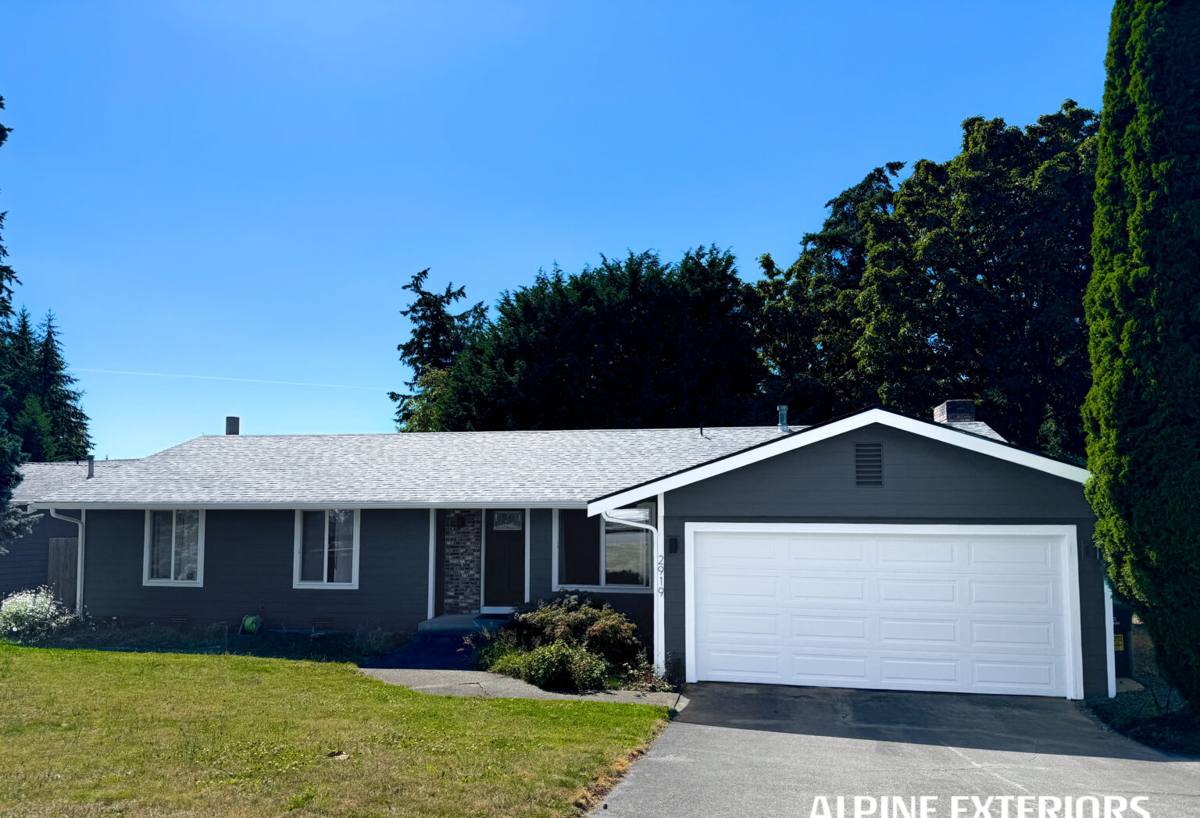
What Local Homes Actually Need From Their Siding
Three things matter most for exterior cladding in this part of Seattle:
- Moisture management, not just moisture resistance. The siding and everything behind it needs a way to dry out between storms, because in Magnolia there often isn't much time between storms.
- Material stability under repeated wet-dry cycling. Siding that swells, warps, or delaminates when it absorbs water and then dries will show it within a few winters here.
- A finish that holds up to salt air and UV without chalking or fading unevenly, especially on the sides of a house that face open water or get the most direct exposure.
This is the core of why we only install James Hardie fiber cement siding. Hardie's HZ5 product line is engineered specifically for climates like ours — freeze-thaw cycling, sustained moisture, and coastal exposure — rather than being a general-purpose siding pressed into service in a demanding environment. The board itself is non-combustible fiber cement, dimensionally stable, and backed by a factory-applied ColorPlus finish that's formulated to resist fading and hold its color far longer than a field-applied paint job.
Matching the Right Hardie Product to a Magnolia Home
Not every home on the peninsula needs the same siding profile. We look at exposure, architectural style, and the condition of the existing wall assembly before recommending a product line.
| Product | Best Fit | Why It Works Here |
|---|---|---|
| HardiePlank lap siding | Most single-family homes, especially traditional and craftsman styles | Proven track record in wet, windy climates; wide range of textures and reveals |
| HardieShingle | Homes with shingle-style detailing or accent gables | Gives the look of cedar shake without the moisture uptake and maintenance cedar demands |
| HardiePanel | Modern builds, accent walls, garages | Clean vertical lines; works well combined with lap siding for contrast |
| HardieTrim | Corners, window and door surrounds, fascia | Matches the siding's moisture and rot resistance so trim doesn't become the weak point |
On homes with more direct exposure to wind off the water, we also pay closer attention to reveal size, fastening pattern, and butt joint treatment — details that matter more when a wall is taking rain at an angle instead of straight down.
What a Correct Installation Actually Involves
James Hardie siding performs the way it's designed to only when it's installed to Hardie's specifications, and it's the installation — not just the product — that determines how a wall handles Magnolia's weather over the next few decades. A correct install includes:
- A drainable weather-resistive barrier installed with proper lap and taped seams, so any water that gets behind the siding has somewhere to go
- Correct fastener type, spacing, and embedment — under- or over-driven nails are one of the most common causes of early siding failure
- Proper clearance between the siding's bottom edge and grade, decks, and roofing, so water doesn't wick up into the board
- Flashing at every window, door, and horizontal trim transition, not just caulk
- Correctly sized gaps at butt joints and trim, sealed with a flexible sealant rated for the assembly — tight, unsealed joints trap moisture instead of shedding it
- Factory-cut and factory-primed edges wherever possible, since field-cut edges need to be sealed to maintain the product's moisture resistance
Skipping or rushing any one of these steps is how a house ends up with siding that looks fine for a year or two and then starts showing problems at the seams — exactly the failure pattern that shows up faster in a marine climate than a dry one.
Our Process on a Magnolia Job
Assessment and Tear-Off
We start by inspecting the existing siding and the wall assembly underneath it once it's removed. On older Magnolia homes this step matters — sheathing that's been absorbing moisture behind failing siding for years needs to be identified and addressed before new siding goes over it, not after.
Moisture and Structural Check
Before any new material goes up, we confirm the sheathing is sound and dry, repair or replace any compromised sections, and make sure the drainage plane is continuous across the whole wall — including around windows, corners, and penetrations like vents and hose bibs.
Installation
We install the weather-resistive barrier, flashing, and Hardie product to manufacturer spec, with attention to fastening and joint treatment as described above. We also install HardieTrim and any accessory pieces at the same standard, since mismatched trim durability undermines the siding around it.
Final Walkthrough
We walk the finished exterior with the homeowner, checking reveals, joints, paint lines, and caulking before calling the job complete.
Living With Hardie Siding in a Wet, Salty Climate
James Hardie siding is low-maintenance compared to wood or engineered wood products, but "low-maintenance" doesn't mean "no maintenance," especially in a neighborhood that sees this much moisture and shade on north- and east-facing walls. A short annual checklist keeps a Hardie exterior performing the way it should:
- Rinse siding with a garden hose once or twice a year to clear salt residue and organic buildup before it becomes established moss or algae
- Keep gutters clear so overflow doesn't run down the siding face during heavy rain
- Trim back plants and tree limbs that keep any section of wall shaded and damp longer than the rest of the house
- Inspect caulking at trim and joints every year or two and re-seal if it's cracked or pulling away
- Check for moss starting at board overlaps and butt joints, since that's usually the first place it takes hold
None of this requires refinishing or repainting the way cedar or primed wood siding does — ColorPlus finish is baked on at the factory and holds up far longer than a field-applied coat, which is part of why we standardized on it.
What Drives the Cost of a Magnolia Siding Job
| Factor | Why It Matters |
|---|---|
| Home size and wall complexity | More corners, gables, and dormers mean more cutting, flashing, and labor time |
| Condition of existing sheathing | Water damage found during tear-off adds repair scope before new siding can go up |
| Product line selection | Lap, shingle, and panel products vary in material and labor cost |
| Trim and accessory scope | Full HardieTrim packages cost more than reusing sound existing trim, but hold up longer |
| Site access | Steep lots, tight setbacks, or limited staging area near the water can add labor time |
We give every homeowner a specific, written estimate after seeing the home in person — broad cost ranges without an inspection aren't useful when so much depends on what's found once the old siding comes off.
Why Hiring a Crew That Already Works Magnolia Matters
A siding crew that mostly works drier, more sheltered parts of King County can still do competent work, but they're not necessarily thinking about the details that matter most on a peninsula home: how much clearance to leave near grade on a lot that drains toward the water, how aggressive to be with flashing on a wall that takes rain sideways off Puget Sound, or how soon moss will show up on a shaded north wall if the reveal and drainage plane aren't done right. A crew that regularly works Magnolia and similar Seattle neighborhoods has already seen how these choices play out over years, not just at the final walkthrough.
That's the standard we hold every install to, and it's a big part of why we only put James Hardie on homes in the first place — a durable, climate-engineered product installed correctly is what actually holds up out here, and we'd rather stand behind one system we know inside and out than offer several products we can't fully vouch for in this climate.
If you're planning a siding project in Magnolia, we're happy to take a look at your home and put together a free, no-pressure estimate — just fill out the form below.