 Seattle
 Why Magnolia's Setting Is Hard on Siding
Magnolia sits on a peninsula wrapped by Puget Sound, Elliott Bay, and the Ship Canal, which means most homes here deal with salt-laden air moving in off the water almost year-round. Add Seattle's long wet season — steady, driving rain rather than short downpours — and a heavy tree canopy in many pockets of the neighborhood, and you get siding conditions that are genuinely tougher than what a typical inland Seattle lot faces. Salt air accelerates corrosion on fasteners and trim. Wind-driven rain finds its way behind poorly flashed siding instead of running off the face of it. And shaded, damp lots grow moss and algae faster than sunnier ones, which keeps siding wet longer between dry spells.
None of this means Magnolia homes need something exotic. It means the installation has to be done correctly, with materials that hold up to sustained moisture exposure and a crew that understands how water actually moves across a wall in this specific environment.
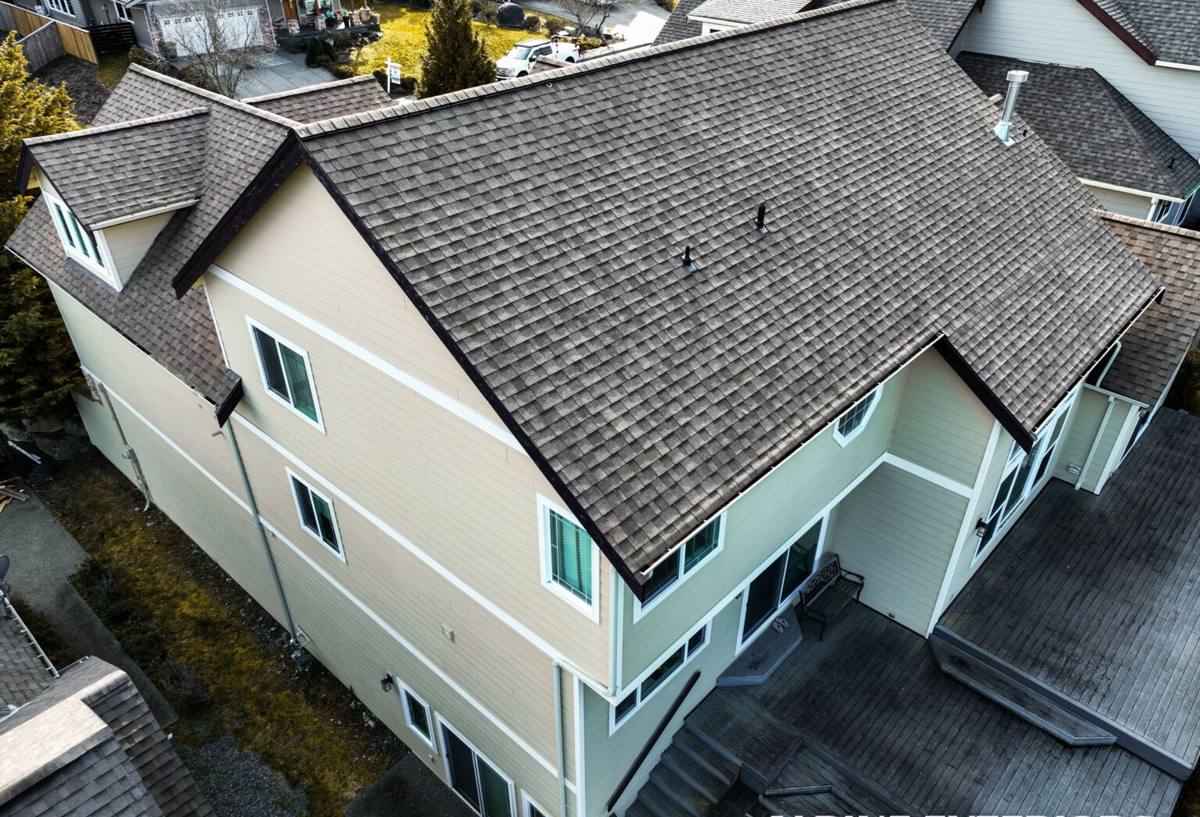
What "Correct" Siding Installation Actually Involves
Siding failures in this region are rarely about the siding material itself — they're almost always about what's happening underneath it. A proper installation is a system, not just a set of boards nailed to a wall.
The Weather-Resistive Barrier
Every wall needs a continuous, properly lapped weather-resistive barrier (WRB) behind the siding. Seams get taped, penetrations get sealed, and the barrier laps correctly at every horizontal joint so water is always directed outward and down, never trapped behind the cladding.
Flashing at Every Opening
Windows, doors, and any wall penetration are the most common failure points on King County homes. Head flashing, sill pans, and kick-out flashing at roof-to-wall intersections all have to be installed in the correct order relative to the WRB — flashing tucked behind the barrier above and lapped over it below, so water sheds outward instead of into the wall cavity.
Fastening and Clearances
James Hardie siding has specific fastener spacing, embedment depth, and clearance requirements — including a minimum gap between the bottom of the siding and roofing, decks, and grade. Skipping these details doesn't show up as a problem on install day; it shows up two or three winters later as staining, swelling trim, or rot at the bottom course.
Why We Only Install James Hardie
We made a deliberate decision not to install vinyl, LP SmartSide, or unfinished wood siding, even though we could offer them. Vinyl expands and contracts significantly with temperature swings and can crack or warp over time, and it isn't fire-resistant. Wood-based and engineered wood products depend heavily on maintaining an intact factory or field-applied coating — once moisture gets past that coating in a climate that stays wet for months at a stretch, the underlying material is vulnerable in a way fiber cement isn't.
James Hardie fiber cement is non-combustible, dimensionally stable in wet-dry cycling, and comes with a factory-applied ColorPlus finish that's baked on and warrantied against fading and cracking — not something we're relying on a field paint crew to get right on a ladder in the rain. For a peninsula neighborhood dealing with salt air and a long wet season, that combination matters more than it does in a drier climate. It's why Hardie is the only siding we put our name behind.
Choosing the Right Hardie Product for a Magnolia Home
James Hardie makes several distinct siding profiles, and the right one depends on the home's architecture and exposure, not just personal preference.
- HardiePlank lap siding — the most common choice for traditional Seattle homes; available in several exposure widths and textures, including smooth and cedar-grain finishes.
- HardieShingle — for homes with Craftsman or cottage-style detailing where a shingled look fits the architecture better than lap boards.
- HardiePanel — vertical panel siding, often used for modern homes or as an accent alongside lap siding on gables and dormers.
- HardieTrim — matching fiber cement trim boards around windows, corners, and fascia, so the whole exterior envelope is made of the same moisture-stable material instead of mixing in wood trim that will fail on a different timeline.
James Hardie also engineers its products by climate zone. Homes in our region are specified to the HZ5 line, which is formulated for the Pacific Northwest's moisture exposure rather than a generic national product. We spec every job to HZ5 as a baseline, not an upsell.
Our Installation Process
The steps don't change much from job to job, but the details within each step are where quality is won or lost.
- On-site assessment. We look at the existing siding, sheathing condition, trim, and any signs of past moisture intrusion before quoting anything.
- Tear-off and sheathing inspection. Old siding comes off and we check the sheathing underneath for rot or soft spots, especially around windows and at the base of walls — common trouble spots on older Magnolia homes.
- WRB and flashing installation. A new weather-resistive barrier goes on, with flashing integrated at every window, door, and penetration before a single piece of siding is hung.
- Siding installation to manufacturer spec. Correct fastener pattern, embedment, and clearances, with attention to how courses align around windows, corners, and roof lines.
- Caulking and touch-up. Joints and trim are sealed with a flexible, paintable sealant rated for exterior use; factory-finished ColorPlus panels need touch-up paint matched to the specific color, not a generic exterior paint.
- Final walkthrough and cleanup. We walk the job with the homeowner, and the site is cleared of debris and old material.
What Affects the Cost of a Siding Installation
Every home is different, so we don't quote off square footage alone. These are the factors that actually move the price up or down.
| Factor | Why It Matters |
|---|---|
| Existing siding removal | Tear-off, disposal, and sheathing repair add labor beyond the new install itself. |
| Sheathing and framing condition | Rot found once old siding is off has to be repaired before new siding can go on correctly. |
| Home height and stories | Multi-story homes and steep Magnolia lots often require additional staging or lift equipment. |
| Trim and architectural detail | Homes with more windows, dormers, gables, or mixed siding profiles take more time per square foot. |
| Access and site conditions | Narrow side yards, retaining walls, and mature landscaping common on hillside lots can slow material staging. |
| Siding profile chosen | Lap, shingle, and panel siding have different labor requirements even at the same square footage. |
Why Hiring a Crew That Already Works in Magnolia Matters
Magnolia's terrain and tree cover create job-site conditions that aren't universal across Seattle. Steep, view-oriented lots often mean careful staging and fall protection planning that a crew unfamiliar with the neighborhood's topography hasn't had to think through repeatedly. Homes tucked under mature tree canopy hold more moisture against the siding and grow moss and algae faster, which changes how we sequence work and what we flag during the initial assessment. And because a large share of the neighborhood's housing stock is older, we're used to finding original sheathing and past patch jobs that need to be addressed honestly before new siding goes up — not covered over.
A crew that has done this work across the peninsula recognizes these patterns on sight instead of learning them on your house.
Caring for Your Siding After Installation
James Hardie siding with a ColorPlus finish is low-maintenance, but "low-maintenance" isn't "no-maintenance" in a climate like ours.
- Rinse siding annually with a garden hose to remove salt residue and pollen buildup, especially on sides of the home facing open water.
- Keep gutters clear so overflow doesn't run down the siding face during heavy rain events.
- Trim back vegetation and tree limbs that keep siding shaded and damp longer than necessary.
- Address moss or algae growth early with a gentle wash rather than pressure-washing directly into joints and seams.
- Re-caulk joints if you notice cracking or separation, and touch up any nicks in the finish before bare fiber cement is exposed to moisture long-term.
Signs Your Magnolia Home May Need New Siding
- Visible warping, buckling, or separation at seams and corners.
- Soft spots or spongy areas when pressed, which can indicate moisture behind the siding.
- Persistent moss or algae staining that returns quickly after cleaning.
- Paint that's peeling or bubbling rather than just fading.
- Rising energy bills that may point to a compromised weather barrier, not just an aging furnace.
- Siding that's original to a home built decades ago and has never been replaced.
If your Magnolia home is showing any of these signs, or you're simply planning ahead, we're happy to take a look and give you a straightforward, no-pressure estimate — use the form below to get started.