 Seattle
 Why Queen Anne's Climate Is Hard on Siding
Queen Anne sits on one of Seattle's highest hills, with long views over Puget Sound from many blocks — and that same exposure is what makes siding choice matter here. Homes on the west and south-facing slopes take salt-laden air off the Sound directly on the wall assembly, which accelerates corrosion on fasteners, trim, and any siding product that isn't built to shrug off moisture. Add King County's driving rain, which comes in sideways during winter storms rather than falling straight down, and you get water pushed into laps, seams, and butt joints that a fair-weather siding job never has to deal with.
Then there's moss. Queen Anne's mature street trees and shaded north-facing lots keep siding damp for days after a storm passes, and that damp, shaded environment is exactly what moss and mildew need to take hold. On wood-based products, that moisture sits against the material and starts breaking it down from the surface in. On a well-installed fiber cement system, it's just something you rinse off.
Queen Anne's Housing Stock, and What It Means for Siding Work
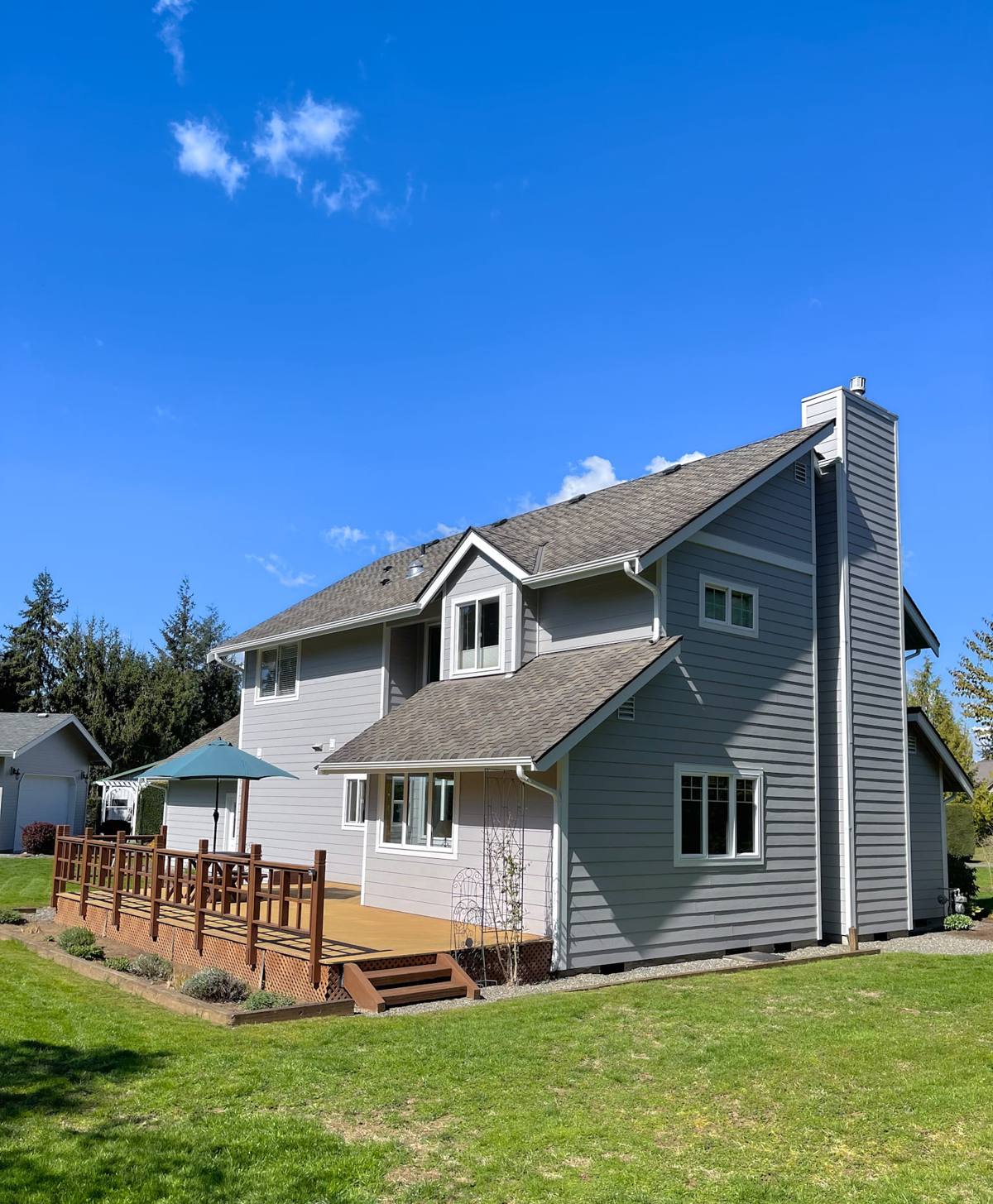
Queen Anne has one of Seattle's more varied building stocks — early-1900s craftsman and foursquare homes near the top of the hill, mixed in with mid-century and newer construction further down the slopes. Older homes often carry original wood siding or later replacements that were never detailed for today's rain-screen standards. That matters because a siding replacement on an older Queen Anne home isn't just a material swap — it's a chance to correct decades-old flashing and drainage mistakes that have been quietly feeding moisture into the wall.
Newer homes on the hill tend to have better underlying construction but still face the same exposure problems, especially on upper stories that catch wind-driven rain other parts of the house never see. Whatever the vintage, the siding plan has to account for the specific slope, shading, and wind exposure of that lot — a one-size-fits-all install doesn't hold up on a hill this varied.
Elevation and Orientation Change the Job
- West and south-facing walls with Sound views generally see the most wind-driven rain and salt exposure
- North-facing and tree-shaded walls dry slower and are the first place moss and mildew appear
- Upper floors and gable ends on taller Queen Anne homes take more direct wind load than ground-floor walls
- Older additions and dormers are common trouble spots where flashing details were never brought up to current standards
Why We Install James Hardie — and Only James Hardie
We don't install vinyl, LP SmartSide, cedar, primed spruce, Cemplank, or Allura. That's a deliberate standard, not a matter of what happens to be in stock. Vinyl expands and contracts with temperature swings and can crack or bow over time, and it doesn't hold paint if you ever want to change the home's color. Wood-based and engineered-wood sidings are more sensitive to the exact kind of sustained damp, low-light exposure Queen Anne delivers every winter — they need more diligent maintenance to keep water out at the edges, and any lapse shows up as swelling or rot. Other fiber cement brands aren't unreasonable products, but we've standardized on one system so our crews install it the same correct way on every job and warranty support is never a question mark.
James Hardie fiber cement is non-combustible, engineered specifically for wet marine climates like ours (the HZ5 product line is built for exactly this weather), and comes with a factory-applied ColorPlus finish that resists fading and holds color far longer than field-applied paint on wood siding. It also carries a strong transferable warranty — useful if you sell the home while the siding's still relatively new, which is common in a neighborhood with steady turnover like Queen Anne.
What a Correct Fiber Cement Installation Involves
The siding itself is only part of the system. Most of the difference between a job that lasts decades and one that fails early happens behind the boards, in details you won't see once it's finished.
| Detail | Why It Matters in Queen Anne |
|---|---|
| Rain screen / drainage gap | Gives wind-driven rain that gets past the siding a path to drain and dry instead of sitting against the sheathing |
| Weather-resistant barrier and flashing | Directs water around windows, doors, and penetrations rather than letting it track behind the siding |
| Fastener pattern and type | Correct nailing schedule and corrosion-resistant fasteners matter more near the Sound, where salt air speeds up corrosion on the wrong hardware |
| Joint and butt seam treatment | Properly caulked and sometimes flashed seams keep driving rain from wicking into panel edges, the most common failure point |
| Clearance at grade and roofline | Keeping siding off the ground and away from roof splash-back reduces the constant dampness that feeds moss growth |
Any one of these done wrong can undercut an otherwise good siding product. This is also where hiring quality shows up most — the siding brand is visible, but the flashing and drainage plan underneath it is what actually determines whether the wall stays dry.
Our Process on a Queen Anne Job
We start with a full walk-around assessment of the specific lot — orientation, tree cover, existing drainage, and the condition of what's currently on the wall. On older homes, that includes checking for hidden moisture damage under the existing siding before we ever price the job, so there are no surprises once tear-off starts. From there we plan the water management details (flashing, rain screen, transitions at windows and rooflines) before a single Hardie board goes up, then install to manufacturer spec with fastening and joint treatment suited to the wall's actual exposure.
Working this neighborhood regularly also means practical familiarity that shows up in the day-to-day of the job — narrower streets and hillside driveways that affect where material gets staged, homes close enough together that protecting a neighbor's property during tear-off is part of the plan, and an understanding of how Seattle's older housing stock was typically built so we're not guessing at what's behind the old siding.
Living With Fiber Cement Siding Through Queen Anne's Wet Season
Once it's installed correctly, Hardie siding asks very little of you — but a short seasonal routine keeps it looking good and catches small problems before they become expensive ones.
- Rinse siding annually, and more often on shaded or north-facing walls, to keep moss and mildew from taking hold
- Walk the exterior each fall before the rainy season and check caulking at trim, windows, and joints for cracking or gaps
- Keep gutters clear so overflow doesn't run down the wall face during heavy storms
- Trim back tree branches and shrubs that keep any section of wall shaded and damp longer than the rest of the house
- Touch up any chipped or scratched paint at trim promptly — factory ColorPlus finish on the siding itself needs far less attention than field-painted trim
What Affects Cost
Every Queen Anne home is different, and pricing depends on the specifics of the job rather than a flat rate — but the same factors drive cost on most projects in this neighborhood.
| Factor | Why It Affects Price |
|---|---|
| Existing siding removal | Tear-off and disposal of old material, especially multiple prior layers, adds labor |
| Hidden sheathing repair | Older homes sometimes need rot or moisture damage addressed before new siding goes on |
| Home height and access | Taller Queen Anne homes and steep or narrow lots can require more staging and scaffolding |
| Trim and detail complexity | Craftsman and older homes often have more corners, dormers, and trim than a simple newer build |
| Product line and profile | HardiePlank lap siding, panel systems, and shingle-style profiles carry different material and labor costs |
Why Local Experience Matters for This Job
A siding job done to spec in a mild, sheltered part of King County can fail faster on a wind-exposed Queen Anne slope if it isn't detailed for that exposure. A crew that already works this neighborhood knows which walls need extra attention at flashing and drainage before the first board goes up, not after a callback. That's the difference between siding that looks right for a season and siding that's still doing its job in twenty years.
If you're considering new siding for a Queen Anne home, we're glad to walk the property, look at what's there now, and talk through what a correct James Hardie installation would involve for your specific exposure — no pressure, no obligation. Use the form below to request a free estimate.