 Seattle
 Siding Built for Southeast Seattle's Wet, Shaded Streets
Rainier Valley runs along the west side of Lake Washington in southeast Seattle, and like the rest of King County, it sits squarely inside the Puget Sound region's marine climate. That means long stretches of low-intensity rain, humidity that never fully lets up even in the "dry" months, and a lot of mature tree cover that keeps siding shaded and slow to dry after a storm. None of that is unusual for this part of Washington, but it is exactly the combination that wears out the wrong siding material years before it should fail.
Homes here also see their share of wind-driven rain off the lake and the broader Puget Sound weather systems that move through the area, pushing moisture into seams, corners, and butt joints that a fair-weather installation wouldn't have to deal with. Add in a moss season that can stretch for most of the year on shaded north- and east-facing walls, and you have a climate that rewards correct material choice and correct installation — and punishes shortcuts on both.
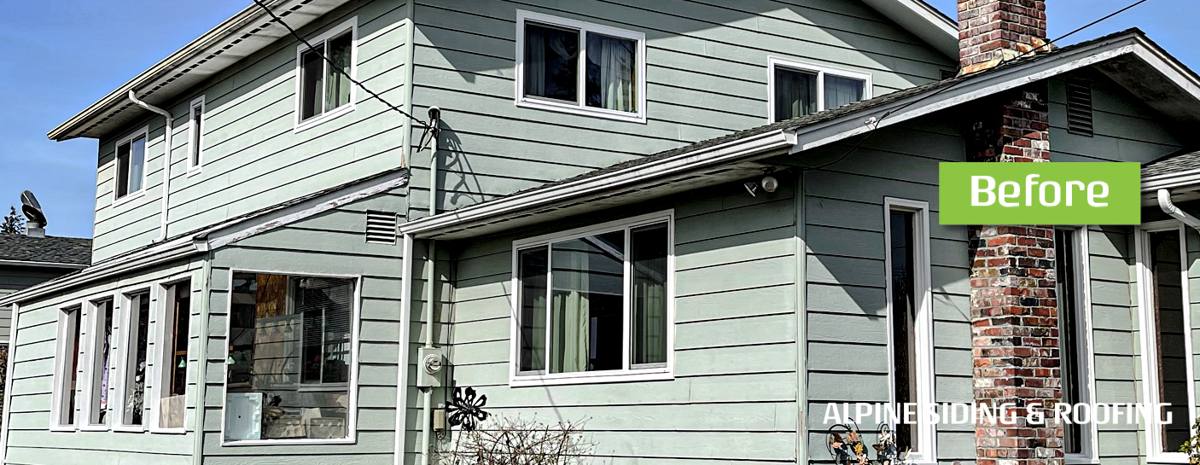
What Seattle's Climate Actually Does to Siding Over Time
It helps to be specific about the failure modes we're actually protecting against, rather than talking about "harsh weather" in the abstract.
- Moisture intrusion at seams and fasteners — driving rain finds any gap in flashing, caulking, or panel overlap and works it wider over time.
- Moss and algae growth — shaded, north-facing walls stay damp long enough for organic growth to take hold, which traps even more moisture against the surface.
- Freeze-thaw stress — King County doesn't get brutal winters, but repeated freeze-thaw cycles on saturated siding still open up small cracks that grow each season.
- UV and weathering on painted wood and composite trim — even with less direct sun than drier climates, exposed grain and painted surfaces still chalk, fade, and need repainting on a shorter cycle than manufacturers advertise.
- Swelling and delamination in moisture-sensitive materials — engineered wood products and some composite panels are rated for wet climates on paper, but field performance depends heavily on how well the installation kept water out in the first place.
Most of these aren't dramatic, sudden failures. They're slow-moving problems — a soft spot behind a downspout, a moss-covered shady corner, a seam that's been letting in moisture for two winters before anyone notices the paint bubbling. By the time it's visible, the damage is usually already behind the siding.
Signs a Rainier Valley Home Needs New Siding
Because a lot of siding damage happens out of sight, it's worth doing a walk-around a couple of times a year, especially before and after the wettest months. Look for:
- Soft, spongy, or visibly warped panels, especially near ground level and under windows
- Persistent moss, algae, or dark streaking that comes back shortly after cleaning
- Paint that's peeling, bubbling, or chalking faster than a normal repaint cycle
- Visible gaps, cracking, or separation at panel seams and corner boards
- Nail pops or fasteners that have backed out or rusted through the surface
- A musty smell or unexplained humidity inside exterior walls
- Siding that flexes or feels hollow when pressed
One or two of these might mean a repair. Several at once, especially spread across different walls, usually means the siding system itself is past the point where patching makes sense.
Why We Install Only James Hardie Fiber Cement Siding
We made a decision as a company to install one siding system — James Hardie fiber cement — and not vinyl, not LP SmartSide, not primed spruce or cedar, and not other fiber cement brands. That's not about brand loyalty. It's about what performs reliably in exactly the conditions Rainier Valley homes deal with every year.
Fiber cement is non-combustible, which matters for insurance and fire safety and simply doesn't flex or warp with moisture the way wood-based products can. James Hardie in particular engineers its HZ product lines by climate zone, and the Pacific Northwest formulation is built around the reality of sustained rain and humidity rather than a generic national spec. The factory-applied ColorPlus finish is baked on under controlled conditions, which gives it more consistent coverage and a longer service life before repainting than a field-applied coat on wood or composite siding typically gets.
We're not going to tell you every alternative product is junk — that's not honest, and it's not our call to make about someone else's manufacturing. What we will say is that after years of installing and repairing siding in this climate, we saw a consistent pattern: wood and engineered-wood products need more maintenance to hold up here, vinyl can crack and fade and doesn't offer the same fire performance, and other fiber cement brands don't offer the same climate-specific engineering, factory finish warranty, or track record we've come to trust. Standardizing on one system lets our crews get very good at installing it correctly, and lets us stand behind the result without hedging.
How James Hardie Compares to Other Common Siding Options
| Material | Moisture & Moss Resistance | Fire Rating | Typical Maintenance |
|---|---|---|---|
| James Hardie Fiber Cement | Engineered for wet climates; won't rot or swell | Non-combustible | Occasional wash; factory finish resists fading |
| Vinyl | Doesn't absorb water but can trap moisture behind it; seams can let water in | Combustible, can warp near heat | Low, but cracks and fades over time |
| LP SmartSide / Engineered Wood | Treated wood product; performance depends heavily on installation quality and sealing | Combustible | Regular inspection of seams and cut edges recommended |
| Primed Spruce or Cedar | Natural wood; absorbs moisture, prone to moss and rot without upkeep | Combustible | Frequent repainting/staining and moisture monitoring |
What a Correct Siding Installation Actually Involves
Siding failures around here are rarely a bad batch of material — they're almost always an installation problem. A siding job done right, especially in a wet climate, involves several layers most homeowners never see once the wall is closed up.
The Water Management System Behind the Siding
Correct installation starts with a weather-resistant barrier applied over the sheathing, then flashing at every window, door, and penetration that's designed to shed water downward and outward, not let it collect behind the siding. In a climate with as much sustained rain as ours, a rain screen gap — a small air space between the back of the siding and the wall — makes a real difference by letting any moisture that does get through drain and dry out instead of sitting against the wood sheathing.
Fastening, Clearances, and Manufacturer Spec
James Hardie publishes specific fastening patterns, clearances from grade and roof lines, and caulking requirements at seams and trim. Skipping these — nailing too tight, closing up clearances, relying on caulk instead of proper flashing — is the single most common reason fiber cement siding underperforms its warranty in the field. It's also usually invisible until years later.
Trim, Corners, and Penetrations
Every outside corner, window trim board, hose bib, and vent penetration is a place water can get behind the siding if it's not detailed correctly. These details take more time than running plain lap siding down a wall, and they're where a rushed crew tends to cut corners.
Our Siding Installation Process in Rainier Valley
- Walkthrough and assessment — we look at your current siding, sheathing condition where accessible, drainage around the foundation, and any problem areas like shaded walls or downspout discharge points.
- Written scope and estimate — what's being removed, what's being installed, which Hardie products and colors, and what the water management details will be.
- Tear-off and sheathing check — old siding comes off and we inspect the sheathing underneath for rot or damage before anything new goes up, since covering a wet or damaged wall defeats the purpose of new siding.
- Weather barrier and rain screen installation — the water management layer goes on correctly before a single piece of siding is hung.
- Hardie installation to manufacturer spec — proper fastening, clearances, and flashing at every seam, corner, and penetration.
- Trim, caulking, and final detailing — the finish work that determines how clean the job looks and how well it sheds water long-term.
- Final walkthrough — we go over the finished work with you before calling the job done.
Why Hiring a Crew That Already Works in Rainier Valley Matters
A siding contractor who works across Seattle and King County regularly sees how the same product performs differently depending on a home's exposure, tree cover, and elevation. A crew that's installed and repaired siding in southeast Seattle's shadier, wetter pockets knows to pay extra attention to north-facing walls prone to moss, to check drainage around older foundations, and to size up how much sun a wall actually gets before assuming a standard installation approach is enough.
There's also a practical side to this: a local crew can respond quickly if a question comes up during the project, is familiar with the permitting and inspection expectations in the city, and isn't guessing at how Seattle's rain patterns should shape scheduling and sequencing around weather windows. Siding installation has a lot of steps that need to stay dry during the process — a crew unfamiliar with the local climate is more likely to get caught out by a rain system moving in at the wrong moment.
Cost Factors for Siding Installation
We don't publish blanket pricing because siding cost depends on real variables specific to your home — but here's what actually moves the number, so you know what you're evaluating during an estimate.
| Factor | Why It Affects Cost |
|---|---|
| Home size and wall complexity | More square footage and more corners, gables, and trim details mean more labor and material |
| Condition of existing sheathing | Rot or moisture damage found during tear-off may need repair before new siding goes on |
| Siding profile and accessories chosen | Lap width, trim style, and accent details all affect material cost |
| Access and site conditions | Tight lots, multiple stories, or limited staging space can add labor time |
| Scope of tear-off | Full removal of old siding versus a more limited replacement changes the labor involved |
Caring for Your Siding After Installation
Fiber cement is low-maintenance, not no-maintenance. A yearly rinse to clear off pollen, debris, and early moss growth — especially on shaded walls — goes a long way toward keeping the factory finish looking new. Keep an eye on caulking at trim joints over the years, and make sure gutters and downspouts are directing water away from walls rather than dumping it against the base of the siding. None of this is heavy upkeep, but a few minutes of attention each year is what lets a correctly installed Hardie system go the distance in this climate.
If your siding is showing wear, or you're planning ahead for a home in Rainier Valley, we're happy to walk the property with you and give you a straight, no-pressure assessment. Reach out for a free estimate using the form below.