 Seattle
 Storm Damage Is Rarely Just One Problem in Rainier Valley
When a winter system rolls through the Rainier Valley, most homeowners call us about one obvious thing — a branch through the roof deck, a section of shingles peeled back, or a ceiling stain that showed up the next morning. What we usually find is that the visible damage is only part of the story. Wind-driven rain works its way under lifted shingles and flashing long before a homeowner notices a leak, and by the time water shows up inside, it's often been traveling through the decking and insulation for days or weeks. Treating storm damage repair as "patch the hole and move on" is how the same roof ends up with a second, worse repair the following season.
Rainier Valley's mix of older bungalows and newer infill homes means we're often working on roofs with very different histories — some original, some already re-roofed once or twice, some with layers of past patchwork stacked on top of each other. A proper storm repair starts by understanding what's actually under the surface, not just covering the part that's obviously broken.
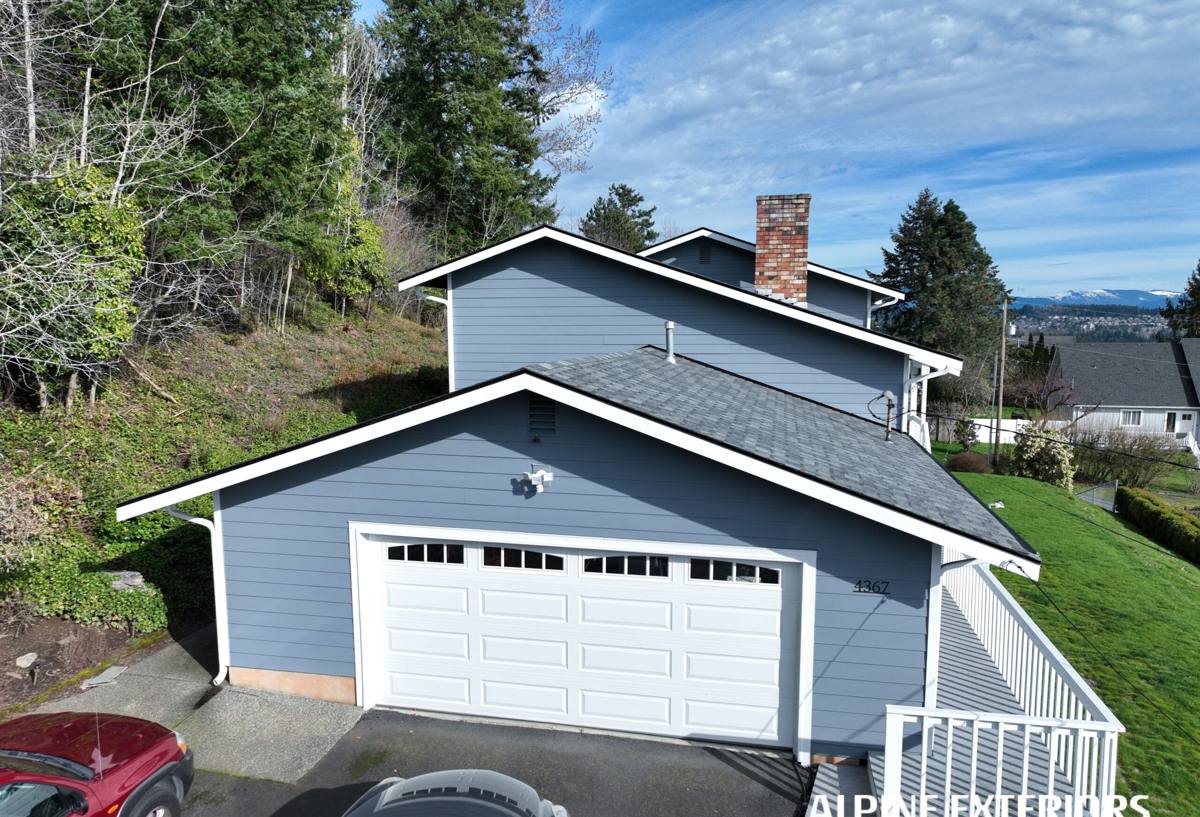
Why Seattle's Climate Makes Storm Repairs Different Here
Roofing storm damage looks different in King County than it does in drier parts of the country, mostly because our storms don't come and go — they linger. A few things specific to this area shape how we approach every repair:
Driving Rain, Not Just Downpours
Seattle storms are typically wind-driven rain rather than short, heavy cloudbursts. That matters because wind-driven rain gets pushed sideways and upward under shingle edges, ridge caps, and flashing in ways that straight-down rain never would. A repair that only addresses the spot where water is dripping inside, without checking the flashing and underlayment above it, tends to fail again in the next windstorm.
A Long Moss Season
Our mild, wet stretch from fall through spring gives moss months to establish itself on north-facing slopes and shaded sections of roof. Moss holds moisture against the shingle surface and can lift edges over time, which weakens exactly the areas most vulnerable to wind damage. When we're repairing storm damage, we're also looking at moss growth nearby, because a repair done next to an untreated moss mat won't hold as long as it should.
Salt Air and Metal Fatigue
Proximity to Puget Sound means homes throughout the Seattle area, including inland neighborhoods like Rainier Valley, deal with some level of salt-laden air. Salt air accelerates corrosion on exposed metal — flashing, fasteners, gutter hardware — faster than it would in a dry inland climate. After a storm, we check flashing and fastener condition even in areas that look fine, because corroded metal is often the real reason water found a way in.
Signs You Likely Have Storm Damage Worth a Closer Look
Not every storm leaves damage a homeowner can spot from the ground. Here's what we tell Rainier Valley homeowners to watch for after a windy or heavy-rain event:
- Shingles that look cupped, curled, or lifted at the edges, especially on the side of the house that faces prevailing wind
- Granules collecting in gutters or at downspout outlets — a sign of accelerated shingle wear
- Visible gaps or bent sections in flashing around chimneys, vents, or skylights
- New or expanding ceiling stains, especially near exterior walls or around penetrations
- Debris — branches, needles, moss clumps — pooled in valleys or against the roofline instead of shedding off
- A musty smell in the attic that wasn't there before, which can mean moisture intrusion before any visible stain appears
- Bent or dented gutters and downspouts, which often indicate branch or debris impact that may have also hit the roof
If you notice any of these after a storm, it's worth having someone look before the next system comes through — even minor storm damage tends to get worse with repeated wetting and drying.
What an Honest Storm Damage Repair Actually Involves
Inspection Before Anything Else
We start on the roof itself, not just from the ground, and we check the attic from the inside too. Ground-level inspections miss lifted shingle tabs, cracked flashing seams, and soft decking that only show up when you're actually walking the surface or looking up from underneath.
Stopping Active Water Intrusion
If a storm has left an active leak or an open section of roof, the first priority is temporary protection — tarping or sealing the exposed area so no more water gets in while the full repair is scoped and materials are sourced. This isn't the repair itself, just triage to prevent the damage from spreading.
Decking and Underlayment
Any decking that's gone soft, delaminated, or rotted from sustained moisture gets cut out and replaced — patching shingles over compromised decking just hides the problem. Underlayment in the repaired section gets replaced as a full barrier, not spot-patched, so there's no seam for water to find.
Flashing and Fasteners
Given how much of our storm damage traces back to flashing and metal fatigue, we treat this as core to the repair, not an afterthought. Corroded or bent flashing around chimneys, vents, and valleys gets replaced, and fasteners get checked for the kind of corrosion that salt air accelerates.
Matching Materials
Wherever possible, we match shingle type, color, and profile to your existing roof so the repair blends in rather than standing out as an obvious patch. On older roofs where an exact match isn't available, we'll tell you honestly what your options are instead of pretending a mismatch won't be visible.
Our Repair Process, Start to Finish
- Initial contact and scheduling — we get basic details about the damage and get someone out promptly, especially if there's active water intrusion.
- On-site inspection — roof surface, attic interior, flashing, and surrounding areas, with photos so you can see what we see.
- Written scope and estimate — what needs to happen, why, and a clear cost range before any work begins.
- Emergency mitigation (if needed) — tarping or temporary sealing to stop further intrusion.
- Repair work — decking, underlayment, flashing, and shingle work completed to match the existing roof system.
- Cleanup and walkthrough — debris removed, gutters checked, and a final walkthrough so you know exactly what was done.
Repair or Replace? A Cost-Factor Comparison
Not every storm-damaged roof needs to be replaced, but not every repair is the right long-term call either. These are the factors that typically decide which direction makes sense:
| Factor | Favors Repair | Favors Replacement |
|---|---|---|
| Roof age | Roof is less than half its expected lifespan | Roof is near or past its expected service life |
| Extent of damage | Damage confined to one section or slope | Damage spread across multiple slopes or the whole roof |
| Decking condition | Decking is sound outside the damaged area | Widespread soft or rotted decking found during inspection |
| Moss and moisture history | Isolated moss, treated and controlled | Long-term untreated moss with widespread shingle lifting |
| Material availability | Existing shingle still available for a clean match | Discontinued material, mismatch would be very visible |
| Insurance scope | Claim covers a defined repair area | Adjuster scope indicates full slope or full roof replacement |
We'll walk you through where your roof falls on these factors rather than defaulting to the more expensive option. Plenty of storm damage is genuinely a repair, not a replacement, and we'll tell you that when it's true.
Working With Insurance on a Storm Claim
Many storm repairs in this area go through a homeowner's insurance policy. We're glad to provide documentation — photos, a written scope, and an itemized estimate — for you to submit, and we can meet an adjuster on-site if that's helpful. What we won't do is inflate a scope to match a bigger check, or tell you damage exists that we didn't actually find. An honest scope protects you if there's ever a follow-up inspection, and it keeps the repair focused on what your roof actually needs.
Why a Crew That Already Works Rainier Valley Matters
Storm damage repair isn't a one-size-fits-all trade. A crew that regularly works Rainier Valley and the broader Seattle area has already seen how local conditions play out on real roofs — which slopes tend to hold moss longest, how flashing ages under sustained damp and salt-air exposure, and what wind-driven rain does to older roof systems versus newer ones. That familiarity means less guesswork and a repair scope that's grounded in what actually fails here, not a generic checklist.
It also means faster response. After a widespread storm, roofing crews get busy fast, and a contractor who already has a routine presence in the neighborhood can typically get to storm calls sooner than one dispatching from farther away. For homeowners dealing with an active leak, that response time is often what separates a contained repair from a much bigger one.
Get a Straight Answer About Your Roof
If your Rainier Valley home took damage in a recent storm — or you're just not sure whether what you're seeing is storm-related or ordinary wear — we're happy to take a look. The estimate is free, there's no pressure, and we'll tell you honestly whether you're looking at a repair or something bigger. Fill out the form below and we'll get in touch to schedule a time.