 Seattle
 Ravenna's Climate Is Harder on Siding Than It Looks
Ravenna is one of Seattle's older, more established neighborhoods, and it shows in the tree canopy — mature street trees and shaded lots are part of the character of the area. That shade is nice to live under, but it's tough on exterior siding. Less direct sun means slower drying times after every rain, and King County gets a lot of rain across a long, mild winter. Add in the region's naturally humid, salt-tinged marine air moving in off Puget Sound, and you have conditions that favor moisture retention and moss growth on anything but the most water-resistant materials.
A Long Moss Season
In much of Seattle, moss and algae growth is more or less a year-round concern, but it's worst from fall through spring when the days are shortest and the shaded, north-facing walls barely dry out between storms. On a lot with heavy tree cover, that season effectively never fully ends. Siding that can't shed water quickly or resist organic growth starts to show it over time: soft spots, peeling paint, discoloration, and eventually rot in the sheathing behind it. The right siding product and the right installation details are what determine whether a home handles this for decades or starts breaking down within the first ten or fifteen years.
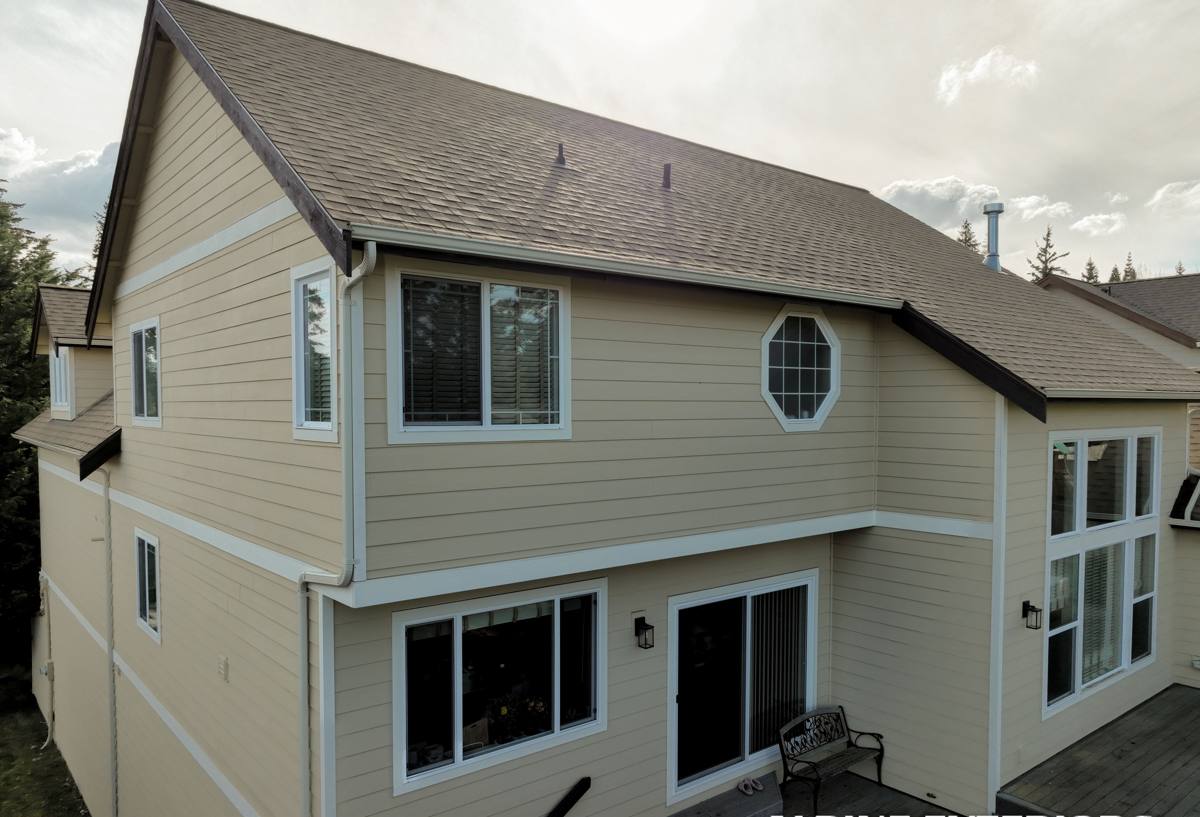
What Ravenna's Housing Stock Means for a Siding Job
Like much of Seattle's close-in housing stock, Ravenna has a mix of early-to-mid-20th-century homes alongside newer construction and additions. Older homes often have layers of history behind the siding — original wood siding, a later re-side, patched trim, and water management details that were adequate when they were built but don't meet today's standards. Before any new siding goes on, that history needs to be understood, not just covered up.
A proper job on an older Ravenna home means checking the sheathing for moisture damage, evaluating what's happening at window and door openings, and confirming the roofline details — especially at any point where a lower roof meets a wall, a common spot for water intrusion if it wasn't flashed correctly the first time. Skipping this step and just installing new siding over old problems is one of the most common ways a siding job fails early, no matter how good the material is.
Why We Install James Hardie Fiber Cement — and Nothing Else
This company installs only James Hardie fiber cement siding. We don't install vinyl, LP SmartSide, primed wood, cedar, or other fiber cement brands, and that's a deliberate standard, not a lack of options. In a climate defined by prolonged damp and shade, the material matters as much as the workmanship.
- Non-combustible core: fiber cement won't feed a fire the way wood-based products can.
- ColorPlus factory finish: baked-on color that resists the fading and chalking that field-applied paint struggles with under constant UV and moisture cycling.
- Climate-engineered HZ product line: Hardie's HZ5 formulation is built for wetter, colder climate zones like ours, with moisture and freeze-cycle performance in mind.
- Dimensional stability: fiber cement doesn't swell, cup, or split the way wood and some engineered wood products can when they stay damp for extended periods.
- Transferable warranty: a real factory warranty backs the product, which matters if the home changes hands.
What We Won't Install, and Why
We're not going to claim other products are worthless — vinyl and engineered wood siding both have a place in the market and get installed successfully in plenty of climates. But vinyl can warp and gap over time, and wood-based engineered siding depends heavily on paint maintenance and correct field sealing to keep moisture out. For the amount of shade, rain, and moss pressure a neighborhood like Ravenna sees, we've made Hardie our standard because it holds up with the least long-term maintenance burden and the fewest moisture-related surprises.
What a Correct Installation Actually Involves
Fiber cement siding is only as good as the installation behind it. The material itself is durable, but a rushed or generic install can undercut all of that durability. On every job we treat these details as non-negotiable:
| Installation Detail | Why It Matters in This Climate |
|---|---|
| Weather-resistive barrier, properly lapped | Gives the wall assembly a drainage plane behind the siding so incidental moisture has somewhere to go |
| Kickout flashing at roof-to-wall intersections | Directs roof runoff away from the wall instead of letting it run behind the siding — a common failure point in wet climates |
| Correct fastener type, spacing, and depth | Manufacturer-spec fastening keeps panels secure without over-driving nails, which cracks the material and opens water paths |
| Proper clearance from grade, decks, and roofing | Keeps the bottom edge of the siding from sitting in standing moisture or splash-back |
| Factory-cut and sealed edges at joints | Field-cut edges need proper sealing; the ColorPlus finish is only as water-resistant as the caulking and sealing at seams |
Every one of these is spelled out in James Hardie's own installation guidelines, and every one of them is also the kind of thing that gets skipped when a crew is moving fast or doesn't do fiber cement often. Getting it right the first time is far cheaper than fixing rot behind a five-year-old wall.
Our Process on a Ravenna Job
- Inspection and moisture check: we look at the existing siding, trim, and — where accessible — the sheathing condition, paying close attention to shaded and north-facing walls.
- Scope and estimate: we walk the homeowner through what we found, what needs repair versus what's sound, and what the job will involve.
- Tear-off and repair: old siding comes off, and any damaged sheathing or framing gets repaired before anything new goes on.
- Weather barrier and flashing: a new weather-resistive barrier and correct flashing details go in at every penetration, opening, and roofline.
- Hardie installation to spec: panels, planks, or shingles are installed per manufacturer fastening and clearance requirements.
- Finish work and cleanup: trim, caulking, touch-up, and a full site cleanup so the property is left better than we found it.
Signs Your Ravenna Home May Need New Siding
- Paint that's peeling, bubbling, or needing repainting more often than every few years
- Soft or spongy spots when you press on the siding, especially near the bottom edges
- Persistent moss, algae, or dark streaking that comes back soon after cleaning
- Visible warping, cupping, or gaps opening up between boards
- Rising heating or cooling bills with no other clear cause
- Siding that's simply original to a much older home and has never been replaced
Any one of these on its own might just mean routine maintenance. Several together, especially on a shaded wall, usually mean it's time for a closer look before small problems become structural ones.
What Affects the Cost of a Fiber Cement Siding Job
| Factor | Why It Changes the Price |
|---|---|
| Home size and wall complexity | More square footage and more corners, dormers, or gables mean more material and labor |
| Condition of existing sheathing | Rot repair discovered during tear-off adds time and materials not visible during an initial walkaround |
| Siding profile and finish choice | Lap plank, panel, and shingle profiles, plus ColorPlus versus field-painted, price out differently |
| Trim and accessory work | Fascia, soffits, and window/door trim replacement add scope beyond the field siding itself |
| Site access | Tight lots, mature landscaping, or limited driveway access can slow staging and material handling |
| Tear-off versus overlay | Full removal of old siding costs more upfront than overlay, but overlay isn't something we recommend when moisture is already a concern |
Maintenance in a Wet, Shaded Climate
Fiber cement is low-maintenance compared to wood siding, but low-maintenance doesn't mean no maintenance, especially under heavy tree cover. A simple annual routine goes a long way:
- Rinse off moss, pollen, and debris buildup once or twice a year, more often on shaded walls
- Keep gutters clear so overflow doesn't run down the siding face
- Trim back branches and shrubs that keep a wall damp or block airflow
- Check caulking at trim joints and penetrations every couple of years and touch up as needed
- Address any paint or finish issues early rather than letting bare material sit exposed
Why Hiring a Crew That Already Works in Ravenna Matters
A siding installer who mainly works drier climates, or who treats fiber cement like just another material to hang, will miss the details that matter here. A crew that regularly works Seattle and King County neighborhoods like Ravenna already knows to check for kickout flashing at roof intersections, already expects to find moisture issues on shaded walls, and already builds in the drying time and sequencing that this climate demands. That familiarity shows up in fewer callbacks and a siding job that's still performing well fifteen and twenty years out, not just on the day it's finished.
If you're weighing a siding replacement or repair on a Ravenna home, we're happy to take a look and give you a straight answer about what your home actually needs. Reach out for a free, no-pressure estimate using the form below.