 Seattle
 Siding Repair in Ravenna: Built for a Wet, Shaded Neighborhood
Ravenna is one of Seattle's older, more established neighborhoods, and it shows in the housing stock: craftsman bungalows, Tudor-influenced homes, and mid-century additions sitting under a mature tree canopy that's part of what makes the area desirable in the first place. That same canopy, combined with the ravine around Ravenna Park and the neighborhood's proximity to Lake Washington and the Sound, means siding here deals with more shade, more standing moisture, and a longer moss season than siding on an open, sun-exposed lot across King County. Repairing siding in Ravenna isn't just about patching a crack or replacing a warped board — it's about understanding why that section failed in the first place and making sure the repair doesn't just fail again in eighteen months.
We work on homes throughout this part of Seattle, and the patterns repeat: moss and algae holding moisture against siding for months at a time, driving rain pushed sideways by storms off the Sound finding its way behind poorly flashed trim, and older siding materials — original cedar, aging vinyl, or improperly finished replacement panels — reaching the point where a repair only makes sense if it's done correctly the first time.
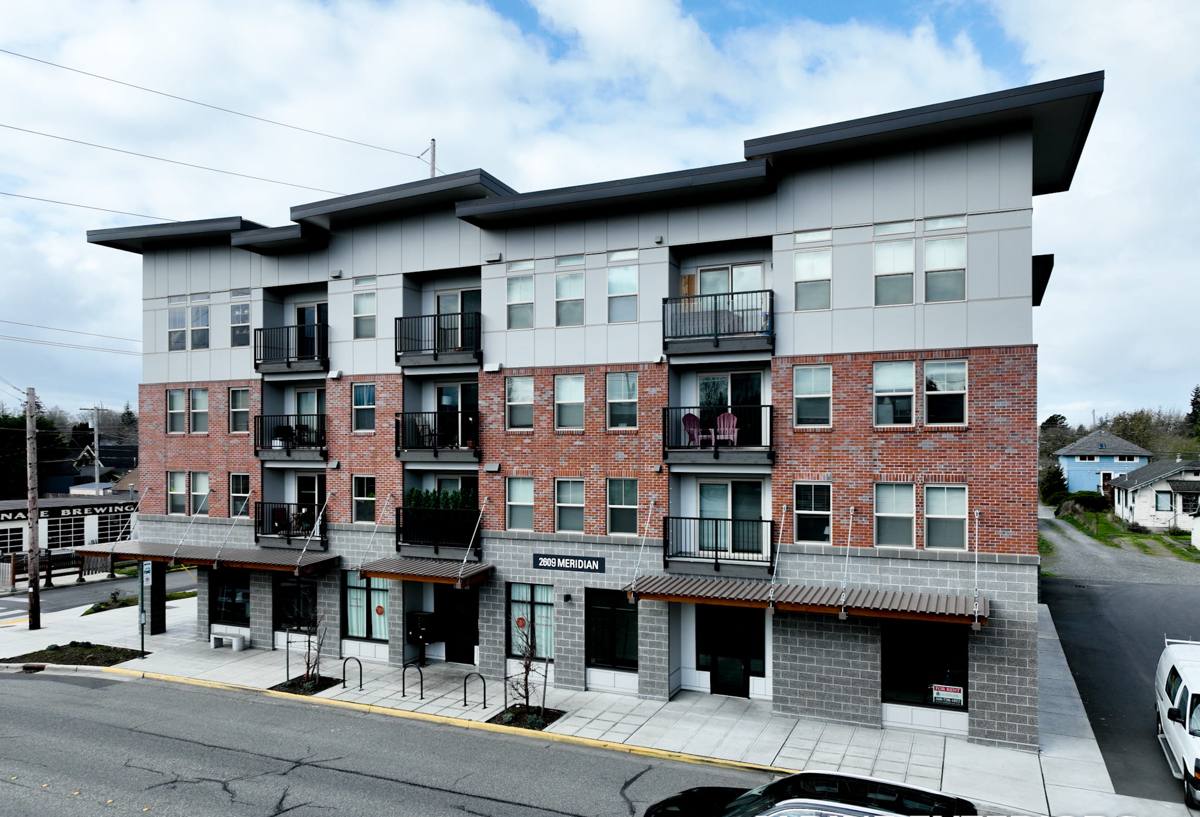
Why Ravenna's Climate Is Tougher on Siding Than People Expect
Seattle's marine climate gets discussed in general terms a lot, but Ravenna's specific conditions push a few of those factors harder than average:
- Tree cover and shade — mature trees keep siding shaded and slow to dry after rain, which is exactly the environment moss, algae, and moisture-loving rot need to take hold.
- Long moss season — in a shaded neighborhood like this, moss can establish itself in fall and hold on through spring, trapping water against the siding surface for months rather than days.
- Driving rain — wind-driven storms don't just wet the siding face, they push water up under laps, around trim, and into any gap that wasn't sealed or flashed correctly during the original install.
- Salt-influenced air — proximity to Puget Sound means the air carries salt content that accelerates corrosion on fasteners, flashing, and lower-grade trim over time.
None of these factors are dramatic on their own. The problem is that they compound. A home with siding that was installed a few degrees out of spec, or with caulking instead of proper flashing at a window head, might hold up fine in a drier climate. In Ravenna, that same shortcut shows up as soft trim, peeling paint, or a soggy wall section within a few years.
Signs Your Siding Needs Repair, Not Just a Wash
A lot of Ravenna homeowners call us after pressure-washing or moss treatment doesn't solve the problem, because the issue was never just cosmetic. Here's what actually signals a repair is needed:
- Soft or spongy spots when you press on the siding, especially near the bottom courses or under windows
- Visible cracking, splitting, or buckling in individual boards or panels
- Paint that's peeling or bubbling in a localized area rather than uniformly across the wall
- Gaps opening up at seams, corners, or trim joints
- Moss or algae that keeps returning to the same spot no matter how often it's cleaned
- Discoloration or staining that suggests water is tracking behind the siding, not just sitting on the surface
- Musty smell or visible moisture inside on an exterior wall that lines up with a problem area outside
Any one of these on its own might be minor. Several together, especially in a shaded or low-airflow section of the house, usually means water has been getting behind the siding for a while — and that's a different repair than simply swapping a cracked board.
What a Correct Siding Repair Actually Involves
It starts with finding the water path, not the visible damage
The cracked or stained board you can see is usually the symptom, not the cause. A repair that just replaces that board without figuring out how water got behind it in the first place is a repair that fails again. Our process starts by pulling back the affected area to check the weather-resistive barrier, flashing, and framing underneath — not just swapping the surface material.
Matching materials matters more in a visible neighborhood like this
Ravenna homes tend to have street presence — visible from the sidewalk, close to neighbors, part of a block that people notice. A patch that doesn't match the existing siding's profile, reveal, or finish stands out immediately. When we repair sections of existing siding, we match reveal and profile as closely as possible; when a section is too far gone to patch credibly, we talk through whether a small honest replacement area makes more sense than a mismatched repair.
Flashing and sealant get redone properly, not just re-caulked
A huge share of the repair calls we get in this neighborhood trace back to caulk being used as the primary water barrier instead of proper flashing. Caulk fails — it's a maintenance item, not a permanent seal. Any repair we do re-establishes correct flashing at windows, doors, and horizontal trim, with sealant used the way it's meant to be used: as a secondary defense, not the main one.
Repair vs. Replace: An Honest Look
Not every siding problem in Ravenna needs a full re-side, and we're not going to tell you it does. But there's a real point where patch repairs stop being the economical choice, and pretending otherwise just costs you money twice.
| Situation | Repair usually makes sense | Replacement usually makes sense |
|---|---|---|
| Damage location | Isolated to one or two sections, clear cause identified | Spread across multiple walls or recurring in the same spots |
| Underlying material | Sound siding with a localized failure point | Original material at or past its service life (old cedar, aging vinyl, deteriorated composite) |
| Moisture history | Single identifiable water intrusion point | Long-term moisture exposure affecting sheathing or framing |
| Visual match | Replacement material can closely match existing siding | Discontinued profile/color makes a seamless patch unrealistic |
| Cost over time | One-time fix resolves the issue | Pattern of repeat repairs already costing more than a re-side would |
When a repair is the right call, we do the repair — we're not in the business of upselling a full re-side to a homeowner who just needs a trim section fixed. When the siding has reached the point where repair is just delaying an inevitable, larger project, we'll tell you that plainly, with the reasoning, and let you decide the timeline.
Why We Only Replace With James Hardie Fiber Cement
When a repair does turn into a replacement — whether it's a full wall section or a whole-home re-side — we install James Hardie fiber cement, and nothing else. We don't install vinyl, LP SmartSide, Cemplank, Allura, or primed wood, and it's worth explaining why in the context of repair work specifically, since repair is often where the limits of those other materials show up first.
Vinyl siding doesn't patch invisibly once it's sun-faded, and it can warp or crack in ways that are hard to repair cleanly rather than replace outright. Engineered wood products like LP SmartSide are wood-based and depend heavily on intact factory sealing and correct field caulking at every cut edge — once that seal is compromised, moisture can get into the substrate faster than with a non-combustible fiber cement product. Primed cedar or spruce siding needs ongoing paint maintenance to keep water out at all, which in a shaded, wet neighborhood like Ravenna is a losing long-term battle.
James Hardie fiber cement holds up differently. It's not wood-based, so it doesn't feed the kind of rot and moisture absorption we see driving repair calls across this neighborhood. Its ColorPlus factory finish is baked on, not field-painted, which means color-matched replacement pieces stay consistent for years instead of fading unevenly against older sections. And Hardie's HZ5 product line is engineered specifically for climates like ours — freeze-thaw cycles, sustained moisture, and the kind of driving rain Seattle gets in the fall and winter. When repair work reveals that a section of siding is beyond patching, this is the material we put back up, because it's what we'd want on our own homes in this climate.
Our Repair Process
- On-site inspection — we look at the visible damage and check surrounding areas, flashing, and trim for signs the problem extends further than what's obvious from the ground.
- Honest diagnosis — we explain what caused the failure, not just what it looks like, and whether it's isolated or part of a broader moisture pattern.
- Clear scope and estimate — you get a written explanation of what needs to happen, why, and what it costs, with repair and replacement options laid out separately if both are realistic.
- Correct repair execution — proper flashing, matched materials where possible, and sealant used as a backup, not the primary barrier.
- Final check — we walk the repair with you before calling it done, so you know exactly what was fixed and why it'll hold.
Why It Matters to Hire a Crew That Already Works in Ravenna
Siding repair is one of those trades where local experience actually changes the outcome, not just the sales pitch. A crew that's worked on Ravenna's mix of older craftsman homes and mid-century additions already knows what original siding and trim details tend to look like on houses of this era, how the tree canopy and shade patterns across the neighborhood affect where moisture problems show up first, and how Seattle and King County permitting works for repair versus larger siding scopes. That familiarity means fewer surprises once a wall gets opened up, and a repair plan that accounts for the actual conditions on your specific block rather than a generic checklist.
It also means straight answers about timeline. Repair work in a wet climate is weather-dependent — you don't want open siding sections sitting exposed during a stretch of driving rain — and a crew that works this area regularly plans around that instead of learning it the hard way mid-project.
What Affects Siding Repair Cost
| Factor | Why it matters |
|---|---|
| Extent of moisture damage behind the siding | Repairs that involve sheathing or framing take more time and material than a surface-level fix |
| Material match availability | Matching an older or discontinued siding profile can add labor or push toward a small honest replacement instead |
| Access and height | Second-story or hard-to-reach sections require additional equipment and time |
| Flashing and trim condition | A repair that also corrects failed flashing costs more upfront but prevents the same failure recurring |
| Scope: isolated vs. multiple areas | Several small repairs across a home may cost more in aggregate than treating it as one coordinated project |
We don't quote sight-unseen over the phone for anything beyond the roughest ballpark, because the real cost driver is almost always what's happening behind the siding — and that only shows up once we've had eyes on it.
Get an Honest Look at Your Siding
If you're seeing soft spots, recurring moss, cracked boards, or water staining on a Ravenna home, it's worth getting an inspection before the problem gets bigger or more expensive to fix. We'll give you a straight assessment of what's actually going on, whether repair or replacement makes sense, and a clear estimate with no pressure to do more than the situation calls for. Use the form below to request a free estimate.