 Seattle
 Why Shoreline Roofs Wear Out Differently Than Roofs Inland
Shoreline sits right along Puget Sound in King County, and that location shapes how a roof ages here. Homes get a steady diet of driving rain off the Sound, salt-laden air that works on metal fasteners and flashing faster than dry inland air does, and heavy tree cover that keeps roof surfaces shaded and damp for weeks at a time. That combination is exactly what moss, moisture, and slow-developing leaks feed on. A roofing system that would hold up fine in a drier climate can fall behind schedule here, wearing out years before its rated lifespan if it wasn't built with this specific environment in mind.
A correct new roof installation for a Shoreline home isn't just about laying shingles. It's about choosing materials, underlayment, and ventilation that account for near-constant moisture exposure, and installing all of it with the kind of attention to detail that keeps water from finding a way in over the next twenty to thirty years.
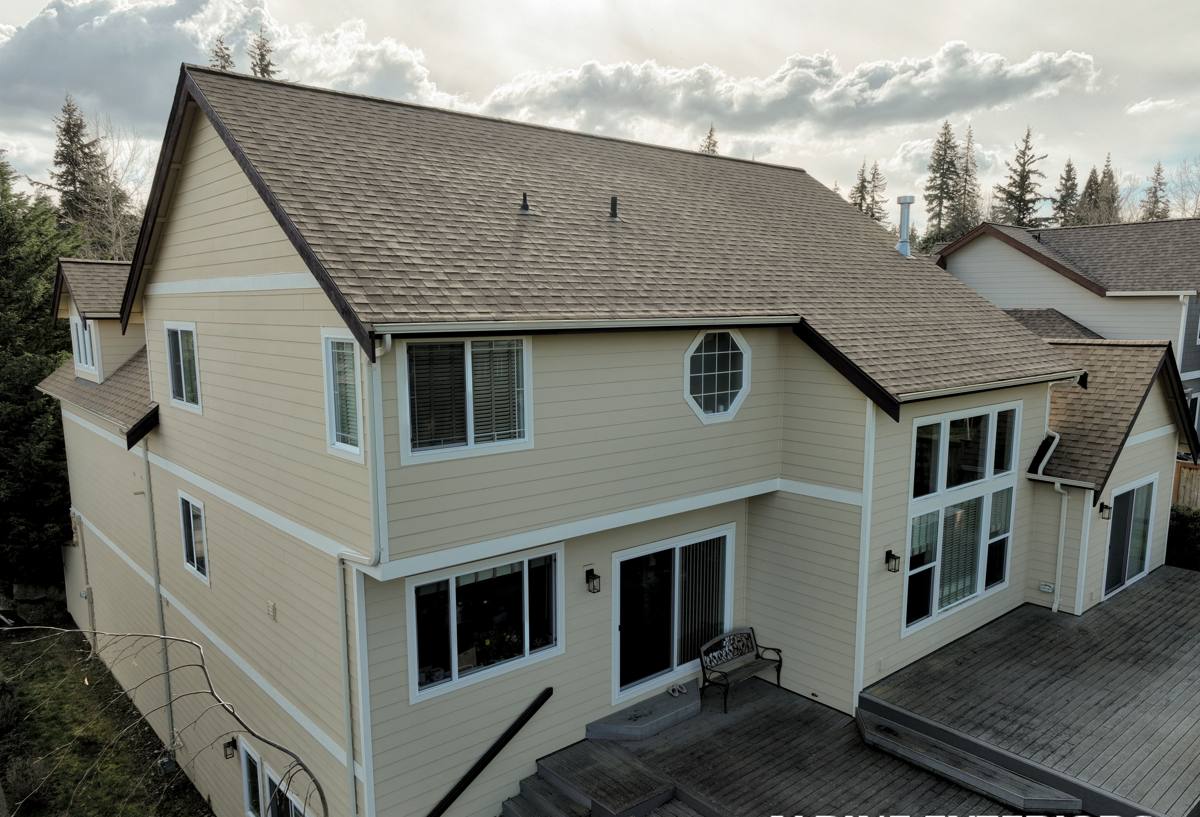
Signs a Shoreline Home Needs a New Roof, Not Another Repair
Roof repairs make sense when the damage is isolated. A full replacement is the right call when the roofing system as a whole has reached the end of its useful life, or when repeated repairs are treating symptoms of a deeper problem. Common signs we see on Shoreline homes include:
- Granule loss showing up in gutters or at downspout outlets, which signals the shingles are past their protective lifespan
- Shingles that are curling, cupping, or cracking, especially on north-facing or shaded slopes that stay wet longest
- Moss or algae that keeps returning within a season or two of cleaning, a sign the roof surface is holding moisture instead of shedding it
- Soft spots in the decking when walked, or visible sagging along the roofline
- Daylight visible through the attic roof boards, or damp insulation and staining on attic rafters
- Flashing around chimneys, skylights, and vent pipes that's rusted, lifted, or was never properly integrated with the roofing material
- A roof that's simply reached or passed the manufacturer's expected service life for its material and installation conditions
If you're seeing more than one of these, it's worth having someone look at the whole system rather than patching one spot at a time.
Choosing the Right Roofing System for Shoreline's Climate
What Actually Matters Here
In a marine climate like this one, three things separate a roofing material that performs well from one that struggles: how well it sheds and resists sustained moisture, how it holds up to wind gusts and salt-carrying air off the Sound, and how much upkeep it demands to stay that way. Cost matters too, but the cheapest material up front is rarely the cheapest one over twenty years if it needs constant maintenance or fails early.
| Material | Moisture & Moss Resistance | Wind & Salt Air Durability | Typical Lifespan | Maintenance Needs |
|---|---|---|---|---|
| Asphalt composition shingle (architectural) | Good, especially with algae-resistant granules and proper ventilation | Good when installed with the correct nailing pattern and wind rating | 25–30 years | Periodic moss removal, gutter clearing |
| Standing seam metal | Excellent — sheds water fast, doesn't hold moisture against a porous surface | Excellent; handles wind-driven rain and salt air very well with proper coatings | 40–50+ years | Low; occasional fastener and sealant checks |
| Synthetic/composite shake or slate | Very good; engineered to resist moisture absorption | Good to very good depending on product | 30–50 years | Low to moderate |
| Natural cedar shake | Requires ongoing treatment; absorbs moisture and is prone to moss without diligent upkeep | Moderate; vulnerable to splitting in sustained wet-dry cycling | 20–30 years with maintenance | High — regular treatment and moss control required |
Our Standard on Cedar Shake
We'll install cedar shake if that's what a homeowner wants for a specific look, but we're upfront that it's the highest-maintenance option in this climate. Sustained moisture exposure and shade are exactly the conditions cedar struggles with, and skipping annual upkeep shortens its life considerably. For most Shoreline homes, we steer conversations toward architectural asphalt or metal, which deliver similar curb appeal with far less ongoing work.
What a Correct New Roof Installation Actually Involves
A new roof is more than the shingles you see. In this climate, the layers underneath do most of the work keeping water out.
Tear-Off and Deck Inspection
We remove the old roofing down to the deck rather than layering over it. That's the only way to find soft or rotted sheathing, which is common on older homes that have been dealing with slow moisture intrusion for years. Any damaged decking gets replaced before anything new goes down — installing new roofing over a compromised deck just hides the problem.
Underlayment and Water-Resistant Barriers
Given how much sustained rain this area gets, we use synthetic or ice-and-water-shield underlayment at eaves, valleys, and other vulnerable points, not just a single layer of felt across the whole deck. Valleys and roof-to-wall transitions are where most leaks start, so these get extra protection regardless of the primary roofing material chosen.
Flashing
Flashing around chimneys, skylights, vent stacks, and sidewalls has to be properly integrated with the underlayment and the roofing material, not just caulked over. In salt-influenced air, we pay attention to the flashing metal itself — some metals corrode faster near the Sound than they would further inland, so material choice here matters as much as installation technique.
Ventilation
An attic that can't breathe traps moisture, and trapped moisture is what accelerates decking rot and shortens shingle life from underneath. A correct installation balances intake vents (soffit) with exhaust vents (ridge or roof-mounted) so air actually moves through the attic space instead of stagnating.
How Our Process Works
- On-site inspection and estimate. We look at the current roof, attic ventilation, decking condition where visible, and any problem areas you've noticed, then walk you through honest options and a written estimate.
- Material selection. We help you weigh cost, appearance, and how each option holds up specifically in a Puget Sound climate — not a one-size-fits-all recommendation.
- Scheduling and prep. We coordinate timing around weather windows, since a proper tear-off needs a reasonably dry stretch to keep the open deck protected.
- Tear-off and deck inspection. Old roofing comes off, decking gets inspected and repaired as needed.
- Underlayment, flashing, and ventilation installed. This is the part that determines how the roof performs in ten or twenty years, and we don't rush it.
- New roofing installed to manufacturer specification. Correct nailing patterns, exposure, and fastening matter for both performance and keeping warranties valid.
- Final walkthrough and cleanup. We review the finished work with you and make sure the property is cleared of debris and old material.
Moss, Algae, and Keeping a New Roof Performing Long-Term
Even a well-installed roof in this region will face moss and algae pressure over its lifetime — that's the reality of a shaded, wet climate, not a defect in the roof. What changes is how well the roof is set up to resist it and how easy it is to manage.
- Ask about algae-resistant shingle options if going with asphalt — many manufacturers offer granules formulated to resist streaking and growth
- Keep gutters and valleys clear so water doesn't pool and give moss a place to establish
- Trim back overhanging branches where practical to reduce shade and debris buildup on the roof surface
- Have moss physically removed rather than just treated when it becomes visible — chemical treatment alone doesn't address buildup already trapping moisture
- Schedule a periodic roof check, especially after major storms, so small issues get caught before they become deck-level problems
Permits and Working Within Local Requirements
Roof replacement typically requires a permit, and requirements can vary depending on the scope of work and the jurisdiction. As a crew that works in Shoreline and the surrounding King County area regularly, we handle the permitting conversation as part of the process so you're not left figuring out code requirements on your own. If your home is in an area with additional design or shoreline-related review, we'll flag that during the estimate rather than after work has started.
Why Hiring a Crew That Already Works in Shoreline Matters
Roofing crews that mostly work drier, inland climates sometimes underestimate how much moisture and shade change what a roof needs here. A crew that regularly works Shoreline and the broader Seattle area already knows which valleys and roof transitions tend to cause trouble in this weather, which materials actually hold up against salt air and moss rather than just performing well on paper, and how to sequence a tear-off around a marine climate's unpredictable rain windows. That local familiarity shows up in fewer callbacks and a roof that performs the way it's supposed to for its full expected life, not just for the first few dry summers.
If you're weighing whether it's time for a new roof, or want a straightforward second opinion on a quote you've already received, we're happy to take a look. Reach out for a free, no-pressure estimate using the form below.