 Seattle
 Why Magnolia Siding Wears Differently Than Siding Inland
Magnolia sits on a bluff above Puget Sound, and that position is a double-edged sword. The views are real, but so is the exposure. Homes here take wind-driven rain off the water, a steady dose of salt-laden air, and a moss season that stretches longer than it does just a few miles inland in Seattle. None of that is unique to one street or one block — it's the whole neighborhood's climate reality, and it shows up in the siding first.
Salt air accelerates corrosion on fasteners, flashing, and any exposed metal trim. Driving rain finds every gap in a siding system that's even slightly out of spec — lapped seams that weren't caulked right, butt joints that were never flashed, corners where two trades didn't quite meet in the middle. And moss doesn't just sit on the surface looking bad; it holds moisture against the siding face for weeks at a time, which is exactly the condition that rots wood-based products and delaminates poorly made fiber cement.
When we get called out to Magnolia, we're rarely looking at one isolated problem. We're usually looking at how years of that combination — salt, rain, and moss — have worked on a specific weak point in the original installation.
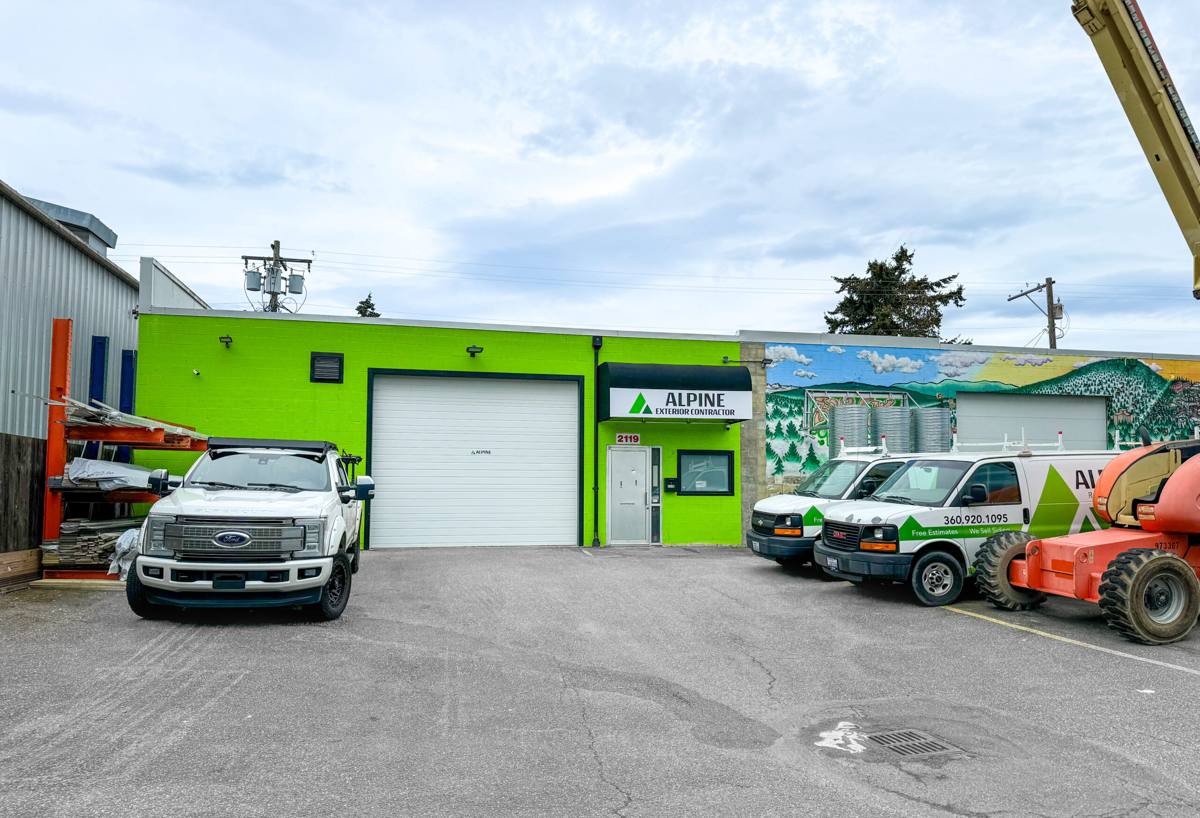
Signs Your Magnolia Home Needs Siding Repair, Not Just a Paint Job
A fresh coat of paint can hide a lot for a season or two, but it doesn't fix what's underneath. Here's what actually signals a repair job:
- Soft or spongy spots when you press on the siding, especially near the bottom courses and around window trim
- Visible cracking, buckling, or bowing in individual boards or panels
- Paint that's bubbling, peeling, or failing in the same spot repeatedly, even after repainting
- Dark streaking or persistent moss and algae growth that comes back within a season of cleaning
- Gaps opening up at butt joints, corners, or where siding meets trim, flashing, or the foundation
- A musty smell or visible staining on interior walls that share an exterior wall with damaged siding
- Rust bleeding from nail heads or fastener lines, common where salt air has gotten at exposed metal
Any one of these on its own might be minor. Several together, especially on a wall that faces the Sound or sits in shade where moss thrives, usually means water has already gotten past the surface.
What a Correct Siding Repair Actually Involves
A repair that just replaces the visibly damaged board and calls it done is a repair that will need to be redone. Doing it right means treating the damage as a symptom and finding the cause before closing the wall back up.
Diagnosis Before Demolition
We start by pulling back enough siding to see what's happening behind it — the house wrap or building paper, the flashing details around windows and penetrations, and the sheathing underneath. Damaged siding with dry, sound sheathing behind it is a straightforward fix. Damaged siding sitting on soft, discolored sheathing means the repair scope just got bigger, and we'll tell you that honestly before any work continues.
Fixing the Water Path, Not Just the Symptom
If the underlying cause is a flashing gap, a caulking failure, or a grading issue pushing splashback onto the wall, patching the siding without correcting that just resets the clock on the same failure. We address the water path first.
Matching Material and Method
New siding has to match the existing profile, exposure, and finish closely enough that the repair doesn't stand out — and it has to be installed with the same attention to lapping, fastening, and sealing that a full installation would get. A patch job that ignores manufacturer install specs is a patch job that fails again.
Common Culprits Behind Siding Damage in Magnolia
Moisture Intrusion
This is the big one. Whether it's wind-driven rain forcing its way past a poorly lapped joint or condensation trapped behind a wall that can't breathe, moisture is behind the majority of the repair calls we see. Once it's inside the wall assembly, it doesn't leave on its own — it just keeps doing damage until someone opens the wall up.
Moss and Organic Growth
Seattle's moss season runs long, and Magnolia's tree cover and marine humidity make it longer still on shaded and north-facing walls. Moss holds water against the siding surface, and on wood-based products it accelerates rot from the outside in. On lower-quality fiber cement, prolonged moisture exposure can contribute to surface deterioration and finish failure over time.
Salt Air Corrosion
Fasteners, flashing, and any exposed metal trim take a beating from airborne salt near the water. Corroding fasteners loosen their grip on siding boards, which opens gaps for water to follow. It's a slow process, but it's a steady one on homes closer to the bluff.
Repair vs. Replace: How We Make the Call
Not every damaged section needs a full re-side, and we're not going to tell you it does. But there's a point where patching stops making financial and practical sense. Here's roughly how that decision breaks down:
| Factor | Usually Repairable | Usually Needs Replacement |
|---|---|---|
| Extent of damage | Isolated to one or two wall sections | Spread across multiple elevations |
| Sheathing condition | Dry and structurally sound | Soft, discolored, or rotted |
| Age of existing siding | Under 15-20 years, still holding paint well | Original siding from an older installation showing widespread wear |
| Material match availability | Matching profile and finish can be sourced | Discontinued profile or unmatchable finish |
| Underlying cause | A single, fixable flashing or sealant failure | A systemic install issue affecting the whole house |
When the damage is contained and the wall assembly behind it is sound, a targeted repair is the honest recommendation — we're not in the business of upselling a full re-side when it isn't needed. When it isn't, we'll walk you through why and what the real options are.
Why We Patch With James Hardie, Not Whatever's Already on the Wall
We install James Hardie fiber cement exclusively — we don't install vinyl, LP SmartSide, Cemplank, Allura, or primed wood siding, and that standard carries into repair work too. If your home already has one of those products and needs more than a small patch, we'll be straightforward with you: we can do a minimal, contained repair to buy time, but we won't represent a large-scale patch of a product we don't stand behind as a long-term fix.
When a repair opens the door to replacing a full wall section or elevation, we recommend transitioning that section to James Hardie. It's non-combustible, engineered for the Pacific Northwest's wet climate through Hardie's HZ5 product line, and finished at the factory with ColorPlus technology, which holds color and resists the kind of moisture-driven finish failure that shows up as peeling and streaking on lower-grade products. It also carries a strong, transferable warranty — something worth having on a home exposed to salt air and driving rain year after year.
We're not going to tell you your existing siding is garbage. We'll tell you honestly what it can and can't hold up to going forward, and why Hardie is what we put on Magnolia homes when the decision is ours to make.
Our Siding Repair Process for Magnolia Homes
1. On-Site Inspection
We walk the exterior, identify every problem area, and check for water intrusion signs that aren't obvious from the ground — around windows, at corners, along the foundation line, and on shaded elevations where moss holds moisture longest.
2. Honest Assessment
We tell you what we find, what's causing it, and whether it's a contained repair or something bigger. No inflated scope, no downplaying real damage.
3. The Repair Itself
We pull damaged material, address the underlying water path, replace sheathing if it's compromised, and install matching or upgraded siding to manufacturer spec — correct lapping, fastening, and sealing every time.
4. Cleanup and Walkthrough
We clear debris, clean up the work area, and walk the repair with you so you know exactly what was done and why.
Why Hiring a Crew That Already Works Magnolia Matters
Magnolia's mix of bluff-top exposure near Discovery Park and more sheltered inland streets means siding condition can vary block to block, even house to house. A crew that regularly works this part of Seattle recognizes the difference between a wall that's dealt with a few decades of Puget Sound weather and one with an install defect that needs correcting, not just covering up. That local pattern recognition speeds up diagnosis and keeps repairs from turning into guesswork.
There's also the practical side: knowing King County permitting requirements, understanding how older Magnolia homes were typically built and wrapped, and having a track record of standing behind the work after the truck leaves the neighborhood. That accountability matters more on a repair than almost any other exterior project, because a repair done wrong fails quietly, behind the wall, before it shows up again.
Keeping Repaired Siding in Good Shape Afterward
A correct repair should hold up, but a little upkeep extends it further, especially in a climate like this one:
- Keep gutters clear so overflow isn't running down the siding face
- Trim back vegetation and tree cover on shaded walls to slow moss regrowth
- Rinse moss and algae off siding surfaces before it has time to root and hold moisture
- Recaulk joints and trim intersections on the manufacturer's recommended schedule
- Have siding checked after any major windstorm off the Sound, since that's when hidden gaps tend to get exposed
If you're seeing signs of trouble on your Magnolia home's siding, we're happy to take a look and give you a straight answer about what it needs. Reach out for a free, no-pressure estimate using the form below.