 Seattle
 Siding Replacement in University District: Built for Seattle's Climate
University District sits close to the University of Washington, in one of Seattle's older and more densely built neighborhoods. The homes here run the gamut from early-1900s bungalows and craftsman-style houses to later infill construction and multi-family buildings, many packed close together on shaded, tree-lined streets. That mix of age, density, and tree cover means siding in University District works harder than siding in a newer, more open subdivision — and it needs a replacement job that accounts for that.
Like most of Seattle and King County, University District sits inside Puget Sound's marine climate. That means damp, salt-tinged air moving in off the Sound, driving rain that comes in sideways during fall and winter storms, and a moss and algae season that can stretch eight months or longer under our gray skies. None of that is unique to any one block — it's the reality every exterior surface in this region deals with, and it's why siding replacement here isn't a cosmetic project. It's a moisture-management project first, and an appearance project second.
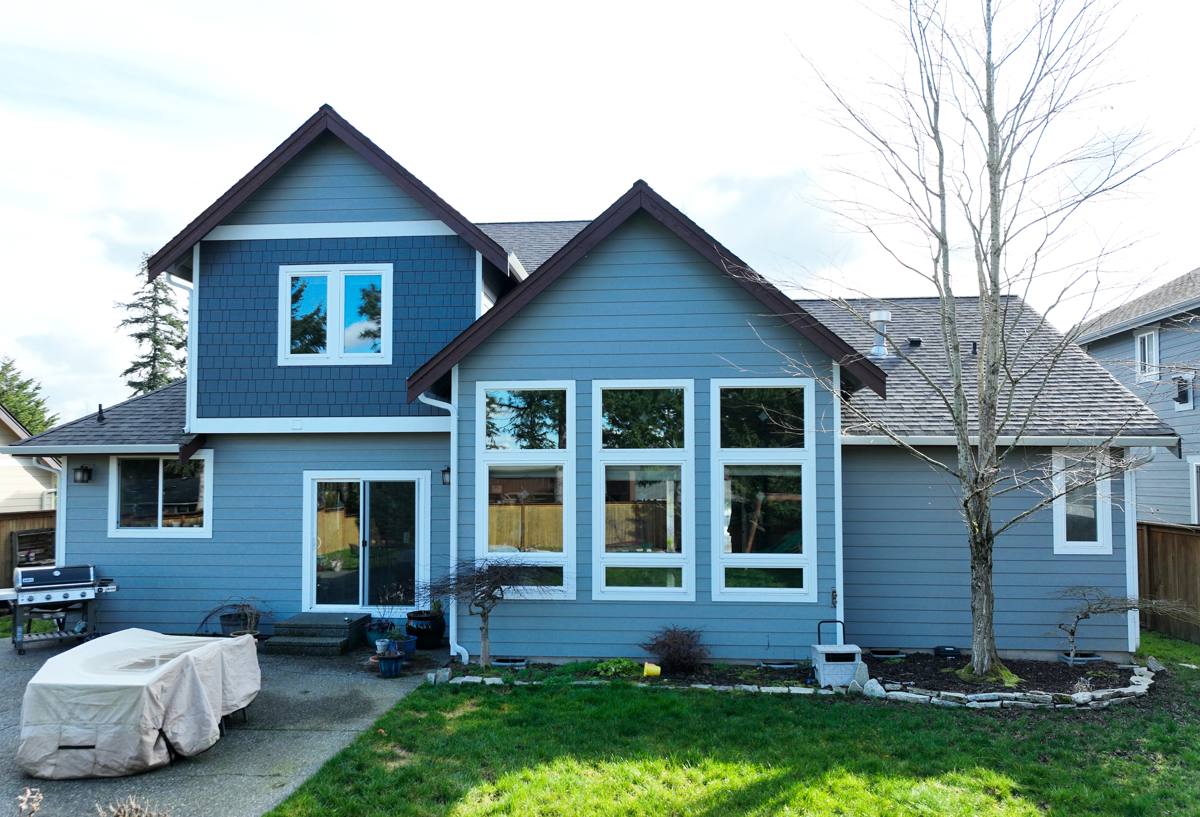
What Seattle's Climate Actually Does to Siding
Moisture and Driving Rain
Seattle doesn't get the heaviest total rainfall in the country, but it gets a lot of low-intensity, wind-driven rain over many months of the year. That kind of weather finds every gap, every failed caulk line, and every place where flashing was installed wrong. Water doesn't have to pour in to cause damage — it just has to get behind the siding and stay there. Once moisture is trapped against sheathing or framing, rot and mold follow, often invisibly, for years before it shows on the surface.
Moss, Algae, and Shade
University District's mature trees and close-set lots mean a lot of siding stays shaded and damp for long stretches, especially on north-facing walls and anywhere air can't circulate. That's ideal growing conditions for moss and algae, which hold moisture against the surface and accelerate whatever breakdown is already happening underneath. Wood-based sidings are especially vulnerable because moss and algae feed on the organic material itself, not just sit on top of it.
Marine Air
The damp, salt-tinged air common across the Seattle area is slow but corrosive to fasteners, trim metal, and paint film over time. It's rarely dramatic — it just means finishes fade and chalk faster, and unprotected metal corrodes sooner than it would in a drier inland climate.
Common Problems We See on Older University District Homes
Because so much of the housing stock near the university predates modern building science, we run into the same handful of issues repeatedly when we're called out for a siding evaluation:
- Wood or hardboard siding with soft, delaminating spots at butt joints and bottom edges
- Persistent moss and algae staining on shaded, north- or east-facing walls
- Cupped, warped, or bowing panels from repeated wet-dry cycles
- Peeling or chalking paint that's been repainted over rot instead of replaced
- Old vinyl siding installed directly over damaged original siding, hiding problems underneath
- Missing or poorly installed flashing around windows, doors, and roof-to-wall intersections
Any one of these can look minor from the sidewalk and still mean real structural moisture damage once the siding comes off. That's part of why we treat every replacement as a chance to inspect the wall assembly, not just swap the outer layer.
Why We Only Install James Hardie Fiber Cement Siding
We made the decision to install James Hardie fiber cement exclusively, and we don't install vinyl, LP SmartSide, Cemplank, Allura, primed spruce, or cedar. That's not a marketing position — it's a standard we hold because of what this climate does to the alternatives.
Vinyl is affordable and low-maintenance, but it's a thin plastic product that expands, contracts, and can warp with temperature swings, and it doesn't add real fire resistance to a home. Cedar and other wood sidings look great and can be installed well, but they're organic material in a climate built for moss and rot, which means an ongoing maintenance commitment most homeowners underestimate when they choose it. Engineered wood products like LP SmartSide perform reasonably well when installed and maintained correctly, but they still rely on wood fiber and resin, and moisture intrusion at a cut edge or fastener point can compromise the material in ways that are hard to catch early.
James Hardie fiber cement is cement, sand, and cellulose fiber — non-combustible, dimensionally stable, and engineered specifically for wet climates through its HZ5 product line, which is built for regions like the Pacific Northwest. It comes with a factory-applied ColorPlus finish baked on under controlled conditions, which holds color and resists fading, chipping, and cracking far better than field-applied paint. It carries a strong transferable warranty, which matters if you ever sell the house. When it's installed to manufacturer spec — correct clearances, proper fastening, real flashing details — it's the most durable, lowest-maintenance option we can put on a Seattle home, and that's why it's the only thing we put our name behind.
Siding Material Comparison for Seattle's Climate
| Material | Moisture/Rot Resistance | Moss & Algae Resistance | Typical Maintenance | Fire Rating |
|---|---|---|---|---|
| Vinyl | Doesn't rot, but seams and gaps let water behind it | Grows on surface film if not cleaned | Periodic washing | Combustible plastic |
| Cedar / wood | Vulnerable without diligent upkeep | High risk in shaded, damp areas | Regular painting/staining, inspection | Combustible |
| LP SmartSide | Good if edges/fasteners stay sealed | Moderate | Field-applied finish upkeep | Combustible (treated) |
| James Hardie fiber cement | Engineered for wet climates (HZ5) | Strong resistance | Occasional washing, minimal upkeep | Non-combustible |
What a Correct Siding Replacement Job Involves
The siding itself is only part of the job. What's underneath it determines whether the replacement lasts 10 years or 40. A correct installation on a University District home includes:
Tear-Off and Inspection
Removing the old siding down to the sheathing so it can actually be inspected, not just covered up. This is where we find rot, mold, or damaged framing that needs to be addressed before anything new goes on.
Weather-Resistive Barrier and Drainage
A properly lapped weather-resistive barrier behind the siding, with a drainage gap or rainscreen where conditions call for it, so any moisture that does get past the siding has somewhere to go instead of sitting against the wall.
Flashing at Every Penetration
Windows, doors, roof-to-wall transitions, and any other penetration in the wall need correct flashing detail. This is one of the most common places we find failures on older homes, and it's a leading cause of hidden rot.
Manufacturer-Spec Installation
James Hardie publishes specific fastening patterns, clearances from grade and roofing, and joint treatment requirements. Installing to that spec is what keeps the warranty valid and what actually makes the product perform the way it's engineered to.
Our Process for University District Projects
- On-site assessment of your current siding, trim, and any visible moisture or moss issues
- Tear-off and sheathing inspection, with photos and a clear explanation of anything we find
- Repair of any damaged sheathing or framing before new material goes on
- Installation of weather-resistive barrier, flashing, and drainage detailing appropriate to your home
- James Hardie fiber cement installation to manufacturer specification
- Trim, caulking, and final detail work, followed by site cleanup
We size the crew and schedule to the project, and we walk you through what we found and what we did at each stage rather than treating tear-off as a black box.
Why a Crew That Knows University District Matters
A siding contractor who works across King County generally is fine. One who regularly works in dense, older Seattle neighborhoods like University District understands things a generalist might miss: how to sequence tear-off and disposal on tight lots with limited access, how to work around mature trees and shared property lines without causing damage, and how the specific rot and moss patterns on shaded, closely-spaced homes tend to show up. Seattle also has its own permitting process through the city, and a contractor who pulls permits here regularly knows how to keep a project moving instead of stalling on paperwork.
Before hiring anyone for a siding replacement in University District, it's worth asking:
- Do you carry current WA state contractor licensing and insurance, and can you provide proof?
- Will you inspect and repair sheathing/framing damage before installing new siding, or just cover it?
- What weather-resistive barrier and flashing details will you use, specifically?
- Is the installation done to the manufacturer's published spec, and does that keep the warranty valid?
- Can I get a written, itemized estimate before work begins?
- Who handles the city permit, and is that included in the price?
Signs It's Time to Replace Rather Than Repair
Repair makes sense for isolated damage on otherwise sound siding. Replacement makes more sense once problems are widespread or the siding is past its functional life. Watch for soft or spongy spots when you press on the siding, persistent moss or dark staining that comes back soon after cleaning, visible cupping or warping across multiple panels, paint that won't hold no matter how often it's redone, or any sign of water damage on interior walls near exterior corners. On older University District homes, we often find that what looks like a paint problem from the street is actually a sign the siding itself has reached the end of its useful life.
If you're weighing repair versus replacement, or you just want an honest read on what your current siding is telling you, we're glad to take a look. Reach out for a free, no-pressure estimate — we'll walk the exterior with you, explain what we see, and lay out your options in plain terms before anything gets scheduled.