 Seattle
 Building Decks That Hold Up in University District's Marine Climate
University District homes see a specific kind of weather stress. Seattle's marine climate sends long stretches of driving rain through King County every fall and winter, followed by cool, damp springs that never quite dry the underside of a deck out before the next system rolls in. Add the salt-tinged air that moves in off Puget Sound and up through the Lake Washington and Lake Union corridors, and you get a moss season that can run six months or longer on shaded, north-facing decks. A deck built without that reality in mind starts showing problems within a few years: soft spots near ledger boards, green film on stair treads, and fasteners that bleed rust through the decking.
A correctly built deck in this neighborhood isn't just about the visible boards. It's about how the whole structure sheds water, how air moves underneath it, and what materials are chosen for the parts you can't see once the project is done. That's the standard we build to on every custom deck we install in University District.
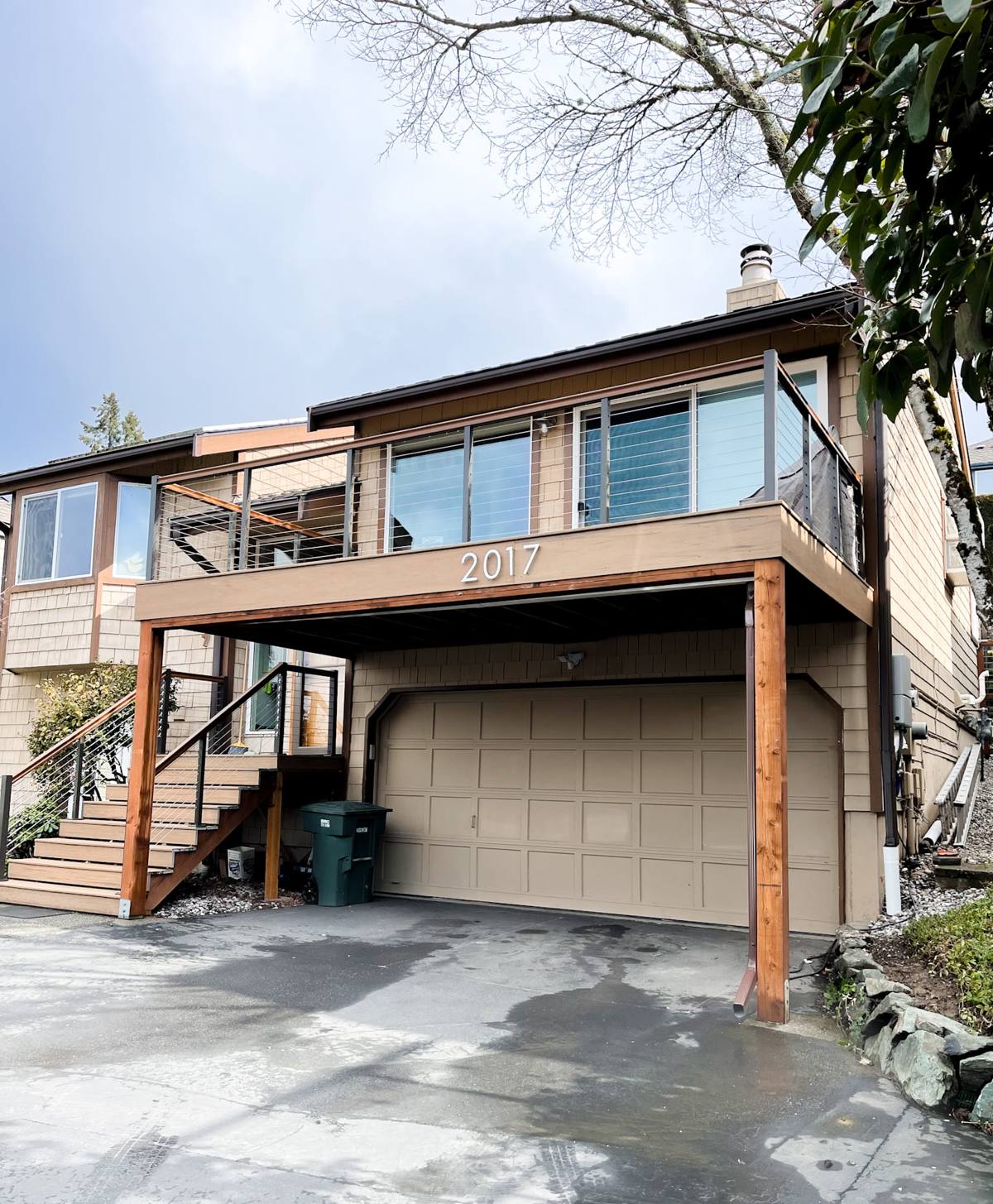
What University District Homes Need From a Deck
Most homes in this part of Seattle were built across a range of decades, which means the decks we're asked to replace or add on to come with a range of problems. A few patterns show up again and again on jobs in this area:
- Older decks with ledger boards attached directly to the house without proper flashing, letting water track into the rim joist
- Decking laid tight with little to no gap, trapping moisture and organic debris that feeds moss and algae growth
- Footings that were undersized or set too shallow for the soil conditions common around here
- Railings and stair stringers showing rot first, since they take the brunt of splash-back and standing water
- Shaded decks under mature trees that stay damp for days after a storm passes
None of these are unusual for a wet Pacific Northwest climate — they're just what happens when a deck is built to a generic spec instead of one that accounts for how much rain King County actually gets and how long things stay damp before the next dry stretch arrives.
What a Correctly Built Deck Involves
Structure and Framing
Everything starts below the decking boards. We size and space joists to the actual load and span, not just what's fast to install, and we use structural connectors rated for exterior exposure rather than relying on toe-nailing. Ledger board attachment gets proper through-bolting and flashing so water is directed away from the house band joist instead of into it — this single detail is the difference between a deck that lasts decades and one that causes hidden rot damage to the home itself.
Footings Sized for the Site
Footing depth and diameter depend on soil conditions and local frost line requirements, and we don't shortcut this step. Undersized or shallow footings are one of the most common reasons older decks in this area develop a wobble or noticeable settling over time.
Moisture Management Underneath
Because this region doesn't get a real dry season, what happens under the deck matters as much as what happens on top. We build in airflow, avoid trapping debris against framing members, and use joist tape or comparable flashing on the top edge of joists so fasteners aren't creating a thousand small entry points for water into exposed end grain.
Decking Surface
Board spacing, fastening method, and material all affect how quickly a deck develops slip hazards and moss growth. We set gaps that let water drain and boards dry between storms, and we use fastening systems suited to whatever material the homeowner chooses.
Choosing a Decking Material for a Rainy Climate
There's no single "best" decking material — there's a best material for the homeowner's budget, maintenance appetite, and how much shade and moisture the specific deck location deals with. Here's how the common options compare for a University District setting:
| Material | Moisture Behavior | Maintenance | Typical Lifespan Here |
|---|---|---|---|
| Pressure-treated wood | Absorbs and releases moisture; needs to breathe and dry between rains | Annual cleaning, periodic sealing/staining | 15–20 years with upkeep |
| Cedar | Naturally moisture and insect resistant, but surface still greys and can host moss in shade | Periodic cleaning, optional staining for color retention | 15–25 years with upkeep |
| Composite decking | Doesn't absorb water into the board itself; still needs airflow underneath and periodic surface cleaning to prevent moss and algae film | Low — occasional washing, no sealing/staining | 25–30+ years, manufacturer warranty dependent |
| PVC decking | Fully moisture resistant surface; most forgiving in shaded, damp locations | Low — periodic washing | 25–30+ years, manufacturer warranty dependent |
We install all of these depending on what fits the project. What we won't do is install any decking material — wood or composite — without proper substructure ventilation and drainage. Skipping that step is the most common shortcut that leads to callbacks and warranty disputes down the road, regardless of which surface material sits on top.
Railings, Stairs, and Guardrails
Stairs and railings fail before flat decking does in this climate because they get more direct splash exposure and often less airflow around connection points. We pay particular attention to stringer material and attachment, post-to-frame connections that meet current guardrail load requirements, and baluster spacing that meets code. If your existing deck's railing feels loose or the stair stringers look soft at the base, that's usually the first visible sign of a bigger moisture problem in the structure below.
Permits and Code in Seattle
Most new decks and many deck replacements in Seattle require a building permit, and requirements can shift based on deck height, size, and proximity to property lines. As part of our process we handle the permit application and coordinate inspections so the homeowner isn't left navigating City of Seattle and King County requirements alone. Skipping the permit step might save time upfront, but it creates real problems at resale and can leave a homeowner without recourse if the work doesn't hold up.
Our Process for a University District Deck Project
- On-site assessment — we walk the property, look at drainage patterns, sun/shade exposure, and existing structure if it's a replacement
- Design and material discussion — layout, railing style, and decking material options weighed against budget and maintenance preference
- Written estimate — a clear scope of work and price before anything is signed
- Permitting — we prepare and submit what's required and schedule inspections
- Demolition (if applicable) — old decking and, when needed, framing removed and hauled off
- Framing and footings — structure built to span, load, and local soil/frost requirements
- Decking, railing, and stairs installed — with attention to drainage gaps and fastening method for the chosen material
- Final walkthrough — we review the finished deck with the homeowner before calling the job done
Maintaining a Deck Through the Wet Season
Even a well-built deck needs some seasonal attention in a climate that stays damp this long. A short annual routine keeps most problems from ever starting:
- Sweep leaves and debris off the surface and out of board gaps before the fall rains set in
- Rinse or wash the surface periodically to remove the organic film that turns into moss and makes boards slick
- Check that gutters and downspouts near the deck aren't dumping extra water onto or under it
- Inspect railing posts and stair stringers each spring for soft spots or movement
- For wood decks, reseal or restain on the manufacturer's recommended schedule rather than waiting until it looks bad
- Trim back overhanging branches that keep shaded sections from ever fully drying
None of this is complicated, but skipping it is exactly how a well-built deck ends up looking and performing like a poorly built one within a few years.
Why a Crew That Already Works in University District Matters
A contractor who works across King County regularly, including in this neighborhood, already knows the drainage quirks, soil conditions, and permitting expectations that come with the area — instead of learning them on your project. That familiarity shows up in small decisions throughout the job: how footings are sized for the soil here, how a ledger connection is flashed against the specific way rain hits this part of Seattle, and how a deck is oriented to get whatever sun exposure the lot allows. It also means faster, more accurate estimates, because we're not guessing at local code requirements or typical site conditions.
If you're planning a new deck, replacing one that's showing its age, or just want an honest opinion on whether your current deck is structurally sound, we're happy to take a look. Reach out for a free, no-pressure estimate using the form below.