 Seattle
 Deck Repair in University District: Built for Seattle's Wet Side
University District sits close to the water, under heavy tree canopy in a lot of pockets, and squarely in the path of the marine rain that rolls off Puget Sound most of the year. That combination is hard on decks. Homes here run from older craftsman-era builds to newer infill construction near campus, but the decks on almost all of them share the same enemies: standing moisture, shade-driven moss growth, and freeze-thaw cycles that work rot deeper into wood each winter. A deck repair in this neighborhood has to account for all of that, not just patch whatever board looks bad on the surface.
Seattle's building stock in this area also skews older, which means a lot of decks were built to codes and framing standards that have since changed. Flashing details that were acceptable decades ago often weren't designed for the volume of rain King County sees today, and that gap is where most of the repair calls we get originate.
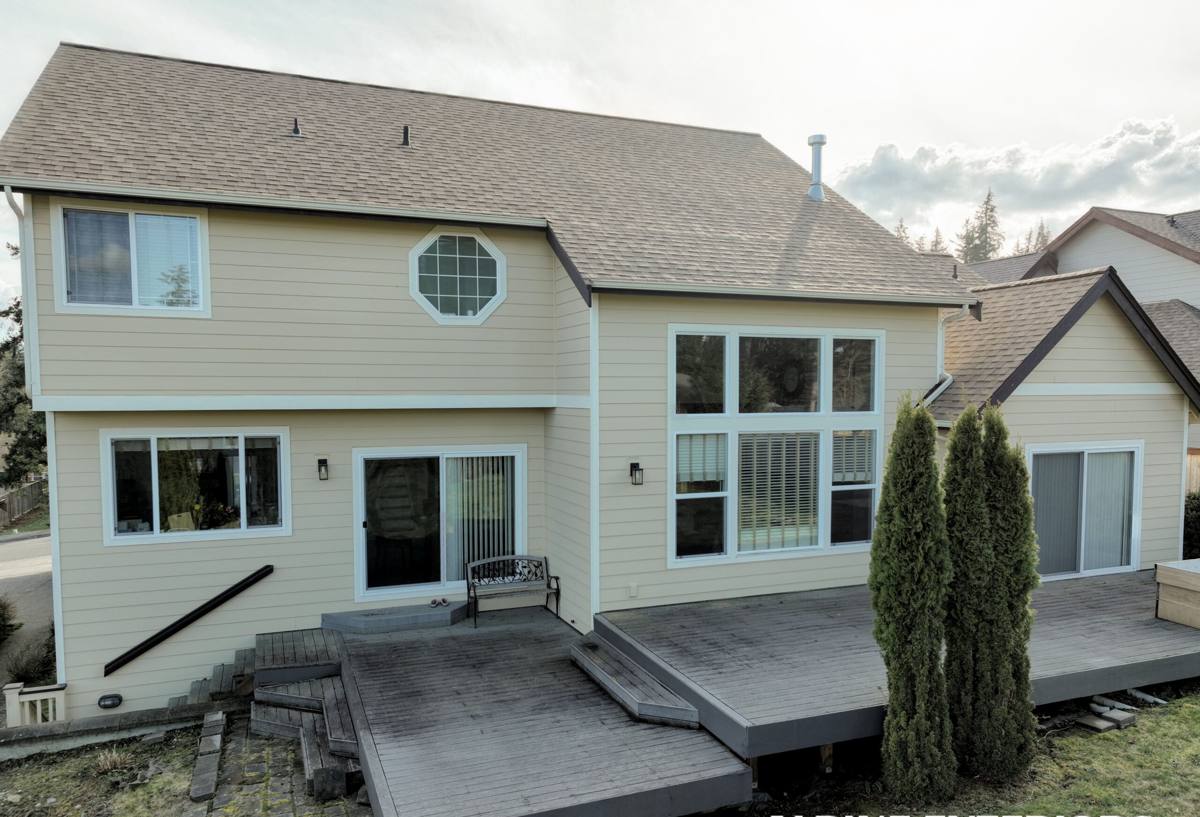
Why University District Decks Fail Faster Than You'd Expect
Three things drive most of the deck damage we see in this part of Seattle:
- Shade and moisture retention: Mature trees and tight lot spacing near campus keep decks damp longer after rain, which is exactly what moss and wood rot need to take hold.
- Driving rain at ledger boards: Wind-driven rain pushes water sideways into the seam where the deck attaches to the house, and if flashing there is missing, cracked, or was never installed correctly, water tracks straight into the ledger and the rim joist behind it.
- Long moss season: Moss on deck boards isn't just cosmetic — it holds water against the wood surface for weeks at a stretch, and it makes stairs and walking surfaces genuinely slick underfoot.
None of this means a deck is doomed. It means repair work has to target the actual moisture path, not just replace the boards that look worst.
Signs Your Deck Needs Repair, Not Just Cleaning
Some deck problems are cosmetic and some are structural, and it's worth knowing the difference before you spend money either way.
Cosmetic issues (cleaning or minor repair)
- Green or black moss and algae film on the board surface
- Gray, weathered wood color with no soft spots
- Minor surface checking or splitting on individual boards
Structural issues (repair required)
- Soft, spongy, or spreading wood at the ledger board, stair stringers, or post bases
- Visible gaps or staining where the deck meets the house siding
- Rusted, bent, or missing joist hangers and fasteners
- Railings or posts that flex, wobble, or have visible rot at the base
- Standing water that doesn't drain off the deck surface within a few hours
If you're seeing anything in that second list, that's a safety issue as much as a cosmetic one, and it's worth having someone look at it before it gets worse over another wet season.
What a Correct Deck Repair Job Actually Involves
A repair that's done right starts below the surface, not at the top of it.
Structural inspection first
Before we touch a single board, we check the framing underneath — joists, beams, posts, and footings. Surface rot is often a symptom of a moisture problem happening one layer down, and replacing boards over a compromised frame just means doing the job again in a couple of years.
Ledger board and flashing
The ledger board — where the deck bolts to the house — is the single most common failure point we find in this neighborhood. If flashing is missing or improperly lapped, water gets behind it and rots the ledger, the rim joist, and sometimes the wall framing behind the siding. Correcting this properly means removing enough decking to inspect and re-flash the connection, not just caulking over the gap.
Fasteners and hardware
Older decks were often built with fasteners and joist hangers that aren't rated for today's pressure-treated lumber chemistry, which speeds up corrosion. Part of a proper repair is swapping in code-compliant, corrosion-resistant hardware where the old hardware is rusted or was never adequate to begin with.
Railings and guards
Loose or rotted railing posts get addressed as a structural item, not a cosmetic one — a railing that doesn't hold real weight is a fall risk, and it's one of the more common items flagged in deck inspections in this area.
Repair or Replace? What Actually Decides It
Homeowners usually ask us this on the first call, and the honest answer is that it depends on where the damage is and how far it's spread. Here's how we think through it:
| Factor | Leans Toward Repair | Leans Toward Replacement |
|---|---|---|
| Framing condition | Joists and beams are solid, damage is isolated | Rot has spread through multiple structural members |
| Ledger board | Ledger is sound, flashing needs correction | Ledger itself is soft or rotted through |
| Age of deck | Under 15-20 years, built to a reasonable standard | Original construction is decades old with outdated framing |
| Board condition | Scattered bad boards, rest of surface is sound | Widespread cupping, splitting, or soft spots across the deck |
| Budget goal | Extend usable life a number of years affordably | Want a long-term reset and possibly a design change |
We'll tell you plainly if a repair is just delaying a replacement you'll need soon anyway — that's not a call we make lightly, since it affects what you spend.
Our Deck Repair Process
- On-site inspection: We check framing, ledger, hardware, and surface boards, and look for the moisture path causing the damage, not just where it shows up.
- Written scope and estimate: You get a clear breakdown of what needs fixing, what's optional, and why, before any work starts.
- Structural correction: Framing, ledger flashing, and hardware get addressed first, since surface work over a bad frame doesn't hold.
- Board and rail replacement: Damaged decking, stair components, and railings are replaced to match the existing deck as closely as possible.
- Final check: We walk the deck with you, check drainage and railing stability, and go over what maintenance will keep it in good shape.
Materials: What We Use and Why
For structural repairs, we use pressure-treated lumber rated for ground contact where it's called for, and corrosion-resistant fasteners and hangers sized to current code — not whatever matches what's already on the deck if that hardware was part of the problem. For decking surfaces, homeowners in University District generally choose between a few options, and each comes with real trade-offs:
- Pressure-treated wood: Lowest upfront cost, but needs regular sealing and is more vulnerable to moss and moisture in shaded yards.
- Cedar: Naturally rot-resistant and a good look for older homes, but still needs periodic maintenance in a climate this wet.
- Composite decking: Higher upfront cost, minimal maintenance, and much better resistance to moisture and moss buildup over time — a common upgrade when homeowners are replacing boards anyway.
We'll walk through what fits your budget and how much upkeep you're realistically willing to do, since that matters more than the material spec sheet.
Keeping a Repaired Deck in Good Shape
A repair holds up a lot longer with a little seasonal attention. Here's what we tell every homeowner after the work is done:
- Sweep leaves and debris off the deck regularly, especially in fall — trapped organic matter holds moisture and feeds moss growth
- Rinse moss and algae off the surface at the start of the dry season before it gets a chance to establish
- Check that gaps between boards stay clear so water can drain instead of pooling
- Look at the ledger board area once a year for staining, gaps, or soft wood
- Re-seal or re-stain wood decking on the schedule your material calls for — don't wait until it looks obviously weathered
- Test railings by hand periodically, especially after winter storms
Why a Local University District Crew Makes a Difference
Deck problems in this part of Seattle follow patterns — the same ledger flashing issue, the same shaded-yard moss buildup, the same aging hardware from a certain era of construction. A crew that already works in University District has seen enough of these decks to know where to look first instead of guessing, and knows what actually holds up against King County's rain rather than what looks fine on a dry day. That local pattern recognition is what keeps a repair from turning into a repeat visit two winters later.
If you've got a deck showing soft spots, moss buildup, or a railing that doesn't feel solid, we're happy to take a look and give you a straight assessment. Reach out for a free, no-pressure estimate using the form below — we'll tell you honestly whether it's a repair or something bigger, and what it'll take to get it right.