 Seattle
 Metal Roofing in a Neighborhood Built on Rain and Shade
University District sits close to Union Bay and Lake Washington, under a mix of mature street trees and the kind of low, gray sky that defines a Seattle winter. Homes here run from older craftsman bungalows to newer infill construction near campus, but they all share the same enemy: months of steady, low-intensity rain broken up by wind-driven storms off Puget Sound, followed by a long stretch of shaded, damp weather that never really lets a roof dry out. Metal roofing has become a popular answer for homeowners in this part of Seattle because it handles that cycle better than most alternatives, provided it's specified and installed correctly for this specific climate.
This page is about metal roofing for University District specifically — not a generic rundown of metal roofing everywhere. The install details, the flashing choices, and the maintenance plan we recommend here are shaped by what actually happens to a roof in this neighborhood over a King County winter.
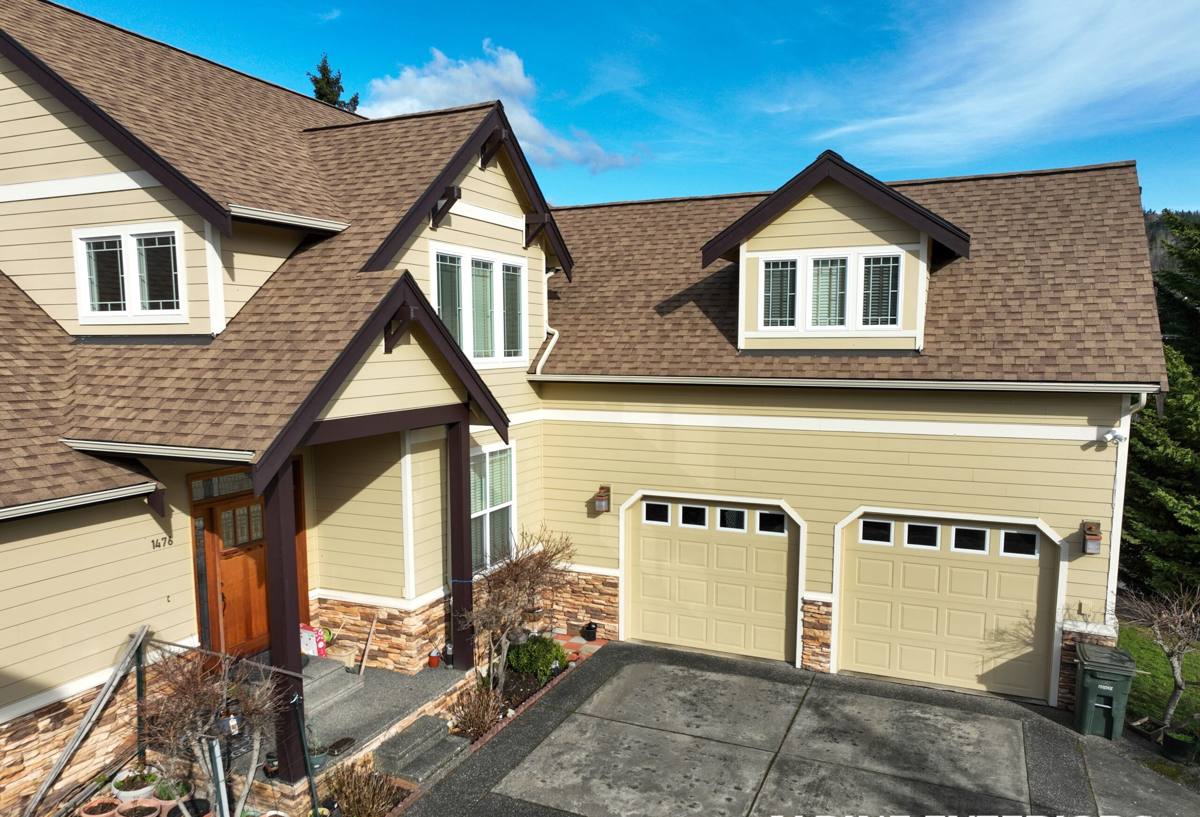
What Seattle's Climate Actually Does to a Roof
Driving rain
Seattle rain is rarely a hard downpour — it's persistent, and storms coming off the Sound often push rain sideways under wind. That matters more for roof edges, valleys, and penetrations than it does for open field area. A roof that only sheds water straight down will eventually let wind-driven rain find its way under a lap joint or around a vent pipe.
Salt air and coastal moisture
Being this close to Puget Sound means the air carries a fine salt content that settles on exposed metal over time. It's not as aggressive here as it is right on the waterfront, but it's enough that fastener quality, coating type, and metal gauge all matter more than they would on a roof fifty miles inland. Cheap fasteners or bare galvanized trim are where salt exposure shows up first — usually as rust bleed at cut edges and screw heads years before the rest of the roof shows any wear.
Moss season
University District's tree canopy is a mixed blessing. It's part of what makes the neighborhood pleasant, but it also means shaded, slow-drying roof surfaces for a good chunk of the year — exactly the conditions moss and algae need to take hold. On composition shingle roofs, moss works its way under the shingle tabs and lifts them. On a correctly installed metal roof, moss has almost nothing to grab onto, which is one of the bigger practical advantages metal has in this specific setting.
Metal Roofing Systems We Install
Not all metal roofing is the same product wearing different colors. The three systems below cover almost everything we install on University District homes, and each has a real trade-off — we'll walk you through which one fits your roof, your budget, and how long you plan to stay in the house.
| System | How it's fastened | Best fit | Trade-off |
|---|---|---|---|
| Standing seam | Concealed clips, no exposed fasteners on the field | Long-term owners, low-slope sections, anyone prioritizing leak resistance | Higher material and labor cost |
| Exposed-fastener panel | Screws through the panel face into the deck | Budget-conscious projects, outbuildings, steeper simple roof shapes | Fasteners need periodic inspection and eventual re-torquing or replacement |
| Metal shingle / shake panel | Interlocking panels, concealed or semi-concealed fastening | Homeowners who want a traditional shingle or shake look with metal's durability | More seams and detail work than standing seam, so installation quality matters more |
Our standard recommendation for most University District homes is standing seam, specifically because of the driving-rain factor described above — concealed fasteners mean there's no exposed screw head for wind-driven water to work against over time. Exposed-fastener panel systems are a legitimate lower-cost option, but we're upfront that they carry a maintenance obligation the homeowner needs to plan for.
What a Correct Metal Roof Installation Actually Involves
Metal roofing fails less often because of the panel itself and more often because of what's underneath and around it. This is where we see the most corner-cutting from past work when we're called out to inspect an older installation.
Underlayment
In a climate this wet, we don't install metal roofing over old felt or a single layer of standard underlayment. A high-temperature synthetic or self-adhered ice-and-water membrane at eaves, valleys, and penetrations gives the roof a real second line of defense — important given how much of the year this neighborhood spends under damp, slow-drying conditions.
Fastener and flashing material
Given the salt air factor, we match fastener and flashing metal to the panel material to avoid galvanic corrosion — mixing incompatible metals is a slow, quiet way to void a roof's service life. Every penetration, valley, and wall transition gets its own properly lapped flashing detail rather than a bead of sealant standing in for real metalwork.
Ventilation
Metal roofs breathe differently than shingles, and in a neighborhood with this much shade and moisture, attic ventilation is not optional. Poor ventilation traps moisture against the underside of the deck, which shows up later as rot or condensation staining — problems that get blamed on the roofing when the real cause is airflow.
Panel layout and seam direction
On roofs with any complexity — dormers, valleys, multiple pitches, which is common on the older lots in this area — panel layout needs to account for water flow direction before the first panel goes down, not be figured out on the fly.
- Solid or properly spaced deck in good condition before panels go on
- High-temp synthetic or self-adhered underlayment at all vulnerable areas
- Fastener and flashing metal compatible with the panel to prevent galvanic corrosion
- Continuous, code-compliant intake and exhaust ventilation
- Properly lapped, formed flashing at every valley, wall, and penetration — no sealant-only details
- Manufacturer-specified fastening pattern and clip spacing for wind and snow load
How Our Process Works
We keep the process straightforward and try to remove the guesswork for the homeowner.
- On-site inspection. We look at the existing roof, deck condition, ventilation, and any trouble spots — valleys, chimney flashing, areas shaded enough to hold moss — before recommending a system.
- Written estimate. You get a clear scope: system type, underlayment, flashing details, and ventilation plan, not just a single lump-sum number.
- Tear-off and deck check. Old roofing comes off and the deck gets inspected for rot or soft spots before anything new goes down — covering up a bad deck is one of the most common shortcuts in this trade.
- Installation. Underlayment, flashing, and panels go in per manufacturer spec, with attention to the driving-rain details at edges and penetrations.
- Final walkthrough and cleanup. We review the finished roof with you and clear the site of debris and fasteners.
What Drives the Cost
Metal roofing costs more upfront than composition shingle, and the range on any given University District home depends on several factors more than it depends on the brand name of the panel.
| Factor | Why it matters here |
|---|---|
| Roof complexity | Valleys, dormers, and multiple pitches (common on older neighborhood lots) mean more flashing and labor time |
| System type | Standing seam runs higher than exposed-fastener panel due to clip hardware and labor |
| Deck condition | Rot or soft decking found during tear-off adds repair cost before roofing can start |
| Access and tree cover | Mature trees common in this area can complicate staging, debris removal, and safety setup |
| Ventilation upgrades | Older homes often need added intake or exhaust venting brought up to a standard that suits metal roofing |
We'd rather give you an honest range tied to your specific roof during an on-site look than a number pulled from a national average that doesn't reflect King County labor rates or your roof's actual condition.
Living With a Metal Roof in University District
One of the real advantages of metal in this neighborhood is how little moss maintenance it needs compared to shingles — but "little" isn't "none," and a few habits go a long way given the shade and moisture this area sees for much of the year.
- Keep gutters clear of needles and leaf litter so water isn't backing up under eave flashing
- Trim back branches that keep a section of roof in constant shade and damp
- Do a visual check after major windstorms for lifted trim or debris caught in valleys
- If you chose an exposed-fastener system, plan on a fastener check every few years
- Rinse off heavy moss or algae buildup with plain water rather than pressure-washing, which can damage coatings and seams
Why It Matters That We Already Work in This Neighborhood
A roofing crew that mostly works other parts of the region will treat University District like any other job site. A crew that regularly works this neighborhood already knows how tree cover here affects moss patterns, how the older housing stock's deck framing tends to be built, and where driving rain off the Sound tends to find weak flashing first. That familiarity shows up in fewer surprises during tear-off and a more accurate estimate from the first visit — not because of anything mysterious, just repetition on the same kind of homes in the same conditions.
If you're weighing metal roofing for a University District home, we're happy to take a look and walk you through what your specific roof needs — no pressure, no obligation. A free estimate is the easiest way to find out what a correct install would actually cost and involve for your house.