 Seattle
 West Seattle's Climate Is Tougher on a Roof Than It Looks
West Seattle sits right on the edge of Puget Sound, and that location cuts both ways. The views are part of why people live here, but that same waterfront exposure means homes take a steady beating from wind-driven rain, salt-laden air, and a moss season that can stretch for most of the year. A roofing material that performs fine a few miles inland in King County doesn't always hold up the same way on a bluff or a hillside facing open water. Metal roofing, done correctly, is one of the better answers to this specific set of conditions — but "done correctly" is doing a lot of work in that sentence, and it's worth understanding why before you commit to a project.
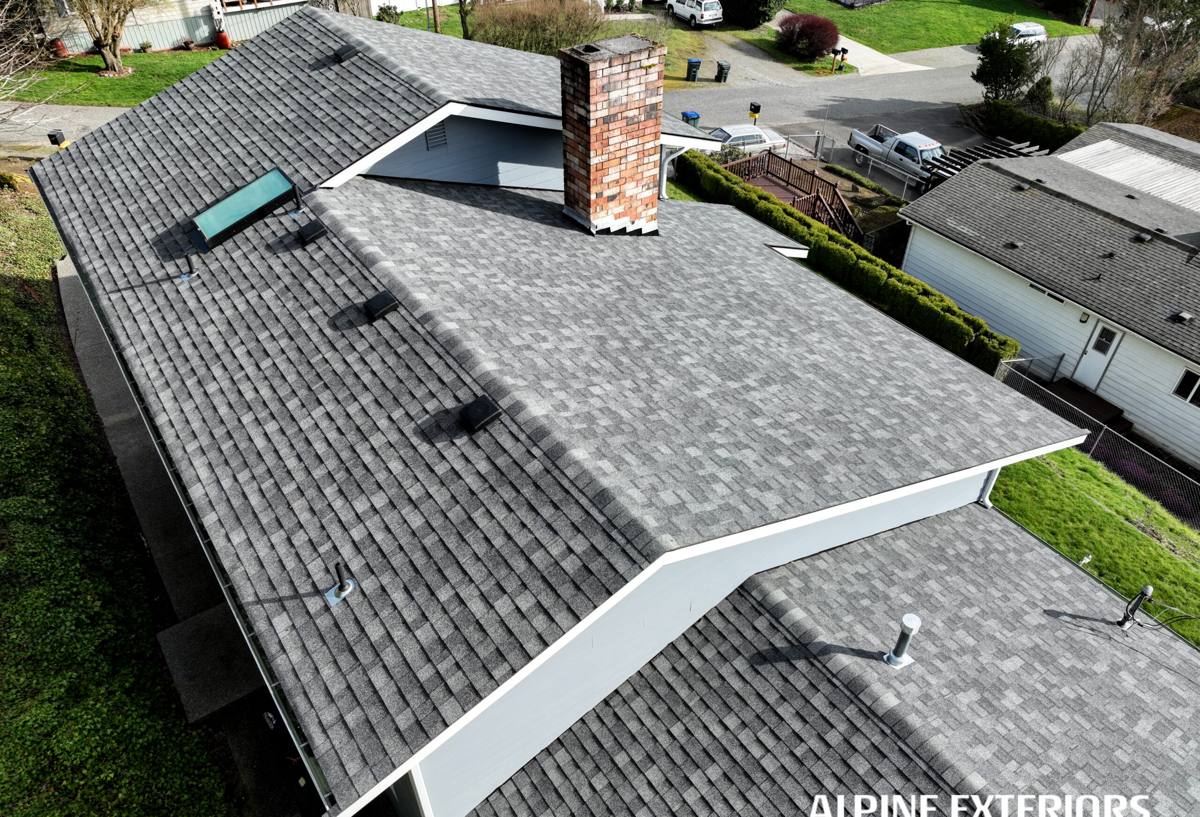
What Driving Rain, Salt Air, and Moss Actually Do to a Roof
These aren't abstract concerns — they're the three things that shorten the life of a roof in this part of Seattle faster than anything else.
- Wind-driven rain doesn't just fall straight down. On exposed West Seattle lots, storms push rain sideways and upward under laps, ridges, and flashing that would stay dry in a calmer setting. Any weak seam or under-detailed flashing eventually finds water.
- Salt air off Puget Sound accelerates corrosion on any exposed metal — fasteners, flashing, gutters — especially on homes with a direct line to the water. This doesn't mean metal roofing is a bad choice; it means the metal, coatings, and fasteners have to be selected for a marine environment, not a generic one.
- Moss and moisture in our long wet season settle into anything with texture or shade. On some roofing materials, moss actively lifts and degrades the surface. Metal sheds it far more easily, but only if the roof was designed to drain properly and not trap organic debris at valleys and low-slope transitions.
None of this is unique to West Seattle, but the combination — waterfront wind exposure plus sustained Pacific Northwest moisture — is more concentrated here than in drier or more inland parts of King County.
Why Metal Roofing Fits This Environment Well
Metal roofing isn't automatically the right choice for every house, but it addresses the three problems above directly: it's largely immune to moss growth on the panel surface itself, it sheds wind-driven rain efficiently when the seams and laps are engineered for it, and modern coatings are built specifically to resist salt-air corrosion. The trade-off is that metal roofing is far less forgiving of a rushed or generic installation than asphalt shingle work — mistakes in flashing or fastening show up as leaks or premature rust, not just cosmetic wear.
Standing Seam vs. Exposed-Fastener Panels
Standing seam systems use concealed clips and interlocking seams, with no exposed screws penetrating the panel face. This is the better long-term choice for a marine climate because there's no fastener head sitting on the roof surface to corrode or work loose over time. Exposed-fastener (corrugated or ribbed) panels cost less upfront but rely on gasketed screws that compress over decades of thermal cycling — in a salt-air environment, those fasteners are the first thing to fail, and re-driving or replacing them becomes routine maintenance rather than a one-time job.
Coatings and Corrosion Resistance
The base metal matters, but the coating system matters just as much. Steel panels are typically coated with a zinc-aluminum alloy layer for corrosion resistance, then finished with a paint system — the better ones use a PVDF-based (often called Kynar-type) finish that holds color and resists chalking far longer than lower-grade paint systems. Aluminum is naturally corrosion-resistant even without a protective metallic layer, which is why it's often the more sensible pick for homes with direct, unobstructed exposure to the Sound.
Metal Roofing Options Compared
| Option | Best For | Watch-Outs Near the Water |
|---|---|---|
| Standing seam steel | Long-term durability, clean appearance, minimal maintenance | Coating quality varies widely — cheap finishes chalk and fade faster in salt air |
| Standing seam aluminum | Highest corrosion resistance, waterfront and bluff-facing homes | Softer material — needs correct panel gauge to resist hail and debris impact |
| Exposed-fastener steel | Budget projects, outbuildings, lower-exposure sites | Fastener gaskets and screw heads are the first failure point in this climate |
| Stone-coated steel | Homeowners wanting a shake or tile look with metal's durability | More seams and granule-coated fasteners to detail correctly than plain panel systems |
What a Correct Metal Roof Installation Involves
The panel itself is the easy part. Most of the long-term performance of a metal roof comes from the details underneath and around it — the parts that aren't visible once the job is finished.
- A synthetic underlayment rated for the full service life of the roof, not a basic felt that degrades under a metal panel's thermal movement.
- Ice-and-water membrane at eaves, valleys, and any low-slope transition where wind-driven rain is most likely to back up under panels.
- Custom-fabricated flashing at every penetration, wall transition, and chimney — pre-formed "universal" flashing is a common shortcut and a common leak source.
- Fasteners and clips matched to the panel metal to avoid galvanic corrosion between dissimilar metals, which accelerates in salty, humid air.
- Proper attic and roof-deck ventilation, so condensation doesn't build up under the panels from the inside — a problem that has nothing to do with the roof surface and everything to do with how the assembly breathes.
- Correct panel spacing and fastening for thermal expansion, so panels aren't fighting themselves during Seattle's seasonal temperature swings.
Flashing and Penetrations
Nearly every roof leak we're called out to diagnose traces back to a penetration or transition, not the open field of the roof. Vents, skylights, chimneys, and wall intersections all need flashing custom-bent for that specific detail. On a metal roof, this work has to account for the panel's ability to expand and contract with temperature — a rigid, over-sealed detail here will eventually crack or pull loose.
Fasteners and Underlayment
Concealed-fastener systems reduce the number of failure points, but the clips and underlayment beneath them still need to be specified correctly for a marine climate. This is where corners get cut on lower-bid jobs — the underlayment and clip hardware aren't visible after installation, so their quality is easy to misrepresent and hard for a homeowner to verify after the fact.
Our Process, Start to Finish
- On-site assessment — we look at your roof's exposure (waterfront-facing, bluff, tree cover), existing deck condition, ventilation, and any current moss or moisture damage before recommending a system.
- Material and panel selection — matched to your home's specific exposure, not a one-size answer. A bluff-top home facing open water gets different recommendations than a more sheltered inland lot in the same neighborhood.
- Tear-off and deck inspection — we check the sheathing for rot or soft spots before anything new goes down, since covering a compromised deck with new panels just hides the problem.
- Underlayment and flashing installation — this is where most of the long-term performance is decided, and it's not something we shortcut to hit a lower number.
- Panel installation — fastened and seamed to spec for thermal movement and wind exposure specific to your site.
- Final walkthrough — we go over ventilation, gutter and downspout tie-ins, and what maintenance (if any) the system will need going forward.
Living With a Metal Roof in a Moss-Season Climate
One of the honest advantages of metal roofing here is how little ongoing maintenance it needs compared to shingle or shake roofs, but "little" isn't "none." Debris still needs to be cleared from valleys and gutters, especially under overhanging trees, since trapped organic matter holds moisture against any roofing material regardless of what it's made from. Gutters should be checked each fall before the wet season sets in, and after any major windstorm it's worth a visual check for lifted flashing or debris buildup at low-slope areas. Beyond that, a well-installed metal roof in this climate is genuinely low-maintenance — that's a large part of its appeal for homeowners tired of re-treating moss on an older shingle or shake roof every couple of years.
Why Hiring a Crew That Already Works in West Seattle Matters
Metal roofing systems perform close to identically on paper regardless of where they're installed — the difference is entirely in how the details are handled for a specific site's exposure. A crew that regularly works West Seattle roofs already knows which streets and elevations catch the worst of the wind off the Sound, which lots tend to hold moss longest into summer, and which flashing details fail first on homes with direct water exposure. That's not something you get from a generic regional roofing outfit working from a standard spec sheet. It shows up in fewer callbacks, fewer surprises, and a roof that's actually built for the site it's on rather than for average conditions somewhere in King County.
If you're weighing metal roofing for a home in West Seattle, we're glad to come take a look, walk the roof, and give you a straightforward, no-pressure estimate based on your home's actual exposure and condition — not a generic quote. Use the form below to get started.