 Seattle
 Why West Seattle Roofs Wear Differently Than Roofs Inland
West Seattle sits closer to Puget Sound than most of the rest of the city, and that location changes what a roof has to deal with year after year. Salt-tinged air off the water, wind-driven rain that comes in sideways off the Sound, and the deep shade from mature trees on many of the neighborhood's older lots all add up to conditions that are noticeably harder on a roof than a drier, more sheltered part of King County. A new roof installed here needs to be built for that reality from day one, not just installed to a generic checklist.
We install new roofs across the West Seattle area and see the same failure patterns over and over on roofs that weren't specified or installed with the local climate in mind. This page walks through what actually matters for a West Seattle roof replacement — the material and installation choices that hold up, the ones that don't, and what our process looks like from first inspection to final walkthrough.
What the Local Climate Actually Does to a Roof
Salt Air and Metal Corrosion
Homes closer to the water pick up airborne salt that accelerates corrosion on exposed metal — flashing, fasteners, vent caps, and gutter hardware. Standard fasteners and thin-gauge flashing that would last decades further inland can start showing rust and pitting years sooner near the Sound. We factor proximity to the water into material selection, favoring corrosion-resistant fasteners and flashing on homes in the more exposed parts of West Seattle.
Driving, Wind-Driven Rain
Seattle's rain isn't usually heavy in volume compared to other parts of the country, but it's frequent, and West Seattle's exposure to weather coming off the Sound means a lot of it arrives at an angle rather than straight down. Wind-driven rain finds every gap in flashing, every short lap in underlayment, and every place where a roof-to-wall transition wasn't detailed correctly. A roof that looks fine in a dry inspection can still be letting water in around chimneys, skylights, and valleys during a real storm.
Moss, Shade, and Moisture Retention
Many West Seattle lots have mature tree cover, and combined with our long wet season, that means moss has a long runway to establish itself on north-facing slopes and shaded roof planes. Moss isn't just cosmetic — it holds moisture against the roofing material, works its way under shingle edges, and can shorten the life of a roof by years if it's never addressed. A correctly installed roof accounts for this with the right material choice and ventilation, not just a one-time cleaning.
Signs a West Seattle Home Needs a New Roof, Not Another Repair
Repairs make sense for isolated damage on an otherwise sound roof. A full replacement is the right call once a roof is failing broadly rather than in one spot. Common signs we see on West Seattle homes include:
- Shingles that are cupping, curling, or losing granules across large areas, not just one section
- Persistent moss growth that returns quickly after cleaning, especially on shaded north-facing slopes
- Soft or spongy decking felt underfoot, or visible sagging along the roofline
- Daylight visible through the roof deck from inside the attic
- Water stains on interior ceilings or attic framing that appear after wind-driven rain specifically
- A roof approaching or past the manufacturer's expected service life for its material type
- Multiple past repairs in different areas within the last few years
- Rusting or failing flashing around chimneys, skylights, and vent penetrations
If you're only seeing one or two of these in isolation, a repair may still be the right move. A proper inspection is the only way to know for sure, and it's the first step in our process either way.
Roofing Materials That Perform in This Climate
There's no single "best" roofing material for every West Seattle home — it depends on the home's exposure, roof pitch, budget, and how much shade and moss pressure the roof deals with. Here's how the common options compare for this specific climate:
| Material | Performance in Salt Air / Rain | Moss Resistance | Typical Lifespan |
|---|---|---|---|
| Architectural asphalt shingle | Good with corrosion-resistant flashing and fasteners | Better with algae/moss-resistant granule options | 25–30 years |
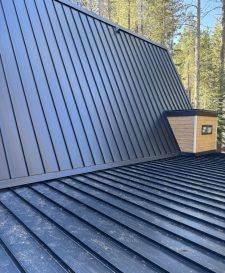
| Standing-seam metal | Excellent when specified with marine-grade coatings and fasteners | Very good — smooth surface sheds moss more easily | 40–50+ years |
| Cedar shake (natural) | Requires diligent maintenance near salt air and shade | Poor without regular treatment and cleaning | 20–30 years with upkeep |
| Synthetic composite shake/shingle | Good — resists moisture absorption better than natural wood | Good | 30–50 years |
We don't push one product line on every home. On heavily shaded, moss-prone lots, we'll often steer homeowners toward metal or a synthetic composite specifically because they shed moisture and moss more easily than natural wood, which needs consistent upkeep to hold up in this climate. That's a maintenance and moisture-behavior tradeoff we're upfront about, not a knock on wood roofing as a product — it's simply a higher-commitment material in a wet, shaded environment.
Architectural vs. 3-Tab Asphalt Shingles
For homes going with asphalt, we generally recommend architectural (dimensional) shingles over 3-tab. They're heavier, carry a higher wind rating, and their layered profile sheds water more effectively than the flat profile of 3-tab shingles — a real advantage when rain is coming in at an angle off the Sound rather than straight down.
What a Correctly Installed New Roof Actually Involves
A new roof is only as good as what's underneath the visible material. Most premature failures we see on West Seattle homes trace back to shortcuts in the layers you can't see once the job is done.
Tear-Off and Deck Inspection
We remove the old roofing down to the deck rather than layering over it. This lets us actually see the plywood or plank decking underneath and replace any sections that are soft, delaminated, or water-damaged before new material goes down. Roofing over a compromised deck just hides the problem.
Underlayment and Ice-and-Water Shield
Underlayment is the roof's real waterproofing layer, and it matters more here than in drier climates. We install self-adhering ice-and-water shield membrane at vulnerable areas — eaves, valleys, around penetrations — and a quality synthetic underlayment across the rest of the deck to handle the wind-driven rain that gets past the shingles or panels themselves.
Flashing at Every Transition
Chimneys, skylights, sidewalls, and valleys are where most leaks actually start, not the open field of the roof. We install new flashing at every transition rather than reusing old pieces, using corrosion-resistant metal appropriate to the home's exposure to salt air.
Ventilation
Proper intake and exhaust ventilation keeps the attic dry and temperature-regulated, which extends shingle life and reduces the moisture buildup that helps moss and mold get a foothold. On many older West Seattle homes, ventilation was undersized or unbalanced by the original construction — a new roof is the right time to correct it.
Our Installation Process
1. Inspection and Written Estimate
We start with a full roof and attic inspection — not just a look from the ground — and provide a written estimate that spells out material, scope, and any decking repair we anticipate, so there are no surprises once work begins.
2. Scheduling Around West Seattle Weather
We plan installation windows with our wet season in mind and monitor the forecast closely. Roofing is weather-dependent work, and we'd rather adjust a schedule than install underlayment or shingles in conditions that compromise the job.
3. Property Protection and Prep
We protect landscaping, siding, and driveways before tear-off begins, and use magnetic sweeps and tarps to manage debris and nails through the job.
4. Installation
Tear-off, deck repair as needed, underlayment, flashing, and final material installation follow in sequence, with each layer inspected before the next goes on.
5. Cleanup and Final Walkthrough
We do a full site cleanup and walk the finished roof and property with you, so you can see the completed work and ask questions before we consider the job done.
Why Local Experience in West Seattle Matters
West Seattle has its own mix of housing stock, terrain, and site conditions — from older homes on steeper lots to newer construction with different roof geometries and view-oriented designs. A crew that regularly works in the neighborhood already understands the access challenges of hillier streets, how to work around mature landscaping, and what the local permitting and inspection process typically requires. That familiarity translates into fewer surprises and a smoother project, compared to a crew seeing the neighborhood's conditions for the first time.
Local experience also means we've seen how different materials and details actually perform here over years, not just on paper — which is why our recommendations lean toward what holds up against salt air, wind-driven rain, and moss, rather than whatever is easiest to install.
What Affects the Cost of a New Roof in West Seattle
Every roof is different, so we don't quote sight-unseen — but these are the main factors that move the price up or down on a typical West Seattle project:
| Factor | Why It Matters |
|---|---|
| Roof size and number of planes | More square footage and more valleys/hips mean more material and labor |
| Roof pitch and access | Steep pitches and difficult access (common on hillier West Seattle lots) require more safety setup and time |
| Material choice | Asphalt, metal, and composite products carry different material and installation costs |
| Decking condition | Rotted or delaminated decking found during tear-off needs to be replaced before new roofing goes on |
| Number of penetrations | Chimneys, skylights, and vents each require flashing work that adds labor |
| Layers of existing roofing | Removing multiple old layers takes more time and disposal cost than a single-layer tear-off |
We walk through these factors with every homeowner during the estimate so you understand exactly what's driving the number, not just a bottom-line total.
Ready for a Straight Answer on Your Roof?
If your roof is showing its age, holding onto moss it shouldn't, or you just want an honest read on how much life it has left, we're glad to take a look. We offer free, no-pressure estimates for West Seattle homeowners — use the form below to get started, and we'll walk your roof with you and tell you what we'd actually recommend, not just what's easiest to sell.