 Seattle
 Asphalt Shingle Roofing Built for Wallingford's Conditions
Wallingford is one of Seattle's older, more established neighborhoods, with a housing stock heavy on craftsman bungalows and early-to-mid-century homes tucked under mature street trees. That combination — an older roof deck, a lot of tree canopy, and Seattle's wet, mild climate — creates a specific set of demands on an asphalt shingle roof that a generic installation doesn't always account for. Shade from established trees keeps roofs damp longer after rain, King County's long wet season gives moss and moisture plenty of time to work into a roof system, and the marine air moving in off Puget Sound adds a layer of humidity that lingers on north-facing slopes even when the rest of the region dries out.
None of this means asphalt shingles are a bad fit for Wallingford — they remain one of the most practical, cost-effective roofing materials available, and the vast majority of homes in this neighborhood are shingled for good reason. It means the details of the installation matter more here than they would in a drier, sunnier climate. A shingle roof that's correctly ventilated, flashed, and underlaid will handle a Seattle winter without issue. One that cuts corners on any of those details will show problems years before it should.
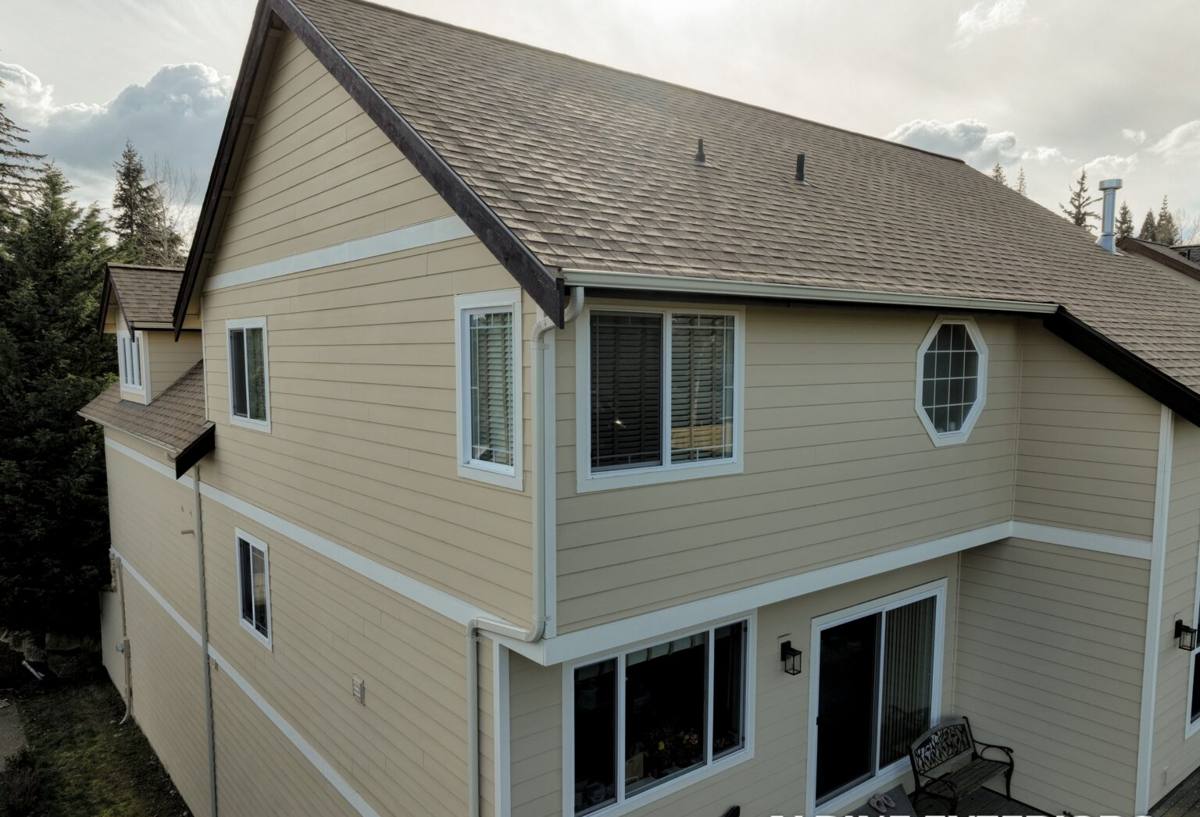
What Seattle's Climate Actually Does to a Shingle Roof
Moss and Shade
Wallingford's tree cover is part of what makes the neighborhood pleasant to live in, but it also means many roofs — especially north- and east-facing slopes — stay shaded and damp for long stretches of the year. That's exactly the environment moss needs to establish. Moss doesn't just sit on top of shingles; its root structure lifts shingle edges and granules, and the moisture it traps against the roof deck is what eventually leads to rot, not the moss itself. A roof in a shaded, tree-lined lot needs more attention to moss prevention than one in full sun.
Driving Rain and Wind-Driven Moisture
Seattle rain tends to come in long, low-intensity systems rather than short violent storms, but it's often paired with wind off the Sound that drives moisture sideways into valleys, eaves, and wall-roof intersections. Flashing at these transition points does more work here than in drier climates, and it's usually the first place a poorly installed roof fails — not out in the open field of the shingles themselves.
Temperature Swings and Ice
King County doesn't get the deep freezes of colder climates, but Wallingford does see periodic cold snaps and occasional snow. Combined with our wet fall and spring, that's enough to create ice damming on roofs with inadequate insulation or ventilation, where meltwater backs up under shingles at the eaves. It's not a daily concern, but it's common enough that eave protection is worth building in rather than skipping.
What a Correct Asphalt Shingle Job Actually Involves
A shingle roof is a system, not a single product. The shingles themselves get most of the attention, but in a climate like this, everything underneath and around them determines whether the roof performs for its full lifespan.
- Deck inspection and repair — any soft, delaminated, or water-stained sheathing gets replaced before new shingles go down, not covered up
- Ice and water shield at eaves and valleys — a self-adhering membrane in the areas most exposed to backed-up water and driving rain
- Synthetic underlayment — a full water-resistant layer across the whole deck as a second line of defense
- Proper flashing — step flashing at walls, counter-flashing at chimneys, and correctly lapped valley metal
- Balanced attic ventilation — intake at the eaves and exhaust at the ridge, sized to the attic's square footage
- Correct nailing pattern — shingles fastened per the manufacturer's specification, not just "close enough," which is what keeps a warranty valid
- Starter strip and ridge cap detailing — the finishing details that are easy to rush and are usually where early leaks show up
Skipping any one of these doesn't necessarily cause an immediate problem — a roof missing proper ventilation can look fine for a few years. But in a climate that stays wet and shaded as much as Wallingford's does, shortcuts compound faster than they would somewhere drier.
Signs a Wallingford Roof Needs Attention
Most asphalt shingle roofs give warning signs well before they actually leak. Worth checking for, especially on shaded or tree-covered lots:
- Dark streaking or green-black growth across the shingle surface, particularly on north-facing slopes
- Moss clumps at the ridge, in valleys, or along the lower edge of the roof
- Granules collecting in gutters or at downspout outlets
- Shingles that look cupped, curled, or have lifted edges
- Soft or spongy spots when walking the roof (only ever assessed by a professional, not a homeowner)
- Daylight visible through the attic roof boards, or damp insulation near the eaves
- Water stains on interior ceilings, especially after a stretch of heavy rain
Any one of these on its own isn't necessarily an emergency, but they're worth a professional look rather than waiting for an active leak, which usually means the water has already been getting in for a while.
Our Process for Wallingford Roof Replacements
1. On-Site Assessment
We walk the roof and the attic, not just one or the other. Ventilation problems, deck damage, and flashing issues are often invisible from the ground and from the shingle surface alike — the attic side tells you things the exterior doesn't.
2. A Written Scope, Not a Guess
You get a clear breakdown of what's being replaced, what underlayment and flashing details are included, and what the shingle and labor warranty actually cover. No verbal promises that aren't in the paperwork.
3. Tear-Off and Deck Repair
Full tear-off to the deck on replacements — no going over existing layers. Any damaged sheathing found during tear-off is repaired before anything goes back down, and we'll show you what we found rather than just billing for it after the fact.
4. Installation to Spec
Ice and water shield at the vulnerable areas, full underlayment, correct flashing at every wall and penetration, and shingles fastened per manufacturer specification so the warranty is actually valid if you ever need it.
5. Ventilation Check
We confirm intake and exhaust ventilation are balanced for the attic size — this is one of the most commonly skipped steps in this region and one of the biggest factors in how long a shingle roof actually lasts here.
6. Cleanup and Final Walkthrough
Magnetic sweep for nails, full site cleanup, and a walkthrough so you can see the finished work and ask questions before we consider the job done.
Shingle Options and What Drives the Cost
Asphalt shingles come in a few tiers, and the right choice depends on how long you plan to be in the home, your budget, and how much visual weight you want the roofline to carry. This is a general guide — your estimate will reflect your roof's actual size, pitch, and access.
| Shingle Type | Typical Lifespan | Best Fit |
|---|---|---|
| 3-tab shingles | Shorter end of the range | Budget-focused projects, flatter architectural style |
| Architectural (dimensional) | Mid-to-long range | Most Wallingford homes — better wind and moss resistance, more dimension |
| Premium/designer | Longer end of the range | Craftsman and character homes where roofline appearance matters |
Beyond the shingle tier itself, the biggest cost factors on any Wallingford job tend to be:
- Roof pitch and access — steep or hard-to-reach roofs take longer and require more safety setup
- Deck condition — how much sheathing repair is needed once tear-off exposes the deck
- Number of valleys, penetrations, and flashing details — chimneys, skylights, and dormers all add labor
- Layers to remove — tearing off one existing layer versus multiple
- Ventilation upgrades — adding intake or exhaust venting where the current attic setup is inadequate
Living with an Asphalt Shingle Roof in Wallingford
A correctly installed roof still benefits from a bit of ongoing attention in this climate. Keeping gutters clear so water isn't backing up under the eaves, having overhanging branches trimmed back to reduce shade and debris load, and having moss growth addressed early — before it lifts shingles — all extend the practical life of the roof well beyond just letting it sit through Seattle's weather untouched. None of this needs to be constant or expensive, but a roof in a shaded, tree-heavy lot benefits from more attention than one in an open, sunny yard.
Why It Matters That We Already Work in Wallingford
A roofing crew that works this neighborhood regularly already understands the practical realities of it: narrow lots and tight side-yard access on many older properties, mature trees that need to be worked around rather than through, and the older framing and roof decks common to homes built decades before current building codes. That experience shows up in fewer surprises during tear-off, better judgment about what a given roof actually needs versus what's being upsold, and a realistic sense of how King County permitting and inspection requirements apply to a reroof on an established home. It also means we're not learning the neighborhood on your project — we already know what these roofs tend to need.
Warranty and What to Expect Afterward
Shingle manufacturers typically offer a materials warranty, and we back our installation with our own workmanship warranty — the specifics of both will be spelled out clearly in your written estimate, not left as a verbal assurance. What matters most for a homeowner is that the installation was done correctly enough that the manufacturer's warranty is actually valid if a claim is ever needed — a roof installed off-spec can void that coverage even if the shingles themselves are a quality product.
If you're weighing a shingle replacement or just want an honest read on how much life is left in your current roof, we're glad to take a look. There's a free, no-pressure estimate available through the form below — we'll tell you what we actually see, not just what sells a job.