 Seattle
 Metal Roofing Built for Queen Anne's Weather
Queen Anne sits high above the water on one of Seattle's steepest, most exposed hills, which means the roofs up here take a different kind of beating than roofs in a sheltered valley neighborhood. Wind off Puget Sound carries salt air onto the upper slopes and gables. Driving rain — the kind that comes in sideways during a fall or winter storm — finds every weak seam, nail pop, and flashing gap. And the long, wet moss season that runs from late fall through spring keeps roof surfaces damp for months at a time. A roof here has to shed water fast, resist wind uplift, and not give moss and lichen anything to grab onto.
Metal roofing handles all three of those demands better than most other roofing materials, which is a big part of why we install so much of it in this part of Seattle. It's not the right choice for every house or every budget, but for the conditions Queen Anne actually sees, it earns its keep.
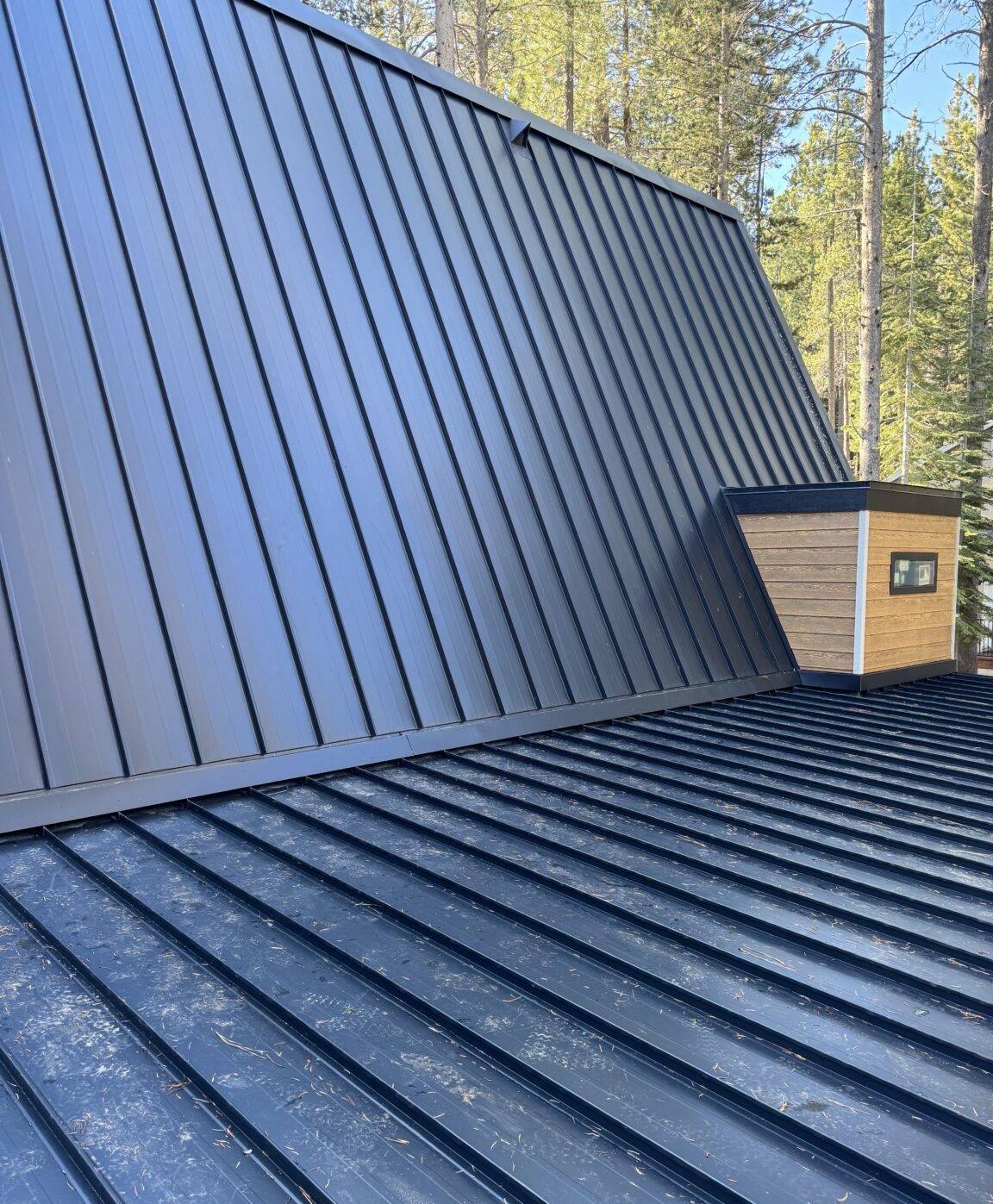
Why Metal Performs Well on Steep, Exposed Roofs
Queen Anne's housing stock is a mix of early-1900s craftsman and Victorian-era homes, mid-century remodels, and newer infill construction, and a lot of it sits on steep lots with equally steep roof pitches. Steep roofs and high wind exposure are exactly where metal roofing's strengths show up:
- Fast water shedding. A steep-pitched metal roof with properly lapped panels moves driving rain off before it has a chance to work under a seam.
- Wind resistance. Properly fastened metal panels or standing seam systems hold up to gusts that can lift or loosen shingle tabs over time, especially on exposed western and southern slopes.
- Moss and lichen resistance. Moss needs organic material and rough texture to anchor into. Smooth painted metal gives it far less to hold onto than asphalt shingles or wood shakes, which cuts down on the yearly moss battle a lot of King County homeowners are used to.
- Long service life. A correctly installed metal roof commonly outlasts two or three asphalt shingle roofs, which matters on a house where re-roofing means renting scaffolding or lift equipment for a steep, multi-story roofline.
None of that means metal is maintenance-free. It still needs the right fasteners, the right underlayment, and periodic checks — we'll get into that below.
Metal Roofing Options for Queen Anne Homes
"Metal roofing" isn't one product — it's a category, and the right pick depends on the house, the budget, and whether the goal is a period-appropriate look or straightforward long-term performance.
| System | Best For | Trade-Offs |
|---|---|---|
| Standing seam | Steep-pitch homes, visible roofs, view-oriented houses | Higher upfront cost; concealed fasteners mean fewer future leak points |
| Stone-coated steel | Homes where a shingle or shake look is wanted | Mimics traditional roofing profiles; coating needs to stay intact to resist moisture |
| Corrugated / exposed-fastener panel | Garages, additions, secondary structures, budget-conscious re-roofs | Lower cost; exposed fasteners need periodic inspection and eventual re-sealing |
For a primary residence roof that will face years of King County rain and wind, we lean toward standing seam or a well-installed stone-coated system. Exposed-fastener panel has its place, but on a full home re-roof it puts more long-term maintenance on the homeowner than most people expect going in.
A Note on Product Choice
We don't push every metal product on every job. Some systems look good in a brochure but are unforgiving to install correctly on a steep, multi-plane roof, or they rely on sealant at exposed fastener points that has to be checked and refreshed over the years. Our standard is to spec systems we're confident will still be performing well a decade or two from now on this specific house, not just whatever has the lowest sticker price.
What a Correct Metal Roof Installation Involves
The metal panel itself is only part of the system. Most of the leaks and failures we get called out to fix on other contractors' metal roofs trace back to what's underneath the panel, not the panel itself.
- Ice and water shield at eaves and valleys. These are the spots most likely to see standing water or wind-driven rain intrusion, and they get a self-adhering waterproof membrane, not just felt.
- Synthetic underlayment across the full deck. A continuous secondary water barrier under the metal, so a single fastener or seam issue doesn't become a deck leak.
- Correct fastener type and spacing. Fasteners rated for coastal/marine air exposure resist corrosion far better than standard hardware, which matters given how much salt-laden moisture blows across these hills.
- Proper flashing at every penetration. Chimneys, skylights, vent stacks, and roof-to-wall transitions are where metal roofs succeed or fail. Flashing has to be formed and layered correctly, not just caulked.
- Attic and roof ventilation. Metal roofs can actually help reduce moisture buildup in the attic if the ventilation is set up right — intake at the eaves, exhaust at the ridge — which also helps control condensation on the underside of the panels.
- Panel expansion allowance. Metal expands and contracts with temperature swings. Panels and clips need to be installed so they can move slightly without stressing seams or fasteners.
Problems We Commonly See on Queen Anne Roofs
Because so many homes here are older and sit on steep, multi-plane roofs with dormers, chimneys, and tight valleys, the failure points tend to repeat:
- Moss buildup in shaded north-facing slopes and valleys that holds moisture against the roof surface for weeks at a time.
- Old flashing around chimneys and dormers that was never properly integrated with the roofing material, leading to slow leaks that show up as ceiling stains long after the water started getting in.
- Gutters and downspouts undersized or clogged for the volume of driving rain Seattle winters bring, causing water to back up under the roof edge.
- Roof decking softened by long-term moisture exposure on homes where a previous re-roof was done over an existing layer instead of down to the deck.
- Fastener corrosion on older exposed-fastener metal or steel components exposed to salt-laden air over many years without maintenance.
A lot of these are the kind of thing that's cheap to fix early and expensive to fix once they've been leaking quietly for a year or two — which is why we always start with an honest inspection rather than a sales pitch.
Our Process on a Queen Anne Metal Roof Project
- On-site inspection. We walk the roof (or use a lift/drone on steep or difficult-access homes) and check the deck, flashing, ventilation, and any problem areas — not just the shingles or panels on top.
- Written estimate. You get a clear scope of work and pricing before anything is scheduled — what system, what underlayment, what flashing detail, and why.
- Site protection and access planning. Steep lots and narrow streets are the norm in this neighborhood, so we plan material staging, dumpster placement, and equipment access before the crew shows up, not on the fly.
- Tear-off or overlay decision. On most full re-roofs we recommend going down to the deck so we can actually inspect and repair what's underneath, rather than covering up a problem.
- Installation. Deck repair as needed, underlayment, ice and water shield at vulnerable areas, panel installation, and flashing at every penetration.
- Final walkthrough. We review the finished roof with you, including how to spot early warning signs and what routine maintenance (if any) the specific system needs.
Maintenance: What Metal Roofing Does and Doesn't Need
One of the appeals of metal roofing is that it needs less upkeep than shingle or wood roofing, but "less" isn't "none," especially in this climate.
| Task | Why It Matters Here |
|---|---|
| Annual visual check of flashing and seams | Catches early separation before winter's driving rain finds it |
| Gutter and downspout cleaning | Prevents water backup at the roof edge during heavy King County rain events |
| Clearing debris from valleys | Reduces moss growth and standing moisture in the wettest part of the roof |
| Checking exposed fasteners (if applicable) | Salt-laden marine air accelerates corrosion faster than inland exposure |
Why a Local Queen Anne Crew Matters
A roof job on a steep Queen Anne lot isn't the same job as one on a flat suburban roof. Access is tighter, streets are narrower, and a lot of the housing stock has quirks — additions, dormers, older framing — that a crew unfamiliar with the neighborhood will discover the hard way, usually mid-project. A crew that regularly works this part of Seattle already understands how to stage equipment safely on these slopes, how the salt air and moss cycle actually affects roofs here year over year, and what King County permitting and inspection expects for a re-roof. That translates into fewer surprises, a more accurate estimate up front, and a roof detailed correctly the first time instead of a call-back six months later.
Signs It's Time to Have Your Roof Looked At
- Visible moss or dark streaking across shaded slopes or valleys
- Rust staining below metal flashing or fasteners
- Ceiling stains or musty odor in an upstairs room after heavy rain
- Loose, lifted, or missing panels or shingles after a windstorm
- Sagging or soft spots visible from the attic or a ladder inspection
- A roof original to the home and now 20+ years old, regardless of visible symptoms
If you're seeing any of these on a Queen Anne home, it's worth having someone take an honest look before the next winter storm cycle rolls through. We offer free, no-pressure estimates — if a repair is all that's needed, we'll tell you that instead of pushing a full re-roof. Fill out the form below and we'll get a crew out to take a look.