 Seattle
 Ballard's Marine Climate Is Hard on Windows — Old and New
Ballard sits close to Salmon Bay and Puget Sound, and that proximity to open water shapes what windows have to put up with here. Salt-laden air corrodes metal hardware and hinges faster than it does further inland. Driving rain off the water pushes against window assemblies from angles that a lot of window designs were never tested for. And the long stretch of gray, wet months each year gives moss and mildew plenty of time to take hold on north-facing sills, frame corners, and anywhere water sits instead of draining.
Ballard's housing stock adds another layer to this. The neighborhood has a mix of older bungalow and craftsman-style homes with original wood windows alongside newer infill construction. Older wood windows were well-built for their era, but decades of Seattle winters have usually worn through their glazing putty, weatherstripping, and paint seals. Newer homes aren't immune either — even good vinyl and fiberglass units can fail early if they were installed with poor flashing or inadequate sealant in the first place. The climate doesn't care how old the house is; it exploits whatever gap it can find.
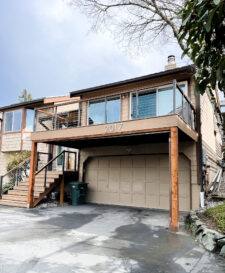
Signs a Ballard Home Needs Window Replacement
Some warning signs are obvious. Others show up gradually enough that homeowners get used to them before realizing something needs attention. Watch for:
- Fogging or a cloudy haze between panes of double-pane glass (a sign the seal has failed and the gas fill is gone)
- Drafts you can feel near the frame, even with the window fully closed and locked
- Soft, spongy, or discolored wood at the sill or lower frame corners
- Peeling or bubbling paint on window trim, which often points to trapped moisture underneath
- Windows that stick, won't stay open, or are difficult to lock
- Persistent condensation on the inside of the glass during cool months
- Moss, algae, or black mildew building up in the frame corners or along the sill
- A noticeable jump in heating costs without any other explanation
Any one of these on its own might just need a repair. Several at once, especially on older single-pane or early double-pane units, usually means the window has reached the end of what it can do for the house.
What a Correct Window Replacement Job Actually Involves
Removing the old window without damaging the opening
The old sash and frame have to come out cleanly, without tearing the surrounding siding, trim, or sheathing more than necessary. This is also the point where hidden rot or water damage around the rough opening gets found — and it needs to be dealt with before a new window goes in, not covered up.
Flashing and water management
This is the part that matters most in a climate like ours and the part that's easiest to shortcut. Proper flashing directs any water that gets past the exterior cladding down and out, away from the wall framing, instead of letting it pool behind the window. Given how much driving rain Ballard sees off the water, a window installed without correct flashing detail is a slow leak waiting to happen — even if it looks fine on install day.
Insulation and air sealing
The gap between the new window frame and the rough opening needs to be filled with the right type and amount of insulation — not overpacked, not left with gaps. Air sealing around that gap is what actually stops drafts; the window itself is only part of the equation.
Sealant selection
Not every exterior sealant holds up to constant damp and salt air. We use sealants and caulks rated for sustained moisture exposure, applied at the joints that see the most water — not just a bead around the visible trim.
Choosing the Right Window Material for Ballard's Weather
Every window material has trade-offs. In a marine climate with regular rain and salt air, moisture behavior and maintenance burden matter more than they might in a drier region.
| Material | Moisture Resistance | Maintenance | Typical Lifespan |
|---|---|---|---|
| Vinyl | Very good — won't rot or corrode | Low; occasional cleaning | 20–30+ years |
| Fiberglass | Excellent; very stable in wet, temperature-swinging conditions | Low | 30+ years |
| Wood-clad (wood interior, clad exterior) | Good on the exterior; interior wood needs protection from any leaks | Moderate; relies on the cladding and seals staying intact | 20–30 years with upkeep |
| Aluminum | Prone to condensation and corrosion near salt air unless thermally broken | Moderate to high | Varies widely |
We steer most Ballard homeowners toward vinyl or fiberglass for straightforward, low-maintenance performance in this climate. Solid wood or wood-clad windows can be the right call for matching an older home's original character, but that choice comes with a maintenance commitment — repainting, caulking, and periodic inspection — that we'll walk through honestly before you decide. We don't push a single "best" product; we tell you what each option actually asks of you over the next 20 years.
Full-Frame vs. Insert Replacement
There are two basic approaches to replacing a window, and which one applies depends on the condition of what's already there.
Insert (pocket) replacement keeps the existing frame in place and fits a new window unit inside it. It's faster, less disruptive to siding and trim, and often more affordable — but it only works if the existing frame is still structurally sound and free of rot.
Full-frame replacement removes the window down to the rough opening, including the old frame. It takes more labor and often means some siding or trim repair, but it's the right call whenever there's water damage, rot, or an out-of-square opening — all of which show up more often in Ballard's older homes after years of moisture exposure.
We don't default to the cheaper option just because it's cheaper. If a frame has hidden rot, an insert replacement just seals the problem behind new glass instead of fixing it.
Our Process
- On-site assessment — we inspect existing windows, framing, and any signs of water intrusion, and take real measurements rather than estimating from a photo.
- Product recommendation — we walk through material and glass options suited to the home's exposure (south- and west-facing walls take more direct rain here than east-facing ones).
- Written estimate — a clear scope and price before any work starts, no surprise add-ons.
- Preparation — protecting interior floors, furniture, and landscaping before removal begins.
- Removal and inspection — old windows come out, and we check the opening for rot or damage before anything new goes in.
- Installation — new window set, shimmed level and square, insulated, flashed, and sealed.
- Exterior finish work — trim, caulking, and any siding repair needed to close the job out cleanly.
- Walkthrough — we test operation and locks with you and go over care and warranty details before we leave.
Why a Crew That Regularly Works in Ballard Matters
A window that performs well in a drier part of the state can still fail here if it's installed without accounting for what this specific location deals with — sustained damp, salt in the air, and long moss seasons that keep surfaces wet longer than they'd dry out elsewhere in King County. Crews who work Ballard regularly know to pay closer attention to flashing detail on water-facing walls, to choose sealants rated for constant moisture, and to recognize early rot in older sills before it spreads.
Ballard's mix of century-old homes and newer construction also means every job is a little different. Older homes often have non-standard opening sizes and original trim worth preserving; newer homes may have their own installation quirks depending on how they were originally built. Experience with both matters more here than it would in a neighborhood of uniform, newer housing stock.
Cost Factors for Ballard Window Replacement
Window replacement costs vary by home, and we won't quote a number without seeing the actual job — but these are the main factors that move the price up or down.
| Factor | Effect on Cost |
|---|---|
| Insert vs. full-frame replacement | Full-frame costs more due to added labor and possible trim/siding repair |
| Window material | Vinyl is typically most affordable; fiberglass and wood-clad cost more |
| Number of windows | Per-window cost usually drops somewhat on larger multi-window jobs |
| Size and configuration | Large picture windows or unusual shapes cost more than standard-size units |
| Hidden rot or water damage | Repair work adds cost but is necessary — sealing over it isn't a real fix |
| Glass upgrades | Triple-pane or higher-performance glass adds cost but can lower heating bills |
| Accessibility | Second-story or hard-to-reach windows can add labor time |
As a broad starting point, a single standard window replacement in this region often falls somewhere in the low-to-mid four figures, with whole-house projects scaling from there depending on the factors above. We'll give you real numbers once we've actually seen the windows and the openings.
Get a Straight Answer for Your Home
If your windows are drafty, fogged, sticking, or showing rot around the frame, it's worth having someone look at them before another wet Seattle winter makes the problem worse. We'll give you an honest read on what's actually going on, what it would take to fix it right, and what that's likely to cost — no pressure, no upsell. Fill out the form below to schedule a free estimate for your Ballard home.