 Seattle
 Decking Built for Columbia City's Weather, Not Just Its Curb Appeal
Columbia City sits in one of Seattle's older, more established neighborhoods, with mature street trees and a housing mix that ranges from early-1900s bungalows to newer infill homes. That tree canopy is part of what gives the area its character, but it also means a lot of backyards and side decks sit in partial shade for much of the year. Combine that with Puget Sound's salt-tinged air, King County's long stretch of driving rain, and a moss season that can run from early fall through late spring, and you get a climate that is genuinely hard on outdoor structures. A deck that looks fine on installation day can start showing problems within a year or two if it wasn't built with this specific combination of conditions in mind.
Composite decking exists precisely because wood struggles under these conditions — but composite is not maintenance-free, and it is not installer-proof. How it's framed, spaced, fastened, and ventilated matters just as much with composite as it does with cedar or fir. This page covers what a correctly built composite deck looks like for a Columbia City home, and what our process does to make sure it holds up.
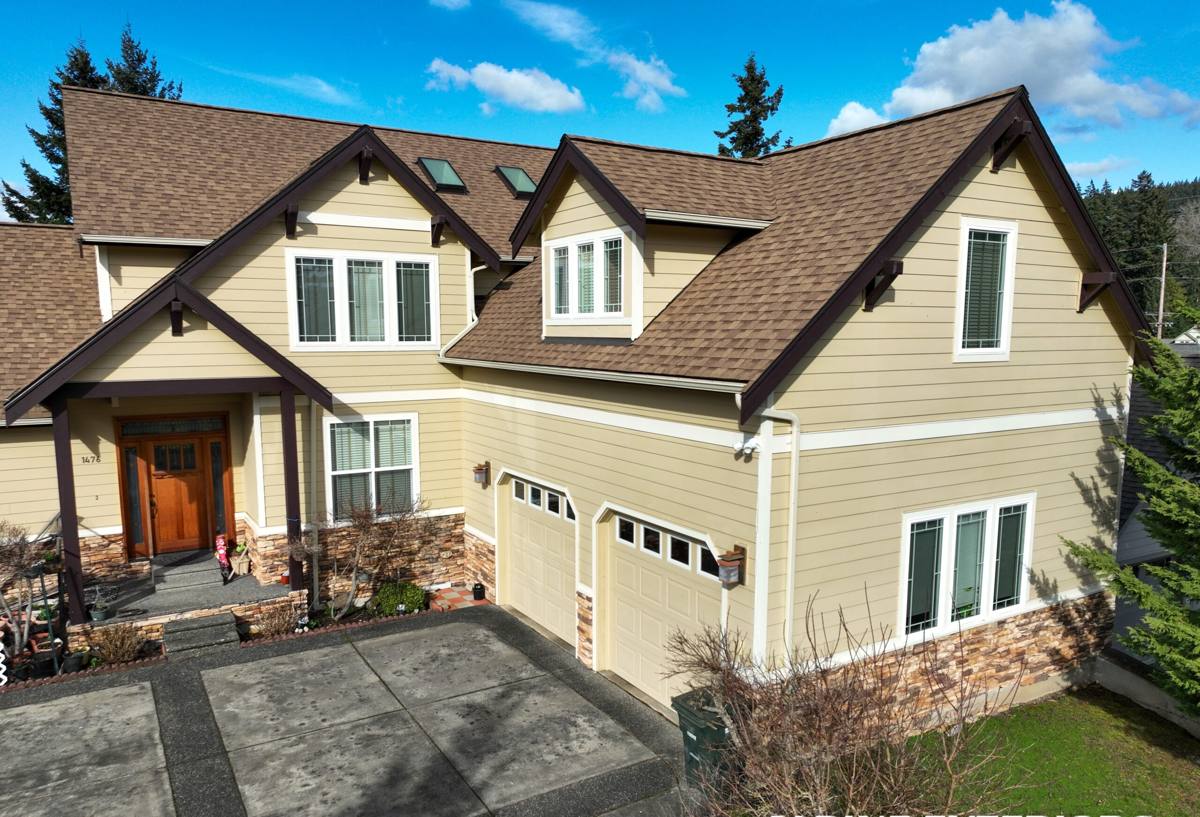
What This Climate Actually Does to a Deck
Moisture That Doesn't Dry Out Fast
Seattle doesn't get the heaviest rainfall totals in the country, but it gets a lot of low-intensity, long-duration rain, followed by overcast, cool days that are slow to dry surfaces out. A deck under tree cover or on the shaded side of a house can stay damp for days after a storm passes. That extended dampness is what feeds moss and algae growth, and it's what causes rot in wood framing that isn't properly protected.
Moss Is a Structural Issue, Not Just a Cosmetic One
Moss doesn't just make boards look neglected — it holds moisture against the surface, makes the deck slick and genuinely dangerous underfoot, and can work into board grooves, fastener heads, and gaps where drainage should be happening. On composite decking, moss growth is almost always a sign that drainage and airflow underneath the deck were never adequate to begin with, not a defect in the boards themselves.
Salt Air and Metal Hardware
Homes closer to Puget Sound deal with a low but steady level of airborne salt, which accelerates corrosion on unprotected fasteners, brackets, and ledger hardware. Over years, corroded fasteners can loosen board connections or, worse, compromise structural ledger attachments. This is a detail that's easy to skip and expensive to fix later.
What a Correct Composite Deck Installation Involves
A composite deck is only as good as what's underneath it. The boards themselves are the most visible part, but the framing, drainage, and hardware choices are what determine whether the deck is still solid in fifteen years.
- Pressure-treated or structural composite joists and beams sized correctly for the actual span and load, not just "what was already there"
- Joist tape or a moisture barrier on top of framing members to keep standing water off cut lumber ends and fastener points
- Stainless steel or coated corrosion-resistant fasteners and brackets, given the salt-air exposure common across this part of Seattle
- Proper board spacing for expansion and contraction — composite moves with temperature more than most homeowners expect
- Grading and drainage under the deck so water sheets away instead of pooling against posts and footings
- Adequate ventilation gaps around the deck perimeter and skirting so airflow can actually dry out the underside after rain
- Ledger board flashing that's integrated correctly with the house's existing siding and weather barrier, not just caulked over
Skipping any one of these doesn't usually cause an immediate problem — it causes a problem in year three or four, which is exactly when it's hardest to trace back to the install.
Composite vs. Wood vs. PVC: An Honest Comparison
We install all three at different times, depending on the homeowner's budget, the look they want, and the deck's exposure. None of them is universally "best" — here's how they actually compare for a shaded, rainy Seattle lot.
| Material | Upfront Cost | Maintenance | Moisture & Moss Behavior | Typical Lifespan |
|---|---|---|---|---|
| Pressure-treated wood | Lowest | Annual cleaning, periodic staining/sealing | Absorbs water; moss and mildew take hold quickly in shade | 10-15 years before major repair |
| Capped composite | Mid to upper-mid | Occasional wash; no staining or sealing | Won't rot, but moss can still grow on the surface film if airflow is poor | 20-30 years |
| Cellular PVC | Highest | Low; very stable in wet conditions | Best resistance to moisture absorption; still needs airflow to prevent surface moss | 25-30+ years |
The table point that matters most for this neighborhood: no material is immune to moss if the deck sits in shade with poor underside ventilation. Material choice affects how the deck ages, not whether it needs airflow and drainage designed correctly from the start.
Our Process for a Columbia City Composite Deck
1. On-Site Assessment
We look at sun exposure, tree cover, existing drainage patterns, and the condition of any structure we'd be replacing or building onto. A deck on the north or shaded side of a Columbia City lot gets treated differently than one with more open sun exposure — the framing and ventilation details change accordingly.
2. Structural and Code Check
We verify footing depth, ledger attachment, and span tables against current code requirements for the jurisdiction, and flag anything on an existing structure that doesn't meet current standards before we build on top of it.
3. Permitting
Most new or substantially rebuilt decks in Seattle require a permit, particularly once you're above a certain height off grade or attaching structurally to the house. We handle that process rather than leaving it to the homeowner to navigate.
4. Framing and Drainage First
Before a single composite board goes down, the framing, flashing, fastener selection, and under-deck drainage are set. This is the stage that determines whether the deck stays dry and moss-resistant later — it's also the stage that's invisible once the project is done, which is exactly why it's worth asking a contractor about directly.
5. Board Installation
Hidden fastener systems, correct expansion gaps, and manufacturer-specified spacing at butt joints and perimeter boards. We follow the manufacturer's installation guide precisely, since deviating from it can void the product warranty even if the deck looks fine at handoff.
6. Walkthrough
We go over drainage, any cleaning or maintenance recommendations specific to the site's shade and exposure, and warranty documentation before we consider the job finished.
Living With Composite Decking in a Shaded, Rainy Yard
Composite decking dramatically cuts the maintenance burden compared to wood — no annual staining, no sanding, no sealing. But "low maintenance" isn't "no maintenance," especially under tree cover.
- Sweep off leaves, needles, and organic debris regularly — trapped organic matter is what feeds moss and mildew growth on any decking surface
- Rinse the deck periodically with plain water, and use a soft-bristle brush with a mild composite-safe cleaner if moss or algae film develops
- Avoid pressure washing directly into board grooves or fastener lines at high pressure — it can drive water into places it shouldn't be
- Keep gutters and downspouts near the deck clear so runoff isn't dumping extra water onto or under the deck surface
- Trim back overhanging branches where practical to increase sun exposure and airflow across the deck surface
What Drives the Cost of a Composite Deck Project
| Factor | Why It Matters |
|---|---|
| Square footage and shape | More linear footage of framing and cutting; complex shapes with angles or curves take more labor |
| Substructure condition | Replacing failed footings or rotted framing on an existing deck adds cost before any composite is installed |
| Height off grade | Taller decks need engineered railings, additional bracing, and sometimes stairs, which add both material and labor |
| Board pattern and picture-framing | Diagonal layouts or contrasting border boards look great but increase cutting time and waste |
| Railing and fascia choices | Composite or metal railing systems cost more upfront than basic wood rail but need far less upkeep |
| Site access and tree work | Limited access for equipment, or the need to protect or trim existing trees, can add time to the schedule |
We walk through these factors on-site rather than quoting a flat per-square-foot number sight unseen, because two decks of the same size can differ significantly in cost depending on what's underneath and around them.
What to Look for in a Contractor for This Kind of Work
A composite deck is a visible, long-term investment, and the quality of the build matters more than the brand name on the boards. Before hiring anyone for a deck project in this part of Seattle, it's worth confirming a few basics.
- Washington State contractor license and current liability insurance, verifiable through the state's licensing lookup
- Willingness to explain their framing, flashing, and drainage approach in plain language, not just the board brand they'll use
- A written scope that specifies fastener type, joist protection, and ventilation details — not just "composite decking" as a line item
- Manufacturer certification or documented experience installing the specific composite product being proposed, since improper installation can void warranties
- Familiarity with Seattle's permitting requirements and willingness to pull permits rather than skip the step
- A clear answer on how they handle drainage and airflow specifically for shaded, tree-covered lots — a generic answer here is a warning sign
A crew that already works regularly in Columbia City and similar Seattle neighborhoods will have seen this exact combination of shade, rain, and moss enough times to design around it by default, rather than treating it as a surprise mid-project.
Get a Straight Answer on Your Deck Project
If you're weighing a new composite deck, a replacement for an aging wood structure, or you're just not sure whether your current deck's framing and drainage are holding up the way they should, we're happy to take a look. The estimate is free, there's no pressure, and you'll get a straight explanation of what your specific lot and layout actually need — use the form below to get started.