 Seattle
 Wallingford's Climate Is Harder on Siding Than It Looks
Wallingford is one of Seattle's older, more established neighborhoods, with a lot of homes built well before modern siding and moisture-barrier standards existed. That housing stock, combined with the neighborhood's mature tree canopy and its position between Lake Union and the Sound, creates conditions that are genuinely tough on exterior walls. It's not dramatic weather — no hailstorms, no hurricanes — but it's relentless. Seattle's marine air carries salt and moisture inland, driving rain hits siding sideways during fall and winter storms, and the wet season here isn't a few weeks, it's most of the year.
That combination is exactly why moss and algae growth is such a common complaint on north- and west-facing walls in this part of King County. Shade from mature trees keeps siding damp longer after rain, and damp siding that never fully dries is where moss gets a foothold. On the wrong material, that's the start of a slow moisture problem. On the right material, installed correctly, it's a cosmetic issue you wash off.
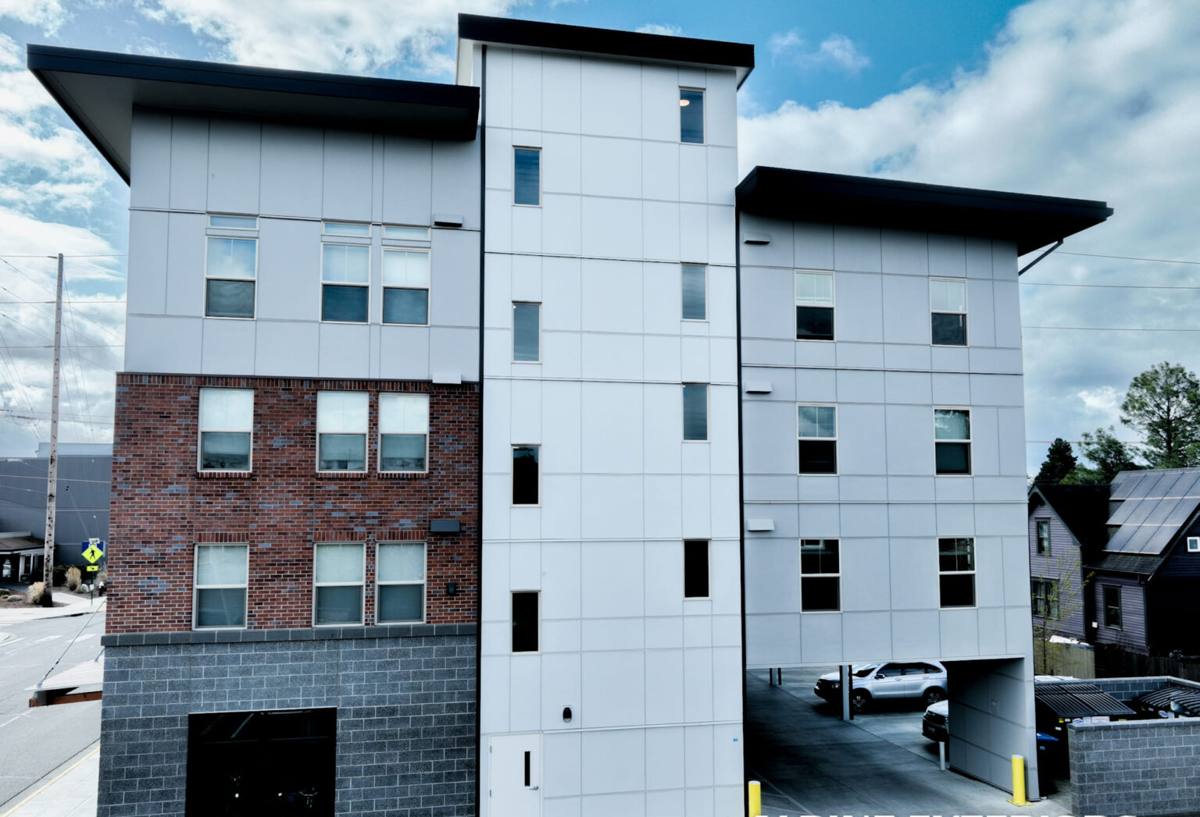
Why We Only Install James Hardie Siding
We made a deliberate call to install James Hardie fiber cement exclusively — no vinyl, no LP SmartSide, no Cemplank or Allura, no primed spruce, no cedar. That's not a marketing angle; it's a standard we hold to because of what we've seen happen to other materials in exactly this climate. Vinyl expands and contracts with temperature swings and can warp or crack over time; wood and engineered wood products need consistent maintenance and are more vulnerable to moisture intrusion if a seam or coating fails. In a climate that stays wet for months at a stretch, those weaknesses compound.
James Hardie fiber cement is non-combustible, dimensionally stable in wet-dry cycling, and comes with a factory-applied ColorPlus finish that's baked on rather than field-painted — which matters in a region where field-applied paint has fewer good drying windows per year. Hardie also engineers specific product lines for different climate zones (their HZ5 line is built for regions with freeze-thaw and heavy moisture exposure, which fits western Washington). None of this means Hardie is maintenance-free or magic — it still has to be installed correctly to perform — but it gives us a product system we can stand behind with a real, transferable warranty instead of one we have to caveat.
What This Means for a Wallingford Home Specifically
On an older Wallingford home, the siding isn't just cosmetic — it's often the only thing standing between decades-old wall assemblies and a genuinely wet climate. Getting the material and the installation right protects everything behind it: sheathing, framing, insulation, and interior finishes that are expensive to fix once water gets in.
What a Correct Installation Involves Here
James Hardie siding is a system, not just a board. A correct installation in a climate like Seattle's depends as much on the details around the siding as on the siding itself.
- Proper weather-resistive barrier and rainscreen gap so water that gets behind the cladding can drain and the wall can dry
- Correct fastener type, spacing, and penetration depth — Hardie is specific about this, and it affects long-term performance
- Flashing at every window, door, and roof-to-wall intersection, sized and lapped to shed water downward, not trap it
- Minimum clearance between the bottom of the siding and grade, decks, or roof surfaces to avoid wicking moisture
- Factory-cut and factory-primed edges kept intact, with any field cuts properly sealed per manufacturer spec
- Caulking used sparingly and correctly — over-caulking a joint that's supposed to drain is a common mistake that traps water instead of releasing it
Skip any one of these and you can end up with a wall that looks fine from the curb but is failing behind the siding. This is where a lot of installation problems in this region actually originate — not from bad siding, but from a rushed or generic installation that ignored the wet-climate details.
Signs Your Wallingford Home's Siding Needs Attention
Because moisture problems in this climate tend to develop slowly, it's worth knowing what to look for before a small issue becomes an expensive one.
- Persistent moss, algae, or dark staining that returns quickly after cleaning, especially on shaded or north-facing walls
- Paint that's peeling, bubbling, or chalking unevenly across the wall — often a sign moisture is moving through from behind
- Soft spots, visible warping, or boards that have separated at seams
- Caulk lines that have cracked or pulled away, especially around windows and trim
- Any musty smell or visible staining on interior walls that back up to exterior siding
- Siding that's original to a home built decades ago and has never been fully inspected behind the surface
How Our Process Works
1. On-Site Evaluation
We walk the exterior, look at drainage patterns, tree coverage, sun exposure on each elevation, and the condition of the existing siding and trim. On older Wallingford homes, this often includes checking what's happening behind the current cladding, since that tells us more than the surface does.
2. Product and Line Selection
We talk through which Hardie product line and profile fits the home — lap siding, panel systems, or trim work — and which ColorPlus finish suits the house and the neighborhood's character without pretending every home needs the same look.
3. Prep and Moisture Management
Before any new siding goes up, we address what's underneath: weather barrier, flashing, and any rot or damage found during tear-off. This step gets skipped by crews trying to move fast, and it's the step that determines whether the new siding lasts.
4. Installation to Manufacturer Spec
Fastening, gapping, flashing, and clearances are done to Hardie's published installation guidelines, not shortcuts. This is also what keeps the manufacturer's warranty intact — installing off-spec can void coverage even on a good product.
5. Final Walkthrough
We go over the finished work with the homeowner, including basic care and what to watch for in the first year or two as the home settles into the new siding.
Comparing Siding Materials for This Climate
| Factor | James Hardie Fiber Cement | Vinyl | Cedar / Untreated Wood |
|---|---|---|---|
| Moisture resistance | Engineered for wet-dry cycling; won't rot | Doesn't rot, but seams and warping can let water behind it | Absorbs moisture; prone to rot without diligent upkeep |
| Moss/algae behavior | Surface growth washes off without damaging the material | Similar surface growth; can trap moisture at seams | Growth can penetrate and accelerate decay |
| Finish durability | Factory-baked ColorPlus finish, long fade resistance | Color molded in but can fade/chalk over time | Requires repainting or restaining on a recurring cycle |
| Fire resistance | Non-combustible | Combustible | Combustible |
| Typical maintenance | Periodic wash; repaint only if desired, not required for protection | Low, but limited repair options if damaged | Regular sealing, staining, or painting required |
Cost Factors for a Wallingford Project
Every home is different, but the main variables that move the price on a Hardie siding project here are consistent:
- Home size and number of stories (access and scaffolding needs go up with height)
- Condition of the existing wall assembly — whether sheathing or framing repair is needed once old siding comes off
- Product line and profile chosen, plus trim and accent details
- Amount of existing damage from moisture, moss, or prior poor installation
- Site access — narrow lots, mature landscaping, and tight setbacks common in older Seattle neighborhoods can affect labor time
We give a firm, itemized quote after the on-site evaluation rather than a ballpark over the phone, because the condition behind the old siding is usually what determines the real cost.
Why Hiring a Crew That Already Works in Wallingford Matters
A lot of siding problems we see on older homes here trace back to installation crews who don't regularly work in this specific climate and housing stock. Wallingford's mix of early-1900s bungalows, later mid-century infill, and everything in between means installers need to recognize different wall assemblies and adapt flashing and moisture details accordingly — not apply one generic approach everywhere.
Crews that regularly work in Seattle and King County also know the realistic weather windows for tear-off and installation, understand City of Seattle permitting expectations for exterior work, and are used to navigating the tighter lots and mature landscaping typical of the neighborhood. That local familiarity shows up in fewer surprises mid-project and fewer callbacks after the first wet season tests the work.
Get a Local Estimate
If your Wallingford home's siding is showing moss, staining, paint failure, or you're just planning ahead for a wet-climate-ready exterior, we're happy to take a look. The estimate is free, there's no pressure, and you'll get a straight answer about what your home actually needs — use the form below to get started.